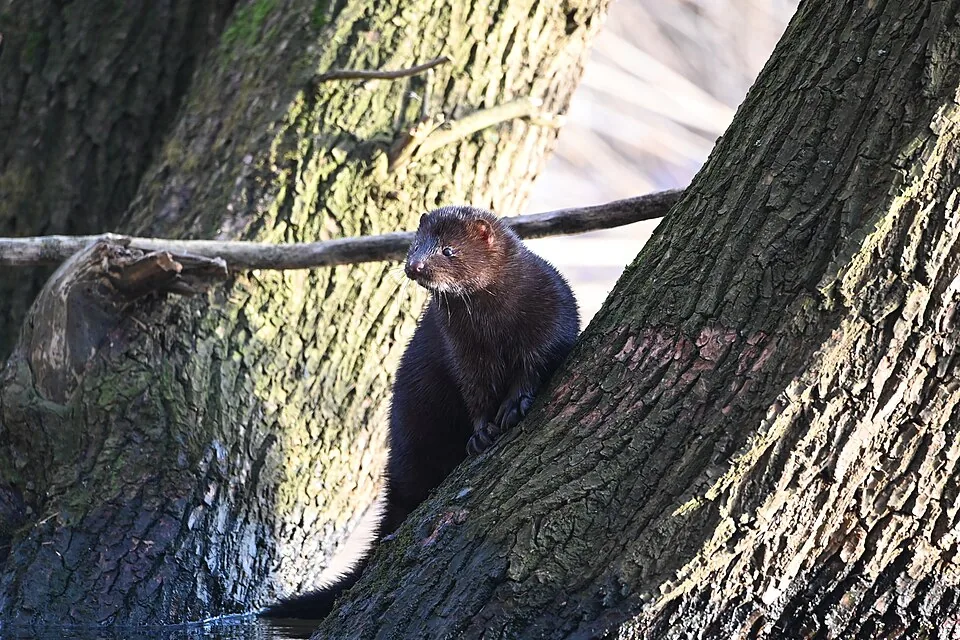
For two months, bird flu has torn through a mink farm about an hour from Salt Lake City, and the federal government's contribution to stopping it was telling Utah's state veterinarian that the USDA doesn't regulate mink. The farm's owner never culled the animals, officials never monitored the workers, and a fur industry rep warned that doing the obvious thing would kill the business.
Welcome to pandemic preparedness, Trump second-term edition.
The Federal Government Shrugs, Professionally
Here's the sequence, as ProPublica laid it out this week using records obtained through Utah's public records law. Bird flu hit a farm that raises thousands of mink for their fur. State veterinarian Amanda Price took point on the response and reached out to the US Department of Agriculture for help.
The USDA told her it doesn't regulate mink and has no vaccine approved for them. That was it. That was the help.
The Centers for Disease Control and Prevention did talk to Utah health department staff. It did not talk to Price, the person actually running the animal-side response. So the one official dealing with the sick animals got a federal agency that wouldn't touch the problem and another that didn't call her back. Efficient.
Other Countries Cull. Utah Waited.
In other countries where outbreaks like this have hit fur farms, governments ordered the mink killed. Veterinarians told ProPublica that is exactly what the Utah owners should have done already. Tom Peacock, an avian influenza researcher at the Pirbright Institute, said depopulation typically happens fast in these situations, and that the fact it didn't here is "very concerning."
So why didn't it happen? Because a fur trade representative told Price that culling the mink at C&T Fenn Farms would kill the business and the industry. Read that again. The argument against stopping a bird flu outbreak was that stopping it would be bad for fur sales.
This is the logic of a man who sees smoke pouring out of the kitchen and objects to the fire department on the grounds that water damages the cabinets.
Nobody Checked the Humans
CDC guidance says farm workers should be monitored for symptoms. Officials reportedly didn't do that. ProPublica found two people who worked at the farm, and one of them had a red eye. The CDC urges testing for that symptom.
Farm owner Chad Fenn told ProPublica the worker simply had dust in his eye and that the state health department did not recommend testing. Maybe so! Dust exists. But the whole point of monitoring protocols is that you don't rely on the guy with a business at stake to diagnose the eye of his own employee.
This is also the exact pathway that matters. Mink are highly susceptible to several viruses that also infect humans, according to research in the Proceedings of the National Academy of Sciences. And Utah has done this dance before. During the Covid pandemic, nearly 10,000 Utah mink died from the coronavirus and nine farms were quarantined. The virus likely came from infected workers, according to a report in Emerging Infectious Diseases.
What the Experts Actually Said (Keep Your Pants On)
Let's be precise here, because panic is not the brand. Jennifer Nuzzo, an epidemiology professor and director of the pandemic center at Brown University School of Public Health, said the mink outbreak is unlikely to produce a "tidal wave of human infections." She doesn't see signals that the virus is spreading. If you don't work around sick animals, she said, you can take this off your worry list.
But the secrecy is what has her alarmed. "No animal or human will be protected from the toll of this virus through secrecy," she said. Her real fear is the farm workers, who could get sick and some of whom could die, when a vaccine of the kind other countries use might have protected them.
There's also the bigger nightmare scenario. The virus could become a pandemic if it combined with a human influenza virus, a worry that grows as flu season brings more of those viruses into circulation. Nuzzo couldn't say how likely that is. "It could be zero," she said. Could be. Comforting!
The Part Where Experts Stop Getting Phone Calls
Nuzzo also pointed to a pattern. Shortly after Trump took office, his administration fired federal employees who were responding to a bird flu outbreak among dairy cows. Federal officials used to hold regular calls with outside disease experts like her to keep them informed, and that no longer happens.
She found those calls useful because they let experts push back and ask what about this, what about that. "A lot is lost when that doesn't happen," she said. Things might be going on that people don't see, and actions don't get the scrutiny they deserve.
The USDA didn't immediately respond to a request for comment. Neither did Price or the Utah department of agriculture and food. The Guardian couldn't reach Fenn.
The Dingo Take
Think of the Titanic's lookouts, except the lookouts have been fired, the binoculars are in a locked cabinet, and the iceberg is being briefed that it's technically outside the ship's jurisdiction. That's where we are on bird flu. A virus with a documented talent for jumping species is sitting in a barn full of animals that catch human viruses like a hobby, and the federal response was a form letter that says mink aren't our department.
No one is saying this farm is the start of the next pandemic. The experts say it probably isn't, and they'd know. But "probably isn't" is a terrible foundation for a public health system, and it's an even worse one when the people who used to run the weekly calls, staff the outbreak response, and answer the state vet's emails have been shown the door. You don't get to cut the smoke detectors and then act surprised that nobody noticed the smoke for two months.
The cost of getting this right is a culled herd and some angry fur lobbyists. The cost of getting it wrong is the thing we all just lived through, with worse timing. Somebody in Washington should maybe pick up the phone.

Comments