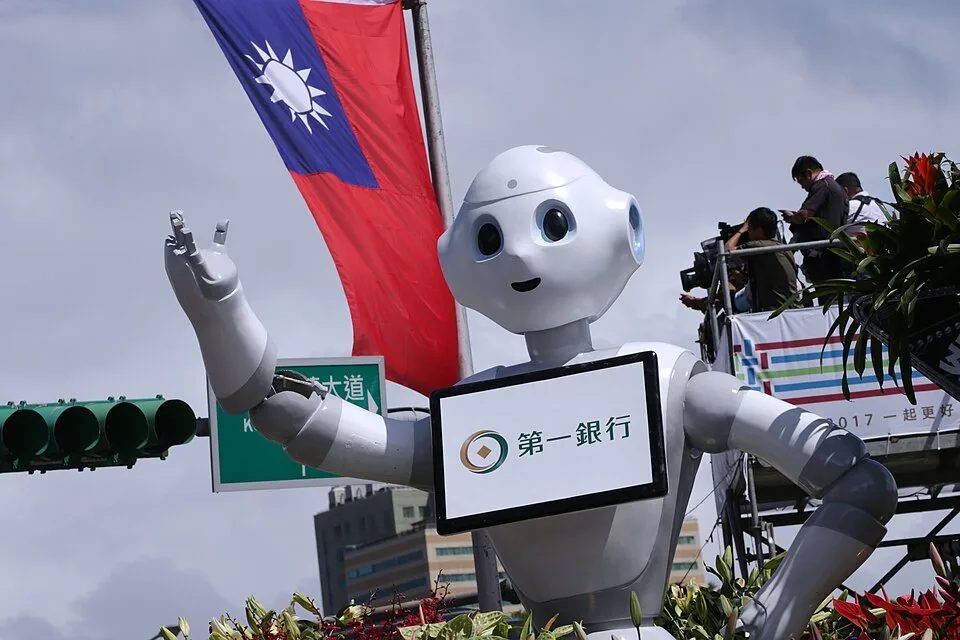
The Trump administration announced Tuesday that it is banning imports of foreign-made humanoid robots, because apparently the dystopian future we were promised includes the US government worrying that your robot butler is secretly filing reports back to Beijing. The Federal Communications Commission added advanced robots, including four-legged machines, and power inverters to its national security blacklist. China, for its part, said it will 'take all necessary measures,' which is the diplomatic equivalent of 'say that again, I dare you.'
What Got Banned and Why
According to the BBC, the ban covers new foreign-produced advanced robotic devices, humanoid and quadruped alike, along with power inverters used in data centers and solar panels. Crucially, this does not yank already-authorized models off the market. If you already own a Chinese robot, congratulations, you and your potential surveillance device can continue your relationship undisturbed.
The FCC's reasoning is genuinely alarming, even if the framing is vintage Washington threat theater. The agency warned that foreign-made inverters could allow overseas firms to remotely switch them off, steal data, or enable surveillance by foreign government actors. On the robot side, the FCC said malign actors could use them to surveil Americans, boost foreign intelligence capabilities, or, and this is where it gets really cinematic, remotely commandeer the robots themselves.
FCC Chairman Brendan Carr said the agency was doing its part 'to secure America's critical supply chains.' Which is a perfectly reasonable sentence that somehow glosses over the fact that we are now officially treating humanoid robots as a national security threat category. Welcome to 2026.
China Is Not Pleased
The Chinese embassy in Washington wasted no time. Beijing accused the US of 'politicising' trade issues and leaning on 'groundless pretexts,' and urged Washington to 'abandon its hegemonic mindset, and stop smearing Chinese companies and threatening them with sanctions.' That last line has some real energy to it. You do not often see the phrase 'hegemonic mindset' deployed in an official diplomatic statement, but here we are.
Beijing also said it will 'take all necessary measures' to protect its interests, while calling on all countries to develop AI 'for the positive and for good.' The BBC reports the Chinese government has previously insisted its AI development is 'the result of its own dedication and effort as well as international cooperation,' a direct rebuttal to US Treasury Secretary Scott Bessent's warning that Chinese AI firms could face sanctions over allegations of stolen American intellectual property.
China's major humanoid robot manufacturers, Unitree, UBTech, and AgiBot, had not responded to BBC requests for comment at the time of publication. Which, given the circumstances, is probably the smart play.
This Is Part of a Much Bigger Fight
Tuesday's robot ban does not exist in a vacuum. The BBC reports that the Trump administration has been systematically tightening the screws on Chinese technology exports for months. Washington has blocked sales of cutting-edge US semiconductors to China in a bid to slow Beijing's military modernization and protect America's AI lead. China, despite being the world's largest electric vehicle exporter, has been effectively shut out of the US market by steep tariffs.
And then there is the rare earths situation, which the US is apparently still nursing a grudge over. The BBC notes that Washington is keen to avoid a repeat of the supply chain squeeze triggered last year when China tightened its own export controls on rare earths, which are critical components in electronics. That move rattled US industry badly enough that it is clearly shaping how policymakers think about Chinese technology dependencies right now.
The pattern here is not subtle. The US and China are in a full-spectrum technology cold war, fought across semiconductors, AI, electric vehicles, solar panels, and now, yes, bipedal robots.
The Robot Race Is Very Real and Very Competitive
Here is the context that makes this ban feel less like paranoid theater and more like a genuinely contested strategic fight: Chinese technology firms have moved fast on humanoid robots. The BBC reports that companies have been aggressively marketing their machines for use in factories and homes, and have beaten US rivals to market. Those US rivals include, notably, Elon Musk's Tesla and Boston Dynamics.
So this ban is also, at least in part, industrial policy wearing a national security costume. Locking Chinese humanoid robots out of the US market buys domestic manufacturers time to catch up. Tesla's Optimus robot has been in development for years. Boston Dynamics has been at this longer than most. Neither is ready to saturate the market tomorrow. Giving them breathing room by eliminating foreign competition is not exactly a secret subtext here.
The Dingo Take
Let's be precise about what is actually happening. The US government is genuinely worried that Chinese-made robots, deployed in American homes and factories, could be used to collect surveillance data or, in a worst-case scenario, be remotely taken over by actors working for a foreign government. That concern is not crazy. It is the logical endpoint of deploying internet-connected hardware built by companies operating under Chinese law, which requires cooperation with Chinese state intelligence services upon request. The FCC's Covered List exists for real reasons.
But let's also be honest about the other thing happening here. American companies are losing the robot race to China right now, and a national security ban is a very convenient way to close the market to competitors while domestic players scramble to catch up. The Trump administration has deployed 'national security' as a justification so many times and in so many directions that the phrase has lost almost all friction. It is the universal solvent of trade policy. Pour it on anything and the thing dissolves.
China says it will take 'all necessary measures.' The US has already blocked semiconductors, tariffed EVs into oblivion, threatened AI sanctions, and now banned robots. At some point this stops being trade policy and starts being something that needs a different word entirely. The robots are just the latest front. The war itself has been running for years, and neither side is close to blinking.



Comments