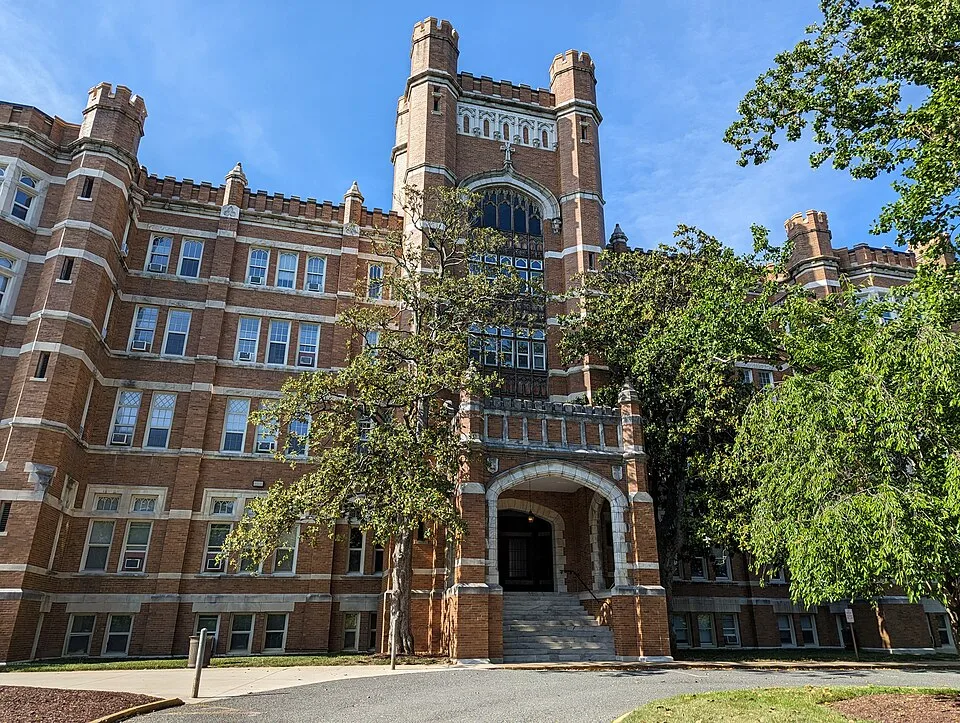
Howard University sent disenrollment notices to 502 incoming freshmen, roughly 20% of its entire incoming class, just weeks before the August 11 move-in date. These are students who had already graduated high school, already celebrated, already packed their bags, already told everyone they knew. Then Howard told them to stay home.
What Actually Happened at Howard
According to The Guardian, the notices went out days ago citing missed tuition payments. Dozens of students were readmitted on July 27, but hundreds more are still out. Weeks from move-in. After a summer of planning. After acceptance letters and graduation parties draped in Howard's indigo, red and white.
Think about what that timing means for a second. This is not a February rejection. This is not a waitlist in April. This is late July. Students have turned down other offers. They have told other schools no. Some of them have signed leases. The decision to mass-disenroll hundreds of students this close to the start of term is not a scheduling inconvenience, it is a catastrophe for the people it hit.
Howard, for the uninitiated, is not just any school. It is nicknamed 'The Mecca' by its alumni, and it has been a cornerstone of Black intellectual and professional life since its 1867 founding. Getting into Howard is a milestone. Getting kicked out of Howard weeks before you were supposed to arrive there is a different kind of milestone entirely.
This Is Happening in the Worst Possible Political Environment
The Guardian's Saida Grundy lays out the broader context, and it is brutal. Tuition across American higher education has risen 40 times its 1963 average. Affirmative action in admissions is effectively dead after the Supreme Court gutted it. And the Trump administration has been actively restricting access to federal financial aid, the same aid that Black students disproportionately depend on to afford college in the first place.
So to recap: the cost of college has exploded, the legal tools that helped Black students get in have been dismantled, and the federal money that helped them pay for it is being squeezed by an administration that has shown, repeatedly and enthusiastically, that it does not consider Black educational advancement a policy priority. And now one of the country's most storied HBCUs is sending hundreds of its own incoming students packing over tuition gaps.
These pressures do not exist in isolation. They compound. A student who might have managed a payment plan in a more functional financial aid environment might not survive the chaos of the current one. The system failed these kids from multiple directions at once.
What HBCUs Actually Do, Since Apparently We Have to Explain This
HBCUs account for just 3% of American higher education institutions. They enroll about 10% of Black undergraduates nationally. And yet, according to The Guardian, they confer 35% of all Black bachelor's degrees in the United States. They produce 75% of Black PhDs, 50% of Black attorneys and physicians, 80% of Black judges, and 40% of Black engineers.
Read that again. Three percent of schools. Eighty percent of Black judges. The output-to-resource ratio of HBCUs is one of the most remarkable stories in American education, and it almost never gets told with the seriousness it deserves.
The Guardian reports that the upward mobility rate for HBCU graduates is more than double the national average. Eighty-eight percent of HBCU alumni say their education helped them support themselves and their families. And 45% of HBCU students report that their mental health is 'flourishing,' compared to 36% of college students nationally and 38% of Black students at predominantly white institutions. These schools are not just educating students. They are, measurably and specifically, making them healthier and more economically stable.
The Disconnection Crisis Nobody Talks About
Here is the part that should make you genuinely alarmed. Social scientists use the term 'Neets' for young people who are not in education, employment, or training. The Guardian reports that young people who fall into this category face dramatically elevated risks of housing insecurity, substance abuse, interpersonal violence, and prolonged mental health challenges including depression.
Black Americans already have the highest rates of disconnection of any racial group. Nearly 30% of rural Black young adults are disconnected. One in five urban Black young adults is disconnected. These are not small numbers. These are a generation of people slipping through every crack in every system simultaneously.
When 500 students lose their spots at Howard weeks before classes start, some of them will land somewhere else. Some will defer a year, regroup, figure it out. But some of them will not. Some of them will become exactly the 'disconnected' young adults that researchers are already sounding alarms about. The disenrollment notice is not just a financial document. For some of these students, it is a fork in the road.
The Sense of Belonging That Cannot Be Replicated Anywhere Else
Writing in The Guardian, Grundy, a Spelman College graduate, describes arriving at her HBCU and feeling 'airlifted from countless racist indignities' she had endured before. She describes an immediate awareness that 'this was how white people must feel about America, in that they never have to question if all of this was made for them.' That is not a small thing. That is a fundamental reorientation of your relationship to your own education.
The Guardian reports that 83% of HBCU attendees feel a strong sense of institutional belonging, a figure that correlates directly with those superior mental health outcomes. Critics sometimes argue that HBCUs insulate students from 'the real world,' but Grundy pushes back on that framing hard. The belonging these schools create comes from their extensive intraracial diversity, the full spectrum of Black American experience gathered in one place, and it produces something that predominantly white institutions have not figured out how to replicate for Black students.
For 502 students who were supposed to move into Howard in less than two weeks, that sense of belonging just got yanked away. Whatever the university's financial justifications, the human cost of this decision is not abstract.
The Dingo Take
You are supposed to believe this is just a billing dispute. A routine administrative matter. Students didn't complete their payments, so the university acted, and besides, some of them got readmitted, so problem solved. This is not a billing dispute. This is what happens when you systematically defund financial aid, dismantle the legal architecture that supported minority enrollment, and let tuition inflate into the stratosphere for sixty consecutive years, and then act surprised when Black students cannot make their payments three weeks before classes start.
The Trump administration is cutting federal financial aid. Republican-appointed judges ended affirmative action. State legislatures across the South have been harassing HBCUs for years with funding fights and politically motivated audits. And now Howard, under pressure from all of that, turns around and dumps 500 kids in late July. Nobody who designed the current system will be blamed for any of this. Howard will catch the headlines, the students will catch the consequences, and the architects of the policy environment that made this inevitable will be on television this week talking about merit and personal responsibility.
This is what dismantling looks like up close. Not one dramatic moment but a thousand compounding pressures that eventually produce a mass disenrollment notice landing in a teenager's inbox six days before they were supposed to start the next chapter of their life. Black educational attainment in America is being squeezed from every direction at once. Howard's situation is not the cause. It is a symptom.



Comments