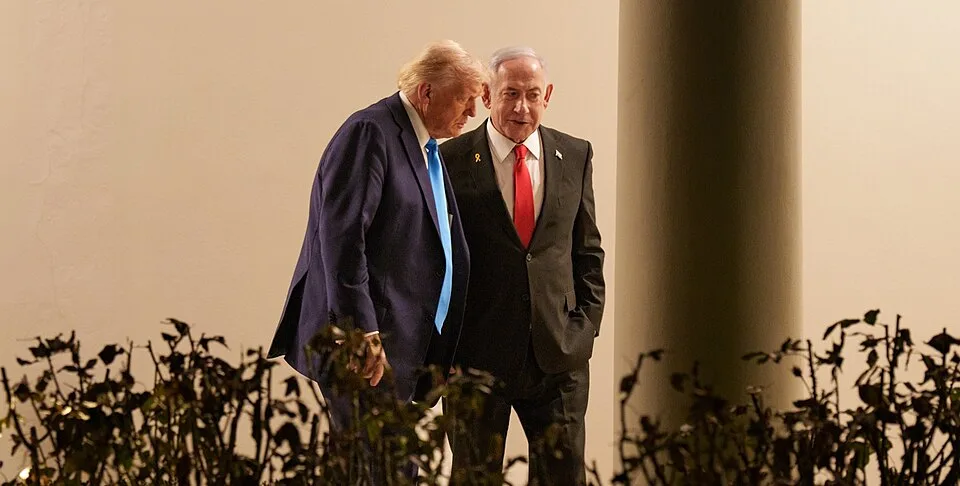
Donald Trump held back-to-back meetings at the White House on Tuesday with two of the world's most complicated relationships in American foreign policy: Ukrainian President Volodymyr Zelensky and Israeli Prime Minister Benjamin Netanyahu. One man is fighting a land war with Russia and desperately needs American weapons. The other is fighting multiple fronts across the Middle East and desperately needs American cover. Both of them need something from Trump, which means Tuesday was a very good day to be Donald Trump.
Two Leaders, Two Crises, One Very Busy Tuesday
NPR's Morning Edition reported the back-to-back White House summits on Tuesday, July 29th, with Zelensky and Netanyahu both making the trip to Washington within the same day. That's not a scheduling coincidence. That's a signal that two of the most active and expensive conflicts on the planet are demanding American attention at the same time, and whoever controls that attention controls a lot.
For Zelensky, every White House visit since Russia's full-scale invasion of Ukraine began in 2022 has carried the same subtext: please don't abandon us. Ukraine's survival has depended on a continuous pipeline of American military and financial support, and under Trump's second term, that pipeline has been anything but guaranteed. Zelensky walks into these meetings knowing he has to perform, charm, and lobby simultaneously, which, to his credit, he has gotten very good at.
Netanyahu's calculation is different. Israel's military operations across Gaza and Lebanon have drawn sustained international condemnation, ICC arrest warrants, and growing pressure even from some traditional allies. A meeting at the Trump White House is, among other things, a photo opportunity that says: whatever the rest of the world thinks, I have a friend in the Oval Office. That is worth a transatlantic flight.
What Each Leader Actually Needs From This Meeting
Zelensky's wish list going into any Trump meeting is roughly the same as it has been for four years: sustained weapons deliveries, continued intelligence sharing, and some kind of ironclad security guarantee that Washington won't quietly broker a deal with Moscow behind Kyiv's back. The third item is the one that keeps Ukrainian officials up at night.
Trump has repeatedly signaled a desire to end the Ukraine war quickly, a phrase that sounds reasonable until you ask what 'quickly' means and who gives up what to get there. Previous reporting from outlets including the New York Times and Politico has documented internal administration debates about how hard to push Kyiv toward territorial concessions. Zelensky showing up in person is partly about making sure Trump sees a human face attached to the country he might be tempted to trade away in a deal.
Netanyahu's visit sits inside an entirely different set of pressures. Ongoing military operations, hostage negotiations, and the question of what a post-conflict Gaza actually looks like have all remained deeply unresolved through 2025 and into 2026. Trump has positioned himself as a dealmaker in the region, but the deals he has floated, including his proposal earlier this year that drew widespread alarm, have demonstrated a comfort with outcomes that most of the world considers legally and morally indefensible.
Meanwhile, Europe Is on Fire. Literally.
While Washington staged its diplomatic double-header, NPR also reported Tuesday that a brutal heatwave is threatening firefighters' ability to contain wildfires burning across France and Spain. That's not a sidebar. That's the other story of our era running in parallel: the planet doing exactly what climate scientists said it would do, at exactly the pace they warned about, while governments argue about other things.
Wildfires in southern Europe have become a grim summer ritual at this point. Each year the fires are larger, the temperatures higher, and the window for containment shorter. Firefighters on the ground in France and Spain are not dealing with a bad season. They are dealing with a structural shift in what Mediterranean summers look like now, and the forecast for the coming decades is not encouraging.
The heatwave threatening those containment efforts is the kind of story that gets bumped to the second half of a news brief because two world leaders showed up at the White House. Which is, itself, a damning summary of how the world is currently allocating its attention.
The Diplomatic Theater of It All
There is something worth sitting with here about what it means that both Zelensky and Netanyahu made the pilgrimage to Mar-a-Lago's more formal cousin on the same day. Under any previous administration in modern memory, routine diplomatic engagement with close allies would not require the heads of those allied governments to fly to Washington and personally lobby the American president to stay engaged. That is not how alliances are supposed to work.
What you are watching, in real time, is the transactional foreign policy Trump promised in 2016 and 2024 actually operating. Every relationship is a negotiation. Every meeting is a performance review. Every ally is one bad phone call away from finding out what 'America First' looks like when it's pointed at them. Zelensky and Netanyahu both understand this, which is why they both showed up.
The details of what was actually said in those meetings, what was promised, what was withheld, and what was demanded in return will take days or weeks to fully emerge through reporting. What we know right now, courtesy of NPR's morning brief, is that the meetings happened. The rest is the work of journalism and time.
The Dingo Take
You are supposed to look at a day like Tuesday and see robust American diplomatic engagement. Two key allies, the president, the White House. Busy, productive, important. And maybe it is all of those things. But the fact that both Zelensky and Netanyahu felt compelled to show up in person, in the same day, to an administration that has repeatedly signaled it views foreign policy commitments as optional depending on its mood, tells you everything about the anxiety underneath the handshakes.
Normal alliances do not require this level of in-person relationship maintenance. You do not fly across the Atlantic to remind someone you exist unless you have genuine reason to believe they might forget. The Trump White House has created a diplomatic environment where that fear is rational, where allies genuinely do not know from one press conference to the next whether American support will hold. That is not strength. It is chaos with good lighting and a formal receiving room.
And while all of this was happening, France and Spain were burning. Firefighters were losing ground to a heatwave on a continent that has been watching its summers get more catastrophic every year. The meetings at the White House matter. So does the fire. We are, as a civilization, getting very bad at paying attention to both at the same time.





Comments