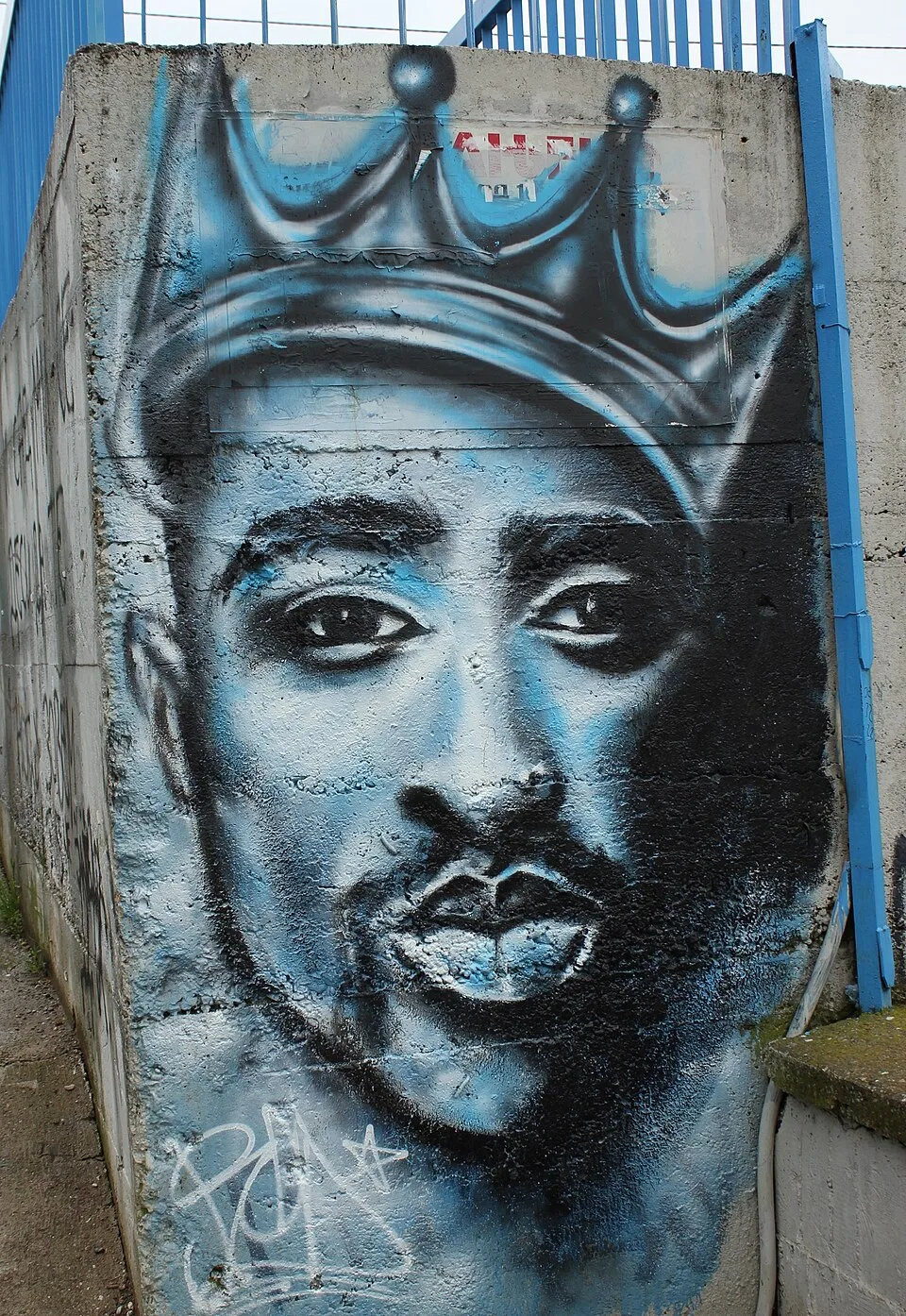
A man who allegedly helped orchestrate the murder of Tupac Shakur, then wrote a memoir about it, then gave a police interview about it, is now upset that people keep finding out about it. Nevada Judge Carli Kierny ruled Tuesday that a 2008 police recording of Duane 'Keffe D' Davis is admissible in his upcoming murder trial. The trial starts August 10. Davis faces life in prison without parole.
He Literally Put It in a Book
Let's set the scene. Tupac Shakur was shot multiple times in Las Vegas on September 7, 1996, after a white Cadillac pulled up beside the car he was riding in with Death Row Records founder Suge Knight near the Strip. Shakur died six days later. The case went cold for decades and became one of the most notorious unsolved murders in American history.
Then Duane Davis, 63, known as Keffe D, decided to start talking. A lot. According to the Associated Press, Davis co-wrote a memoir called 'Compton Street Legend' in which he stated he was in that Cadillac and personally provided the weapon used to shoot Shakur. He called the book the 'real truth' in a subsequent interview. Judge Kierny cited that quote specifically in ruling that Davis had adopted the book as his own, rejecting defense arguments that it was fictionalized for profit and therefore couldn't be pinned on him.
To be clear: his defense argued that his confession memoir might not actually reflect his views. The judge did not buy this.
The 2008 Interview He Now Regrets Enormously
The other piece of evidence Davis desperately wanted kept out of his trial is a 2008 recording of an interview he gave to law enforcement. His defense attorney Michael Sanft argued the interview was supposed to be confidential, that detectives explicitly promised it wouldn't be used against him, and that Davis only opened up because of those assurances.
Davis himself wrote in his book, 'I sang because they promised I would not be prosecuted.' He also wrote, 'It kills me on the inside to know that I told them anything.' Which is a genuinely remarkable thing to publish in a book while apparently hoping nobody would connect that to a murder charge.
Prosecutors argued, and Kierny agreed, that whatever confidentiality understanding may have existed evaporated the moment Davis started publishing books and appearing in documentaries about the killing. The AP reports that portions of the 2008 recording were already used in former LAPD Detective Greg Kading's book 'Murder Rap' and in multiple documentaries, including the recent 'Sean Combs: The Reckoning.' The secret was not exactly airtight.
Who Actually Pulled the Trigger
Davis has been careful, in a self-defeating sort of way, not to say who actually fired the shots. In his memoir, the AP reports, he said he obtained a handgun from an associate and tossed it into the back seat of the Cadillac, stopping conspicuously short of naming the shooter. In his 2008 police interview, he reportedly said his nephew Orlando 'Baby Lane' Anderson 'popped them,' though Anderson denied involvement before dying in an unrelated gang shooting in Compton two years later.
A separate grand jury witness testified that Anderson didn't have a clear shot, and that a man named Deandrae 'Freaky' Smith took the gun and fired instead. Three other people were in the Cadillac with Davis that night. All three are dead. Davis is the only surviving member of the group, and prosecutors allege he was the one who orchestrated the entire thing.
The trial is expected to run about four weeks.
Thirty Years to Get Here
Shakur's murder sat unsolved for nearly three decades. The case cracked open not because of a breakthrough in forensics or a confidential informant finally flipping, but because the man prosecutors believe organized the killing could not stop talking about it publicly. Davis made statements, gave interviews, appeared in documentaries, and published a memoir.
Prosecutors charged him in 2023. He pleaded not guilty. His trial begins August 10 in Las Vegas, in the same city where Shakur was shot leaving a Mike Tyson fight at the MGM Grand almost thirty years ago. If convicted, Davis will spend the rest of his life in prison.
The Dingo Take
You are supposed to believe that a man can co-write a memoir titled 'Compton Street Legend,' describe being in the murder vehicle, describe providing the murder weapon, call the book 'the real truth' on camera, and then turn around and argue in court that the book shouldn't count because it was fictionalized for commercial purposes. That is the defense. That is what they went with.
The 2008 interview argument is slightly more sympathetic, legally speaking. If detectives genuinely promised Davis the interview wouldn't be used against him, that's a real Fourth and Fifth Amendment question worth taking seriously. But that promise, whatever its legal weight, did not survive Davis himself publishing and promoting a book that covers the same material. You cannot claim your confidential police statement is protected while simultaneously selling a memoir to the general public about the same events. That is not how any of this works.
What's wild, and what will keep people riveted to this trial, is that Tupac Shakur's murder was genuinely one of the great unsolved crimes of the 20th century. Federal investigators, LAPD, Las Vegas Metro, journalists, documentary filmmakers, and a small army of rap obsessives spent decades on it. The break didn't come from any of them. It came because Keffe D, apparently, just really needed people to know he was there.



Comments