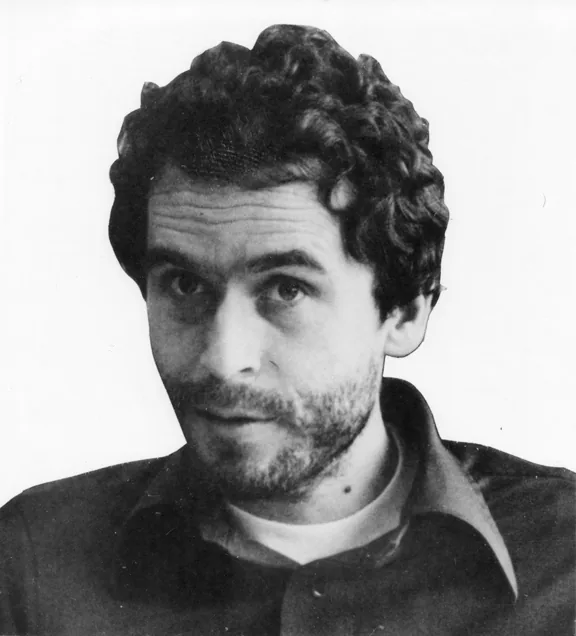
Ted Bundy has been dead since 1989, and he is still getting caught. Utah authorities announced Tuesday that DNA evidence ties him to the 1974 murder of Melissa Ann Smith, a 17-year-old girl whose body was found by hunters 52 years ago. The man spent his last years bargaining, lying, and doling out confessions like favors, and a lab technician just beat him at his own game.
The Girl in the Woods
Melissa Ann Smith was 17 and the daughter of a local police chief. She went missing in 1974, and days later her nude body was found by hunters. The BBC reports she showed signs of rape and torture. Her body was discovered on October 27, 1974, which means authorities named her killer 52 years to the day after she was found.
Think about what that number means. Her family has been waiting since before the Watergate fallout settled. Whole presidencies came and went. Entire technologies were invented and went obsolete. And through all of it, a case file sat somewhere in Utah waiting for the science to catch up with the evidence.
That is both the horror and the strange comfort of this story. Somebody kept the evidence. Somebody did not toss the box.
How a Dead Man Got Caught Twice
The path to Smith ran through another girl. In April, Utah County detectives confirmed that Bundy killed Laura Ann Aime, also 17, in 1974. Aime was last seen at a Halloween party and was found dead and severely beaten in late November of that year.
Bundy had actually admitted to killing Aime. He made a string of confessions before his execution in 1989, and that one was among them. But a confession from Ted Bundy is worth roughly what a promise from a used car salesman is worth. He lied constantly and used his admissions to stall for time. So investigators did what good investigators do and checked.
New DNA testing this year backed his account. Bodily fluid taken from Aime's body matched Bundy's known DNA profile. That match set off the closure of the Smith investigation, because the Y-STR DNA profile recovered from Aime's body was a genetic match to one found on Smith's body. One case cracked the other open.
The Man Who Never Ran Out of Victims
Between 1974 and 1978, Bundy sexually assaulted and killed at least 30 women across the American West and Florida. That is the floor, not the ceiling. The true number has never been pinned down, and Bundy took the answer with him to the chair.
He worked the same way again and again. He approached women in public places, won their trust with charm or a fake injury, then lured them somewhere secluded and killed them. It was a con first and a murder second, and for years it worked because people wanted to believe a polite, good-looking man could not be what he was.
He was arrested in 1975 for kidnapping a woman and sentenced to 15 years. In 1977 he escaped by jumping out of a prison library window. He was recaptured after eight days, then escaped again and kept killing until he was finally caught in 1978. Read that sequence slowly. The system caught him, lost him, caught him, and lost him again.
There Are More Coming
Utah County Sgt. Mike Reynolds said more Bundy cases are still being examined in the state. So this is not the last announcement. It is likely one stop on a longer road.
Reynolds had a message for the man himself. "With every case closure may we stomp the memory of Ted Bundy out," he said. He also said the voices and memories of Smith and Aime "ring louder than the hate and sedition of the one that took their lives."
Salt Lake County Sheriff Rosie Rivera framed it as a message to other families. She said the case should be a sign to other cold case victims "that there is hope out there," and that "every single day forensics is changing and we have the ability to take a look at these cases again and again." She also credited the people who held onto the evidence, saying it "demonstrates the need to preserve evidence even when decades pass."
444 Open Files
Here is the number that should sit heavy. In April, the director of the Utah Bureau of Forensic Services told the Salt Lake Tribune that Utah has 444 unsolved death investigations, including 258 homicides.
That is 444 families, and each of them is waiting on a phone call that may or may not ever come. Bundy is the famous case, the one with the documentaries and the movie casting controversies. Most of those 444 files belong to people nobody made a Netflix series about.
The Dingo Take
Picture a different cold case. A 17-year-old girl is found dead in 1974, and her killer is a nobody. No book deals, no hit documentary, no actor with a famously nice face playing him in a prestige drama. Does that case get the same lab time, the same press conference, the same national headline 52 years later? Be honest. It does not, and everyone in forensics knows it.
That is the uncomfortable part of a genuinely good day for Melissa Ann Smith's family. Bundy is the most famous serial killer in American history, so Bundy cases get attention. Utah still has 258 unsolved homicides sitting on shelves, and the people in those files did not have a killer famous enough to make the evening news. Celebrity is a terrible way to decide whose murder gets solved.
So take the win, because it is a real one. A girl got her name back and a family got an answer after half a century, all because somebody had the sense to keep a box of evidence from rotting in a landfill. Now fund the labs, keep the boxes, and make the next 444 matter as much as this one did.
As for Bundy, the sergeant wants to stomp his memory out. Fair enough. The best way to do it is the one Utah is already doing: keep naming the girls, and let the man's name shrink to a footnote.



Comments