
A child missed her own birthday party because her parents were too afraid to leave the house. That is not a metaphor. That is a direct consequence of the Trump administration's immigration crackdown, and a new survey of 2,250 farm workers puts hard numbers to what that fear actually looks like across an entire workforce feeding this country.
The Numbers Are Staggering
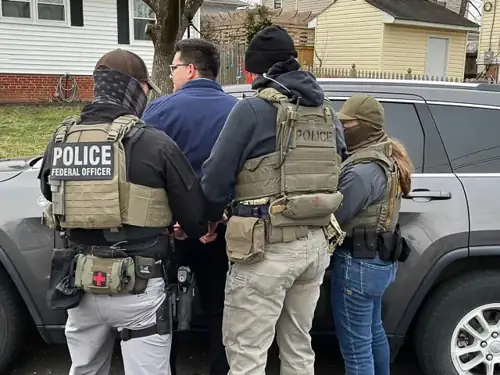
The United Farm Workers Foundation released its survey on Thursday, and the results are the kind of thing that should stop people cold. According to the Guardian, 92% of farm workers surveyed said that raids and deportations have directly affected their employment. Ninety. Two. Percent.
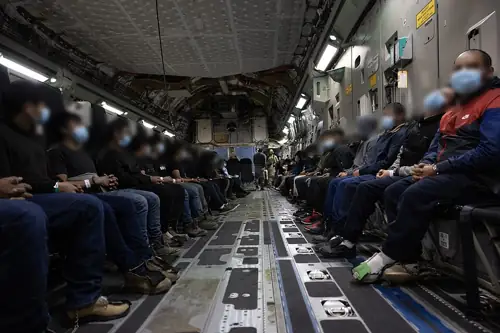
Ninety percent said they worry about family separation. Sixty-one percent are shopping less. Twenty-nine percent are avoiding medical care because they are afraid that seeking treatment will get them arrested. And 17% specifically said they fear being forced into labor inside immigration detention if they are picked up.
Think about that last one for a second. Nearly one in five farm workers surveyed is scared that getting caught means being put to work for free in a detention facility. In America. In 2026. The Department of Homeland Security, for its part, released a statement saying worksite enforcement protects 'public safety, national security, and economic stability.' Sure. That tracks.
These Are Not Newcomers
Here is what the administration and its supporters will not tell you when they talk about cracking down on undocumented workers: most of these people have been here for decades. The Guardian reports that 80% of survey respondents said they have lived in the US for more than ten years. Forty-one percent have been here for more than twenty years.
These are not people who crossed the border last month. These are people who have built lives, raised American citizen children, and picked the food that ends up in every grocery store in this country. The National Agricultural Workers Survey puts the total farm worker population at more than 2.6 million people, 66% of whom are noncitizen immigrants and 47% of whom report lacking work authorization.
You cannot have the food and also pretend the people growing it do not exist. That is not a political position. That is arithmetic.
The Birthday Party That Did Not Happen
A farm worker named Yasmine, who did not provide her last name for obvious reasons, spoke at a press conference about the survey Thursday. She has been in the US for more than twenty years. She is a DACA recipient, though she is currently experiencing delays getting her work permits renewed. Her husband is undocumented. Her two daughters are US citizens.
The Guardian quotes her directly: 'When I leave to work, I'm afraid to not come home and to never see my daughters again.' And then comes the detail that makes the whole thing land like a punch. Her daughter's 11th birthday was recently. They did not go out to celebrate. They stayed home. Because they were afraid.
She has had to sit her small children down and walk them through what to do if their parents do not come home. The kids do not fully understand, she said. She tries to make sure they have a plan anyway. This is the daily reality of a woman who has lived in this country for two decades, whose children are American by birth, who works a physically brutal job feeding the rest of us.
What Farm Workers Actually Want
The survey also asked respondents what they hoped for, which is a question the policy debate almost never bothers with. According to the Guardian, 76% of farm workers said they want protections from deportation and detention. Fifty-three percent said they hope for a pathway to legal status and citizenship.
Eighty-seven percent said they would visit family in their home countries if Congress passed immigration reform giving them legal status. These are people who have not seen relatives in years, sometimes decades, because the moment they leave, they cannot come back. That is its own kind of punishment, quietly running in the background of every year they spend here.
Yasmine put it plainly: 'Having a pathway to citizenship would mean a lot for me. It would change a lot for me and my family, and it would make sure that my husband and I could give a better life for our daughters. I would finally have stability, something right now I don't have.' Congress has had decades to fix this. It has not.
The 'Economic Stability' Argument Is Doing a Lot of Heavy Lifting
The DHS spokesperson's statement deserves a closer look, because the language is doing something very specific. 'Worksite enforcement remains a cornerstone of our efforts to protect public safety, national security, and economic stability,' the statement reads, per the Guardian.
Economic stability. Achieved by terrorizing 92% of the workforce that harvests American crops into either staying home or working in a state of constant fear. Achieved by making 29% of those workers skip doctor visits. Achieved by ensuring that the people keeping American agriculture running cannot plan a child's birthday party without calculating the risk of arrest.
Erica Lomeli Corcoran, CEO of the UFW Foundation, said in a statement that she hopes the survey helps those in power 'understand the realities faced by those who are the most powerless.' That is a generous framing. A less generous one is that those in power understand perfectly well and just do not care.
The Dingo Take
An 11-year-old did not get a birthday party because her parents were afraid to walk out the front door. That is the concrete, specific, human result of policy that the administration describes as protecting 'economic stability.' Write that down somewhere.
Ninety-two percent of the workforce that picks, harvests, and processes American food says those raids have hit their jobs. Twenty-nine percent are skipping medical care. These are not abstract statistics about border policy. This is what it looks like when you conduct mass enforcement operations against an industry that the entire country depends on and then dare to use the phrase 'economic stability' with a straight face. The food does not pick itself. Someone has to do it, and for generations this country has been perfectly comfortable letting undocumented immigrants do the dangerous, backbreaking, poorly paid work while simultaneously threatening them with deportation if they step out of line.
Congress could fix the underlying problem. It has had multiple decades and multiple opportunities to do so. Farm workers, meanwhile, are sitting their kids down and explaining what to do if mom and dad do not come home from work. If that does not land as a moral catastrophe regardless of where you stand on immigration enforcement broadly, you are not paying close enough attention.



Comments