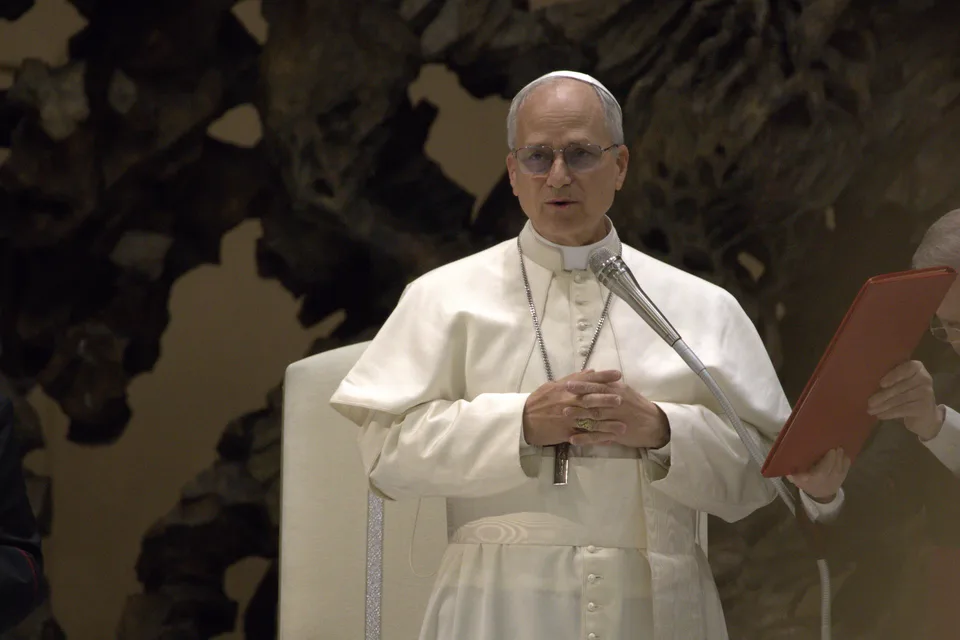
The first American pope sat down with NBC this week and, in the most polite possible terms, explained that the country he loves has stopped being the country he loves. Pope Leo XIV, born in the United States, raised on its ideals, and currently watching the Trump administration detain migrants at an industrial scale, said he thinks of himself as 'the pope who happens to be American.' The 'happens to be' is doing a lot of work in that sentence.
What He Actually Said
In an interview with NBC on the sidelines of a prayer event at Castel Gandolfo, the papal retreat outside Rome, Leo was asked how important being American was to him. His answer was warm and careful and, if you've been paying any attention to the last six months, quietly devastating.
"I have great love for America," he said, according to The Guardian, "but I understand my mission as having a very important dimension, which is precisely being pastor of a universal church." He described what he loves about the US as "the sense of freedom, the sense of opportunity, the sense of having invited for generations people from around the world to be part of America."
Freedom. Opportunity. Welcoming immigrants. Those three things. The pope, who has repeatedly and specifically condemned Trump's immigration policies as "inhuman," listed the exact three values the current administration is systematically torching. He didn't say Trump's name. He didn't have to.
The Family History He Brought Into It
Leo didn't stop at abstract principles. He got personal. His grandparents, he told NBC, were immigrants. On his mother's side, as The Guardian reports, "we have people who were both slaves and slave owners."
That's a complicated, honest, deeply American thing to say. It's also a pointed one. The first American pope is not some sanitized patriotic symbol. He's someone whose family lived through the full brutal contradictions of this country, and who spent twenty years as a missionary in Peru before the cardinals handed him the biggest job in Catholicism. He has seen some things. He has context.
When a man with that biography talks about America's founding ideals being worth preserving, he's not doing a Fourth of July speech. He's making an argument.
The Escalating Fight With Washington
This NBC interview didn't come out of nowhere. Leo and the Trump administration have been in a slow-rolling collision since the day after his inaugural papal mass, when JD Vance showed up at the Vatican to extend a White House invitation. Leo has not accepted it. He told NBC no trip is planned, though he hopes to visit the US soon. Make of that timeline what you will.
The relationship has deteriorated steadily. Leo has called Trump's immigration policies inhuman, repeatedly. He marked the Fourth of July by visiting Lampedusa, the Sicilian island that serves as the main landing point for migrants crossing the Mediterranean from North Africa, which is not the kind of thing you do if you're trying to stay on the administration's good side. And according to The Guardian, relations soured further after Leo strongly condemned the US-Israeli war against Iran.
On the eve of America's 250th birthday, the pope delivered what was widely read as a direct rebuke to Trump, praising the country's history of welcoming migrants and urging Americans to actually live up to what the Declaration of Independence says. Bold strategy. Not a subtle man.
The White House Invitation Sitting on the Table
Vance made the invitation the day after Leo's inaugural papal mass. That was over a year ago. The pope has not gone. The pope has, in the intervening months, done essentially everything except go.
Leo told NBC he hopes to visit the US soon. The Guardian reports no trip has been planned. You don't have to read between too many lines here. Visiting the White House would hand Trump a photo op he desperately wants, a chance to stand next to the pope and imply some kind of papal blessing for an administration the pope has called inhuman. Leo apparently does not feel like providing that service.
That is not a small diplomatic calculation. It is a pope, at 70 years old, declining to fly home and shake the president's hand. There's a message in that.
The Dingo Take
You are supposed to believe this is just a pastoral interview about faith and identity. A pope talking warmly about his homeland. Wholesome stuff. Except the specific things he loves about America are freedom, opportunity, and welcoming immigrants, said by a man who has called the sitting president's treatment of immigrants inhuman, while declining to visit the White House, while spending the Fourth of July on a migrant landing island in the Mediterranean. This is not a man speaking in subtext. This is a man with a very loud text.
The Trump administration has spent a year and a half trying to claim Christianity as its cultural property. The Christian nationalist branding, the prayer breakfasts, the Bible imagery. And then the actual pope, an American one, keeps showing up to politely explain that the thing they're doing is the opposite of what he understands his faith to require. That's a problem you can't spin your way out of. You can't call the pope anti-Christian. You can't call him a radical leftist. You can try, but it's a tough sell.
Leo is 70, spent two decades in South America, has a family history that includes both enslaved people and enslavers, and is now the spiritual leader of 1.4 billion Catholics. He is not going to the White House. He is going to Lampedusa. And he is going to keep saying, in the most measured possible language, that America's founding promise was about welcoming people, not deporting them. The administration can send Vance to Rome all it wants. The pope has places to be.




Comments