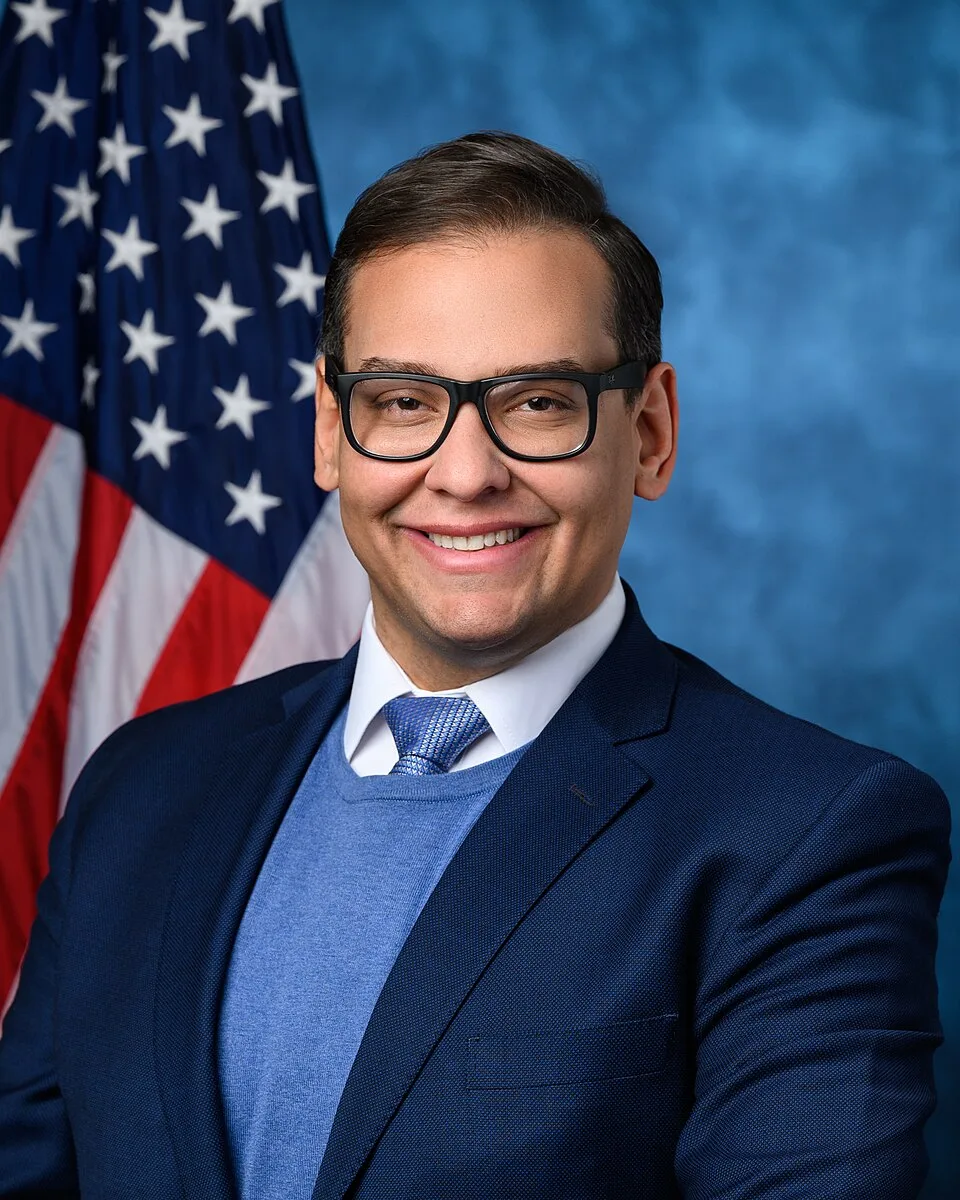
A convicted fraudster walked into a prediction market, bet against himself attending an event he publicly said he would attend, made $17,500, and then — in a twist that surprises absolutely no one — got caught. George Santos has agreed to pay $35,000 and accept a three-year trading ban to settle a federal investigation into what the Commodity Futures Trading Commission is calling "manipulative activity" on the prediction platform Kalshi. The most remarkable thing about this story is that anyone let George Santos near a financial instrument in the first place.
How You Scam a Prediction Market With Your Own Body
Here is the scheme, laid out in its full, depressing simplicity. In February, Kalshi was running a market that asked users to predict who would attend President Trump's State of the Union address. Santos, the former New York congressman currently residing at a New Jersey federal facility, announced on X that he would "be there…in the gallery." Then, according to the CFTC, he bet that he would not attend.
The prices on the Kalshi contract moved in a direction favorable to his position after his posts. Santos ultimately did not attend the address. He pocketed over $17,500. The CFTC's word for this is "manipulative activity." A more colloquial term would be "an obvious con pulled off by someone who thought no one was watching."
Kalshi's head of enforcement, Robert Denault, did not bury the lede when the settlement dropped. "Kalshi caught George Santos. Now he's paying an expensive price," he wrote on X, adding, with what can only be described as professional delight, "Pro tip for catching fraudsters: it's often the usual suspects."
The Defense, Which Is Incredible
Santos' attorney, Joseph Murray, would like you to know that his client had every intention of attending Trump's speech. It was the weather, Murray says. Travel delays. An act of God, practically. Santos realized he couldn't safely make it, "logically adopted a no position," and that was that. Perfectly innocent. Could happen to anyone.
Murray also pointed out, apparently with a straight face, that this was the first time Santos had ever wagered on a prediction market. Which, sure. We all have firsts. Santos just happened to choose, for his debut bet, a market in which he himself was the underlying asset and had total control over the outcome. A remarkable coincidence.
"Mr. Santos concealed neither his intention to attend, nor his change of plans to not attend the SOTU, from anyone," Murray said in a statement to the New York Post. He also stressed that the settlement should not be "mistaken for an admission of any wrongdoing, because it is not one." They're paying $35,000 to put it behind them, which is definitely something innocent people say all the time.
The Part Where We Remember Who George Santos Is
Let's just take a moment. George Santos is a man who fabricated virtually his entire biography to get elected to Congress. The jobs. The education. The dead relatives. The Holocaust victims. The volleyball career. He invented a meaningful percentage of his own life story and then somehow got sworn into the House of Representatives. He was expelled from Congress in December 2023, the first House member expelled in over 20 years who wasn't convicted of supporting the Confederacy. He then pleaded guilty to federal fraud and identity theft charges.
And then someone let him sign up for a prediction market account.
The CFTC settlement, reported by the New York Post, covers fines and profits totaling $35,000, plus the three-year ban from trading on regulated platforms. Federal regulators did not note what, if any, measures Kalshi or similar platforms have in place to prevent, say, a person serving time for fraud from wagering on events they can personally manipulate. That question hangs in the air, unanswered.
The Prediction Market Problem Nobody Wanted to Talk About
This story is funny, and Santos is an easy target, but there's a real issue lurking underneath the punchline. Prediction markets like Kalshi have exploded in popularity and have been lobbying aggressively for lighter regulatory treatment. They got a lot of what they wanted. The pitch is that markets aggregate information efficiently and that prices reflect genuine collective wisdom.
What the pitch does not fully account for is that some of the people trading on these markets have direct, personal influence over the outcomes being predicted. Santos is an extreme and cartoonish example, but the category of "person who can move prices by doing or saying things" is not a small category. Politicians, executives, celebrities, public figures of all kinds can all in theory trade on markets tied to their own behavior.
The CFTC moved here, and moved relatively fast. Whether the agency has the bandwidth and the mandate to police this systematically, across a prediction market industry that is growing rapidly and fighting hard against aggressive oversight, is a much bigger question than George Santos and his State of the Union plans.
The Dingo Take
A convicted fraudster who lied about his entire identity to get elected to Congress got caught running a prediction market scam using his own attendance at a speech as the underlying asset. That is the sentence. Read it again if you need to. This is not a complicated morality play.
What is actually funny, in the blackest possible way, is that Santos' legal defense is essentially "it was the weather." He didn't manipulate a market. He had travel delays. The $17,500 profit was just a coincidence of timing, and the settlement is not an admission of wrongdoing, and please, everyone, move on. This from a man whose entire political career was built on fabrications so brazen that when investigators finally listed them all out, it read like the backstory of a character in a bad airport thriller.
The three-year trading ban is almost poignant. As if in year four, George Santos gets a clean slate and a fresh start on Kalshi. As if the lesson here is about trading specifically, and not about what happens when you build a society that is apparently incapable of stopping this particular person from finding new ways to grift until the federal government physically intervenes every single time. The usual suspects. Pro tip indeed.

Comments