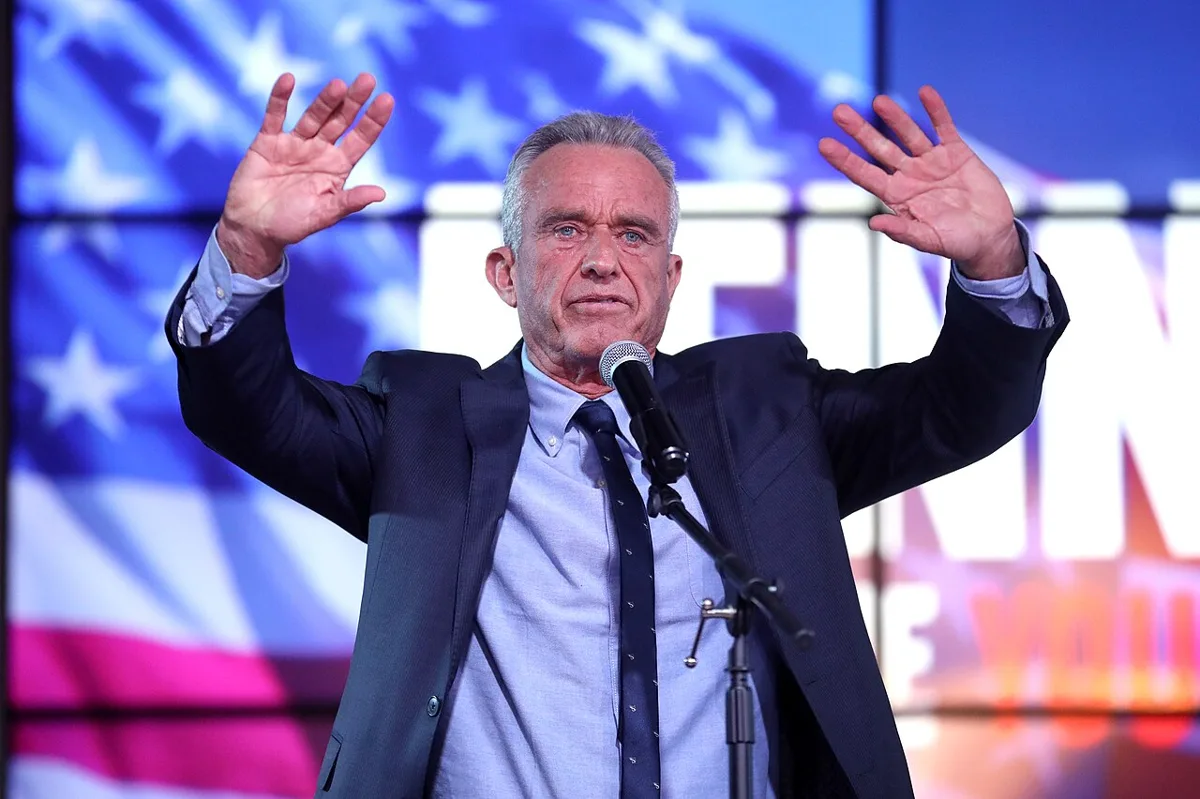
The Department of Health and Human Services looked at polling, saw that vaccine skepticism was bleeding Republican votes, and decided to pretend to be normal for a while. That while appears to be over. Axios is reporting that controversial vaccine policymaking is back on the table at HHS, and the midterms are still more than three months away.
The 'Reset' That Reset Nothing
Here's what happened. After years of RFK Jr. turning the nation's top public health agency into a clearinghouse for anti-vaccine grievance, internal polling apparently got bad enough that someone in the administration noticed. Vaccine skepticism, it turns out, does not play well with the suburban voters Republicans desperately need. Shocking development.
So HHS launched what Axios describes as an "agency reset," apparently designed with the midterm elections specifically in mind. The department would cool it on vaccines. It would act like a real health agency. It would, for a few months at least, stop giving ammunition to every Democrat running against an incumbent Republican in a swing district.
The reset was, in the words of Axios, "only partially successful." Which is a very diplomatic way of saying it didn't work.
Five Months Was Apparently Too Long to Behave
The administration spent most of 2026 in a kind of enforced moderation on vaccine policy. Not because anyone there suddenly discovered evidence-based medicine. Because the numbers told them to. This is the level of public health leadership we are currently working with.
And now, per Axios, controversial vaccine policymaking is back on the table. They couldn't even make it to November. The midterms are more than three months out, the reset is already under strain, and whatever discipline the White House thought it had installed at HHS is cracking under the weight of whatever ideological impulses apparently cannot be contained for a single election cycle.
The agency reset was a political strategy dressed up as institutional maturity. It was never about public health. It was about keeping Republican seats. Even that low bar proved too high.
What 'Controversial Vaccine Policymaking' Actually Means
Let's be precise about what we're talking about when Axios uses the phrase "controversial vaccine policymaking." We are not talking about a spirited debate among epidemiologists. We are talking about the direction of an agency that, under RFK Jr., has already questioned the childhood vaccine schedule, amplified discredited research, and treated established immunization science as an open question rather than a settled one.
The consequences of that approach are not abstract. Vaccination rates have been declining. Measles outbreaks that were considered eliminated diseases a generation ago have been reappearing across American communities. These are not coincidences. They are what happens when the people running the public health apparatus treat vaccines as a culture war prop.
So when HHS floats going back to "controversial" territory, that word is doing a lot of heavy lifting. Controversial for whom, exactly? The scientific community? Parents of immunocompromised kids? The doctors who have spent decades watching preventable diseases kill children?
The Midterm Calculation and Why It's Already Failing
Axios makes clear that the reset was a midterm strategy from the start. The administration looked at what vaccine skepticism was costing them with voters and decided to put it in a drawer until after November. The problem is that ideological movements do not take direction well, and the people running HHS did not get their jobs because they are known for restraint.
The fact that this reset is cracking before summer is even out tells you something important about who is actually in charge of setting policy. If the White House had real control over HHS, you would see real discipline. Instead, you see an agency that agreed to stop talking about vaccines in scary ways until the election, and then couldn't stop itself.
This is what happens when you staff a public health agency with true believers and then ask them to act like bureaucrats for political convenience. They are very bad at it.
The Dingo Take
You are supposed to believe this was a sincere effort at institutional recalibration. A serious agency, taking stock, adjusting course based on new information. The reality is that HHS tried to fake competence for six months so Republicans wouldn't lose the House, and they couldn't even pull that off. The reset failed not because governing is hard but because the people running this agency don't actually want to govern. They want to be right about vaccines in the way that vaccine skeptics mean when they say they want to be right, which has nothing to do with science and everything to do with identity.
What gets lost in the political maneuvering is that actual human beings get sick during election cycles. Measles does not pause its comeback tour because HHS needs to look moderate through October. Children whose parents made decisions based on misinformation that originated from or was amplified by this administration don't get a reset. The stakes of playing games with vaccine policy are not abstract, and the body count is not hypothetical.
RFK Jr. got handed the largest public health infrastructure in the world and has been running it like a podcast. The midterm reset was never going to hold because it was never real. It was a costume. And now the costume is coming off three months early, which means buckle up, because whatever is coming next from HHS will not have been focus-grouped for palatability.



Comments