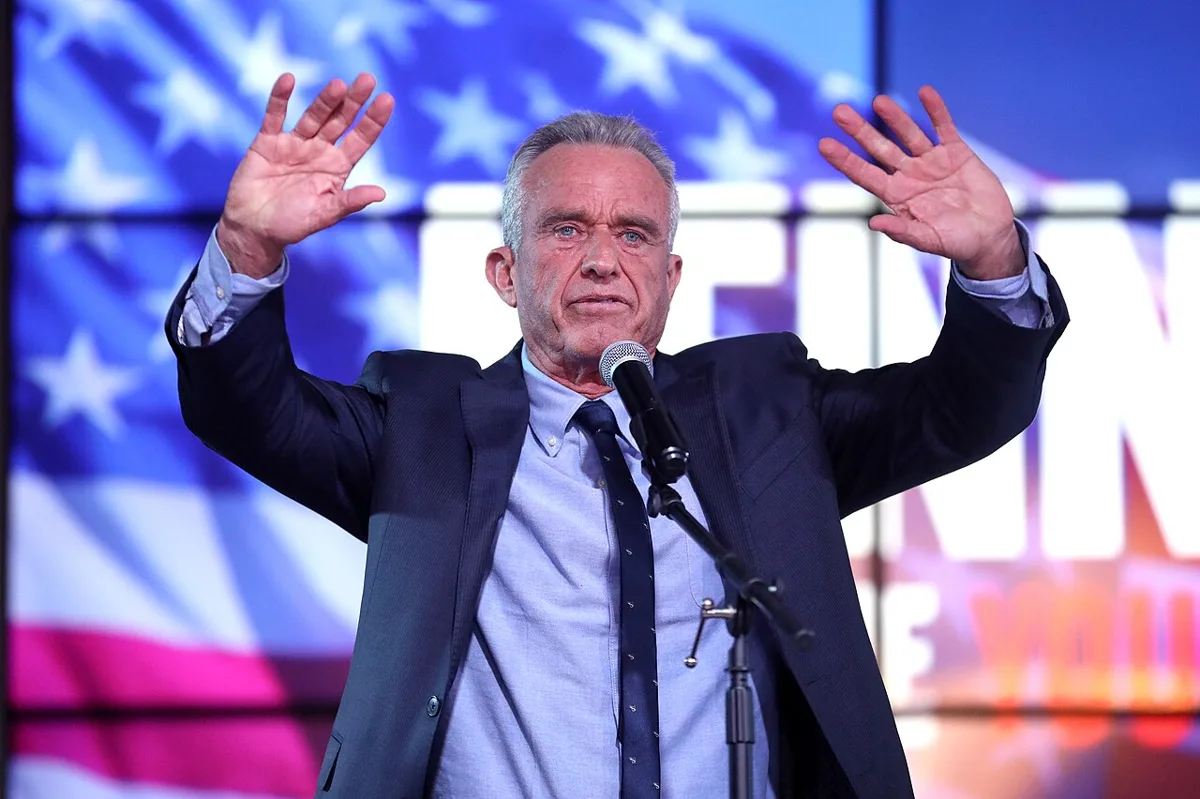
The nation's vaccine advisory committee has been gutted, a judge has said the gutting was done wrong, and the health secretary has responded by doing absolutely nothing to fix it. According to The Guardian, that means new vaccines are being approved by the FDA with no one in place to recommend them, which means insurers don't have to cover them, which means a retired public health worker just got charged $40 for a flu shot.
A Forty-Dollar Flu Shot and a Missing Committee
Meet Ron Kroening, 63, who has asthma, bad fall allergies, and the kind of résumé that makes him the last person you'd expect to get screwed by vaccine policy. He spent a career working on immunizations for the state of Oklahoma. His doctor recommended Moderna's new mRNA flu vaccine, which the FDA approved in August for people 50 and up and which trials suggest protects better than traditional shots.
It took him a while just to find a pharmacy in his area that stocked it. Then came the bill. A $40 co-pay for a flu shot, something he said he had never paid for in his entire life. He assumed it was a mistake.
It was not a mistake. His insurer told him the reason was simple: the shot isn't listed as an ACIP vaccine. His pharmacist also never mentioned that other flu shot options existed. Kroening put it plainly: a $40 co-pay is going to turn people off. He would know. He used to do this for a living.
How a Missing Rubber Stamp Becomes a Three-Year Delay
Here's the mechanism, and it's worth slowing down for. When a vaccine gets approved, the Advisory Committee on Immunization Practices recommends who should get it. That recommendation is what triggers the legal requirement for insurers to cover it, and insurers then get a year to roll it into their plans, which usually start in January.
So if ACIP recommends the new flu shot in December 2026, coverage is required by January 2028. If the recommendation slips a month into January 2027, coverage isn't required until January 2029. Experts say a year-end recommendation looks unlikely.
The only exception is Covid vaccines, because Congress specifically amended the Affordable Care Act to require coverage within 15 days of a recommendation. Everything else sits in the slow lane. UCLA law professor Lindsay Wiley summed up the current trajectory: "It's just delaying more and more and more."
The Judge Said Do It Right, and Kennedy Said No Thanks
Let's rewind. Robert F. Kennedy Jr., the secretary of Health and Human Services, cut childhood immunization recommendations by a third and replaced the experts on ACIP with his own handpicked allies. A judge halted those changes because they were not done correctly.
The fix is not complicated. Follow the proper process, nominate new members, and get the committee working again. Experts say nothing stops him from doing that. He hasn't nominated anyone.
The government did appeal the part of the order that disbanded the committee, which is a neat trick: argue in court that you want the old panel gone while declining to build a lawful new one. The result is a vaccine advisory body that exists in a legal state somewhere between dead and dormant, issuing nothing while the FDA keeps approving products.
Even Kennedy's Own Lawyer Is Calling This Out
You'd expect this criticism to come from the usual suspects. Instead, it came from Aaron Siri, who has served as Kennedy's lawyer and has litigated cases against vaccine makers. Siri wrote that the White House and the Justice Department are "making no serious attempt to actually revive the vaccine committee" and that they appear to be "doing everything they can to make sure that there is no functioning vaccine committee."
Read that again. That is not a Democratic talking point. That is the guy on Kennedy's side of the aisle watching the machinery and concluding the stall is deliberate.
Dorit Reiss, a vaccines expert at UC Law San Francisco, agreed that the government is choosing not to seat a new ACIP. She also noted that Kennedy's slate of advisers were clearly "uninformed" about vaccine policy and that it was "embarrassing," even for anti-vaccine activists, to watch their public meetings. When the people who share your goals wince at the public performance, you have a casting problem.
Why a Broken Committee Might Be the Point
Reiss offered a theory for why Kennedy might not be in a hurry. His appointees, she said, haven't moved nearly as fast as he wanted them to on changing the schedule. So going around ACIP is a plus. Keep the committee empty long enough, and the secretary may be able to issue his own recommendations instead.
That's a hell of a way to run a public health agency. Break the independent expert body, let the court order sit there, and then present yourself as the only person left with the authority to fill the vacuum. It's not a policy. It's a hostage situation with a letterhead.
Meanwhile, the damage spreads outward. Some states won't let pharmacists give vaccines without an ACIP recommendation. A September 2025 recommendation on new RSV shots was halted, though insurers appear to be covering them anyway. A now-voided vote to end the universal hepatitis B birth dose is still influencing potential state-level laws. A decision a court threw out keeps haunting legislatures. Medicare coverage for the new flu shots for seniors, which is mandated by law even without a recommendation, has also seen reported delays.
Don't Expect the Old ACIP to Come Back
Even if this all gets untangled, Reiss warns the committee is unlikely to return to what it was. Kennedy has "aggressively undermined" trust in its independence, and the episode proved that ACIP is politically vulnerable. Her prescription is a statute that gives the committee actual protection.
That's the quiet tragedy buried in this story. An advisory body that functioned for decades on the strength of norms turned out to be one hostile secretary away from paralysis. The norms were load-bearing, and nobody had bothered to put them in writing.
The Dingo Take
"It's a mess right now." That's the headline quote, and it's the most generous possible description of a mess the government is choosing to leave in place. A mess is something that happens to you. This is something being done on purpose, with a judge's order sitting right there explaining how to clean it up.
Think about what we're actually watching. The FDA approves a shot that may protect people better than the old one. A retired immunization worker tries to get it and gets hit with a surcharge because the committee that's supposed to bless it has been vacated by the man whose job is to staff it. The cost of Kennedy's power play isn't borne by Kennedy. It's borne by a 63-year-old with asthma standing at a pharmacy counter doing math.
And the kicker is that Kennedy's own lawyer sees the stall for what it is. When the guy who litigates against vaccine makers says the White House is doing everything it can to prevent a functioning vaccine committee, we can stop pretending this is bureaucratic drift. Somebody decided that public health works better when nobody is in the room to say yes. Forty bucks and a three-year coverage delay is what that decision costs. Guess who's paying.


Comments