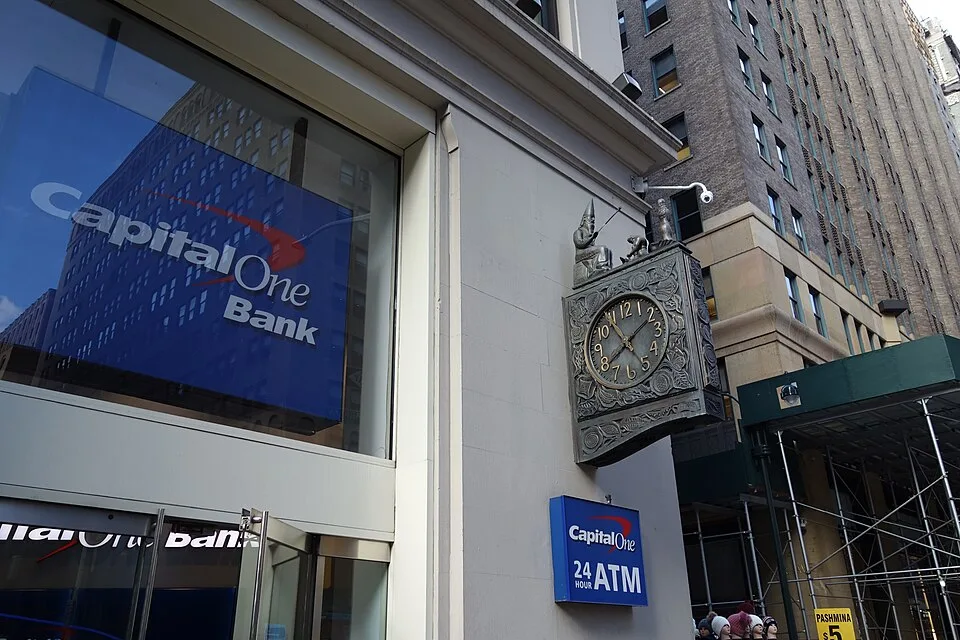
For the first time in history, a bank has formally tied money-laundering concerns to Donald Trump's family business. Capital One filed court documents Friday saying it closed more than 300 Trump Organization accounts in 2021 after a review by its anti-money-laundering team flagged suspicious transaction patterns. The Trump Organization's explanation for why this happened? Too much woke.
The Lawsuit That Accidentally Asked for the Receipts
Here's the thing about suing a bank for closing your accounts: the bank gets to explain why it closed your accounts. In court. On the record.
The Trump Organization and Eric Trump filed suit in March 2025 in a Florida federal court, alleging that Capital One shuttered their accounts because of the bank's 'woke' ideology and a desire to score political points after January 6th. Capital One, apparently unbothered, responded Friday by saying no, actually, it was the money-laundering review. The Guardian reports this is the first time a bank has formally linked anti-money-laundering concerns to Donald Trump's business empire.
Capital One has not accused the Trump Organization of money laundering. Let's be precise about that. What the bank has said, in a court filing, is that its AML team conducted months of analysis, flagged transaction patterns consistent with the types of activity identified in federal banking guidance, and then closed the accounts. That's a very careful, very specific way of saying something very loud.
300 Accounts, Months of Analysis, Very Routine Stuff
Capital One gave notice that it planned to close more than 300 Trump-affiliated accounts back in March 2021. Three hundred. That is not a rounding error. That is not one suspicious wire transfer getting flagged by an overzealous compliance officer. That is an institution-wide decision touching hundreds of accounts across an entire organization.
The filing states the closures were 'the result of months of analysis and a careful review by Capital One's AML team in accordance with bank policies and regulatory guidance.' According to The Guardian, Capital One told the court that the Trump Organization's claims of political pretext were 'misguided' and 'based on cherry-picked quotations unsupported by the full context' of the documents.
In other words: you sued us, we have the documents, and the documents say something different than what you're telling the judge.
This Is Not the First Bank to Have Thoughts About Trump's Money
Capital One isn't exactly alone in this neighborhood. Deutsche Bank's anti-money-laundering professionals reportedly flagged a set of Trump-related transactions, only to be ignored by executives. Deutsche Bank denied the report at the time. Back in 2019, during his first term, Trump actually sued both Capital One and Deutsche Bank to stop them from sharing his financial records with Congress during a Democratic-led investigation.
So the pattern here, if you're keeping score at home, is: banks flag things, Trump sues banks, banks end up in court having to explain what they flagged. Round and round it goes.
Now Trump has filed a separate suit against JPMorgan Chase on debanking grounds as well, as The Guardian notes. That case is also pending. Trump also signed an executive order in August 2025 barring what he calls discriminatory debanking, which is a genuinely convenient piece of policy to have on the books when you're simultaneously suing multiple large financial institutions.
The Executive Order That Just Happens to Cover the President's Lawsuits
Trump's anti-debanking executive order is worth sitting with for a second. The president of the United States, who is personally and through his family business suing banks that closed his accounts, signed an executive order making it federal policy to crack down on banks that close accounts for political or religious reasons.
This is the kind of thing that would get a private citizen investigated for witness tampering if the circumstances were slightly different. When a president does it, it gets a press release and a signing ceremony.
Conservatives have long claimed that major financial institutions deliberately target right-leaning customers and organizations. That may be true in some cases and worth scrutinizing. But 'we closed your accounts because our AML team spent months reviewing transaction patterns that match federal guidance for suspicious activity' is not a political discrimination claim. That's a compliance department doing its job.
What Capital One Is Actually Saying
The bank is not calling Trump a money launderer. That deserves repeating, because the distinction matters legally. What Capital One is arguing is far more narrow: that it had legitimate, documented, regulatory-compliant reasons rooted in anti-money-laundering procedures for closing those accounts, and therefore the lawsuit claiming political discrimination should be dismissed.
That's a defensive legal posture. It's also, if true, extraordinarily damning in its specificity. 'Transaction patterns' flagged by a dedicated AML team after months of analysis, consistent with federal banking guidance on suspicious activity, applied across 300-plus accounts. The bank isn't throwing vague aspersions. It is pointing to a documented institutional process.
The Trump Organization and Capital One both declined to comment to The Guardian. Eric Trump, who is named as a plaintiff alongside the organization, was similarly quiet. Presumably they're all talking to their lawyers, who are presumably reading these court filings very carefully.
The Dingo Take
You are supposed to believe that Capital One, one of the largest banks in America, looked at 300-plus Trump Organization accounts and thought: you know what, let's blow up this relationship, invite a federal lawsuit, and absorb years of litigation costs because we're feeling politically feisty after January 6th. That's the theory. That's what Eric Trump and the Trump Organization are asking a federal judge to accept.
The alternative theory, now stated on the record in a court filing, is that a team of anti-money-laundering professionals reviewed months of transaction data, found patterns consistent with federal guidance for suspicious activity, and did exactly what anti-money-laundering professionals are supposed to do. Which version sounds more plausible to you? Take your time.
The truly remarkable thing about this moment is that it took a lawsuit from the Trump side to produce it. They demanded their day in court. Capital One showed up with the paperwork. Now the first formal, on-the-record linkage between money-laundering review procedures and the Trump family business exists because the Trumps put it there. You genuinely could not write this and sell it as fiction. Nobody would buy it.


Comments