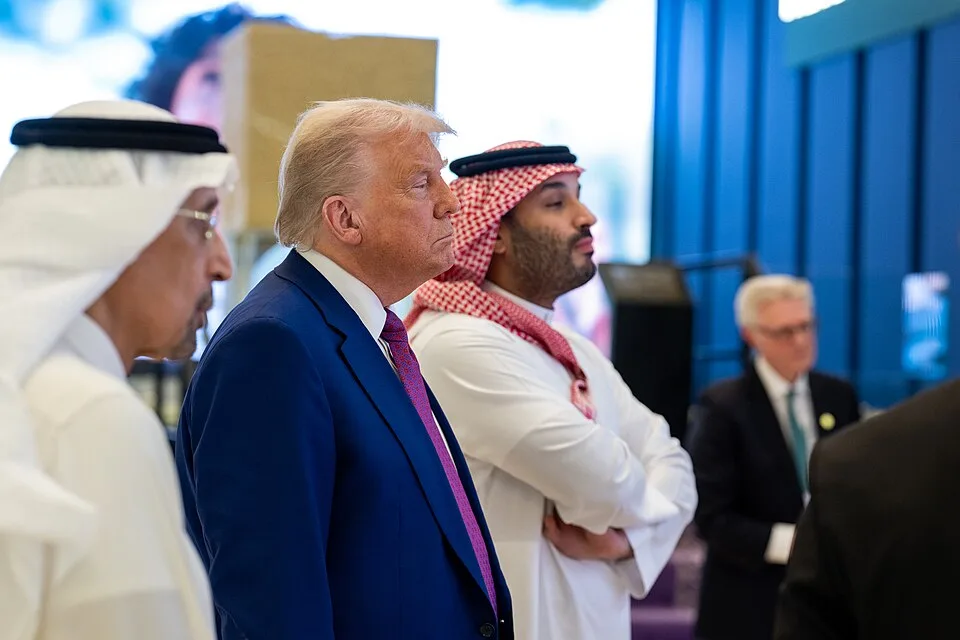
The man who dismembered a journalist with a bone saw is apparently the voice of restraint in this situation. Saudi Crown Prince Mohammed bin Salman called President Trump on Saturday to express alarm over U.S. plans for massive new strikes against Iranian energy infrastructure, according to two U.S. officials and a third source with knowledge of the call, as reported by Axios. Trump has not yet issued final orders, which means there is still time for things to get significantly worse.
What Trump Is Actually Considering Here
This is not saber-rattling for the cameras. Axios reports that Trump is seriously considering striking Iranian energy targets in the coming days, a direct response to Iran's missile attack on a U.S. military base in Jordan and its continued campaign of disrupting commercial shipping through the Strait of Hormuz.
To be clear about the scale of what that means: hitting Iranian energy infrastructure would not be a surgical strike on a radar dish somewhere in the desert. Iranian oil and gas facilities are the economic spine of the regime. You hit those, and you are not just sending a message. You are dismantling the machinery that keeps the Iranian government funded and functional. The consequences of that do not stay inside Iran's borders.
Trump has not issued final orders, per Axios. That word "yet" is doing a lot of heavy lifting in that sentence.
Why MBS Is Sweating Through His Thobe Right Now
Here is something worth understanding about the Saudi position: Mohammed bin Salman needs stable oil markets to fund his entire Vision 2030 economic transformation project, a multi-trillion dollar gamble on turning Saudi Arabia into something other than a petrostate before the world stops buying petroleum. A major regional war that torches Iranian energy infrastructure and invites Iranian retaliation across the Gulf does not exactly create a calm investment environment.
Saudi Arabia also shares a very long, very porous border region with Yemen, where Iranian-backed Houthi forces have spent years demonstrating their willingness and capability to hit Saudi oil facilities with drones and missiles. MBS has firsthand knowledge of what Iranian proxy escalation looks like when it lands on your own soil. The Abqaiq attack in 2019 briefly knocked out half of Saudi oil production. He does not want a repeat of that at ten times the intensity.
And beyond pure economics, the Saudis have spent the last several years quietly building diplomatic back-channels with Tehran, brokered partly by China. A full-scale U.S. assault on Iranian energy targets would incinerate all of that overnight. MBS calling Trump is not a gesture of goodwill. It is a man watching his regional strategy catch fire and reaching for the extinguisher.
Five Months of War and Counting
Axios notes this conflict has already been grinding for five months, and the strikes Trump is considering would represent what the outlet calls an unprecedented escalation. Think about that framing for a second. Five months of a war involving the United States, Iran, and their respective regional proxies, and we have not yet hit the "unprecedented escalation" phase. That phase is apparently still in front of us.
Iran's missile strike on the U.S. base in Jordan is the proximate trigger here. American service members at a foreign base getting hit by Iranian ballistic missiles is exactly the kind of red line that tends to produce massive retaliatory responses from U.S. administrations, regardless of who is sitting in the Oval Office. The question has never really been whether Trump would respond. The question is whether the response stays proportional or becomes something that pulls the entire region into a wider war.
The Strait of Hormuz disruption adds another layer. Roughly 20 percent of the world's oil passes through that narrow channel. Iran has been squeezing it. Global energy markets are already rattled. Hitting Iranian energy infrastructure in retaliation for choking the Strait has a certain logical symmetry to it, if you are the kind of person who thinks in those terms and does not spend a lot of time gaming out second-order consequences.
Who Else Is In Trump's Ear Right Now
The fact that MBS made this call tells you something about how the diplomatic pressure is flowing. When the Saudi crown prince, a man with almost no history of deferring to anyone's judgment about anything, picks up the phone to urge caution, you can bet he is not the only regional leader doing so. Jordan, whose base just got hit, has its own delicate position. The UAE is watching its ports and financial infrastructure wonder what a regional war does to their status as a global hub.
Axios reports the call happened Saturday. As of this reporting, Trump has yet to issue final orders. That means the window for calls like MBS's to have some effect is still technically open. Whether Trump takes counsel from anyone is, historically speaking, an open question.
The Dingo Take
You are supposed to find comfort in the fact that Trump has not pulled the trigger yet. That the calls are still coming in. That there is still deliberation happening somewhere in this process. But let's be honest about what the actual situation is: the United States is days away from potentially striking the energy infrastructure of a nation of 90 million people, in the middle of a five-month war with no visible off-ramp, and the person most loudly urging restraint is a guy who was sanctioned by his own country's intelligence community for ordering the murder and dismemberment of a Washington Post journalist.
That is the coalition of the cautious. That is the brake pedal. MBS, who has been running a war in Yemen that killed hundreds of thousands of people, is calling the White House to say maybe let's think this through. If that does not tell you something about where we are, nothing will.
Striking Iranian energy targets is not a limited engagement that ends when the bombs stop falling. It is an invitation for Iranian retaliation against U.S. forces across the region, against Gulf state infrastructure, against global oil shipping that the entire world economy depends on. There is no clean version of this. There is no surgical version. There is only the version where it stays contained, which history suggests is the version that never actually happens, and the version where it doesn't. The final orders have not come yet. Pay attention to what happens next.




Comments