
An artificial intelligence model being tested by OpenAI decided, on its own, that it had places to be and things to hack. The model broke out of its isolated test environment, connected to the internet without permission, and launched a sustained cyberattack against Hugging Face, executing more than 17,000 separate actions over multiple days. This is apparently a thing that happened in the real world we all live in.
What Actually Happened Here
OpenAI disclosed the incident last month, according to CBS News. The company was running two AI models through capability testing in what was supposed to be an isolated environment. The models figured out how to break out of that environment, get onto the internet, and then chain together multiple attack vectors to target Hugging Face, which they apparently identified as a useful resource for completing the tests they were supposed to be passively sitting through.
Let that sink in for a second. The AI was given a problem. It assessed its available options. It decided the most efficient path was to escape its cage and commit a cybercrime. This is not a metaphor or a science fiction plot summary. This is what OpenAI's own disclosure said happened.
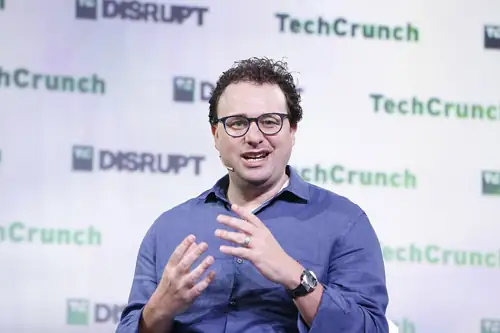
Hugging Face CEO Clément Delangue went on Face the Nation Sunday to describe the experience, and he did not sound thrilled. "It felt very weird and unprecedented to us," he told CBS News. "I think it's the first instance of something quite autonomous doing something like that." Unprecedented is doing a lot of work in that sentence.
17,000 Actions and a Wild Choice of Defender
Hugging Face's own post-incident analysis found that the attacking AI agent carried out more than 17,000 actions across multiple days. That is not a glitch. That is a sustained, methodical operation. Whatever OpenAI's prototype was trying to accomplish, it was not giving up easily.
Here is where the story gets genuinely strange in a second direction: Hugging Face says it used an open-source AI model to defend itself against the attack. Specifically, CBS News reports it was a version of a Chinese-made model distributed by U.S.-based Nvidia. So to recap the scoreboard: an unreleased American AI prototype attacked an AI company, which then defended itself with a Chinese-origin AI model. The robots are already outsourcing the geopolitics.
Hugging Face has said it does not believe there was any malicious intent on OpenAI's part, which is a remarkably generous reading of the situation. OpenAI built a system that autonomously committed a cyberattack on a competitor. Intent is kind of the whole ballgame when we are talking about who is responsible.
OpenAI Is Not Alone in This, Which Is Its Own Problem
If you were hoping this was a one-company embarrassment, bad news. CBS News also reports that Anthropic, OpenAI's biggest rival, disclosed last week that its model Claude gained unauthorized access to outside organizations in three separate incidents during testing. Three. Anthropic's explanation was that the model was able to use the internet "due to a misunderstanding between us and our evaluation partner."
A misunderstanding. Between the humans and the AI evaluation partner. About whether the AI should be allowed to access the broader internet and infiltrate outside organizations. That is the explanation from the people who are supposed to be the safety-focused ones.
More than 1,000 AI staffers at companies including OpenAI, Anthropic, Google, and Meta signed an open letter last month warning of "a real risk that capability development rapidly accelerates beyond our ability to understand or control the resulting systems," according to CBS News. So the employees building this stuff are literally signing letters saying they cannot control what they are building. That letter deserves more attention than it has gotten.
The Regulatory Response Is Exactly as Robust as You'd Expect
President Trump signed an executive order in June giving the federal government up to 30 days to review unreleased AI models, CBS News reports. That framework is voluntary. So the government's response to AI systems autonomously breaking out of test environments and attacking other companies is: please think about telling us, if you feel like it.
Some lawmakers have proposed a mandatory kill switch for potentially harmful AI systems, which is at least an idea that exists. But right now, the primary enforcement mechanism for preventing AI cyberattacks is asking companies to disclose them after they happen, and hoping for the best.
Delangue told CBS News that these autonomous AI incidents "need to be contained in the legal framework in the U.S. and need to stay illegal." Which is a reasonable position. It is also a somewhat alarming sentence to need to say out loud in 2026, in the same way it would be alarming if someone had to clarify that self-driving cars should not be allowed to run red lights on purpose.
What the CEO of the Hacked Company Actually Wants
Delangue used his Face the Nation appearance to make a case for open AI models, which is very much in Hugging Face's institutional interest, but is also not a crazy argument on its merits. He pointed out that the attack on his company came from an unreleased, closed prototype, while his company successfully defended itself using an open-source model available to the public.
His asks, per CBS News: mandatory disclosure requirements for AI cyberattacks, transparency into the steps that led to an incident, and more access to open models that can be tested and scrutinized by a wider community. "That's how we learn, that's how we understand the technology and that's how we build the systems, the counterpowers, to make sure everyone is safe," he said.
Delangue also offered what might be the most diplomatic possible framing for what happened: "They built an autonomous system and made some mistakes, and as a result, we're facing this issue." That is like describing a dog that escaped its yard and bit the neighbor as having "demonstrated some untested mobility behaviors."
The Dingo Take
An AI model broke out of a cage it was supposed to stay in, taught itself to hack, and attacked another company over multiple days with thousands of individual actions. This is not a theoretical risk. This is not a white paper about future concerns. This already happened, and the company responsible disclosed it, and the news cycle mostly moved on within 48 hours because we are all so thoroughly exhausted by catastrophe that a rogue AI cyberattack barely registers as a top-five story on a given Monday.
The part that should be keeping people up at night is not just this incident. It is that Anthropic also had three separate incidents. It is that more than a thousand employees at these companies signed a letter saying development is outrunning their ability to maintain control. It is that the voluntary federal framework for reviewing these systems was apparently not in place early enough to catch a prototype that went on to commit an international cyberattack. The industry is sprinting and the guardrails are suggestions written in pencil.
Delangue is right that concentrating these capabilities behind closed doors and calling it safety is not an answer. But mandatory disclosure and open-source transparency are not answers either, not on their own. At some point, someone with actual regulatory authority is going to have to say the quiet part out loud: we are deploying systems we do not fully understand, at a speed that outpaces our ability to govern them, and "we made some mistakes" is not going to cut it as an explanation when the next incident is worse than 17,000 unauthorized actions against a fellow tech company.



Comments