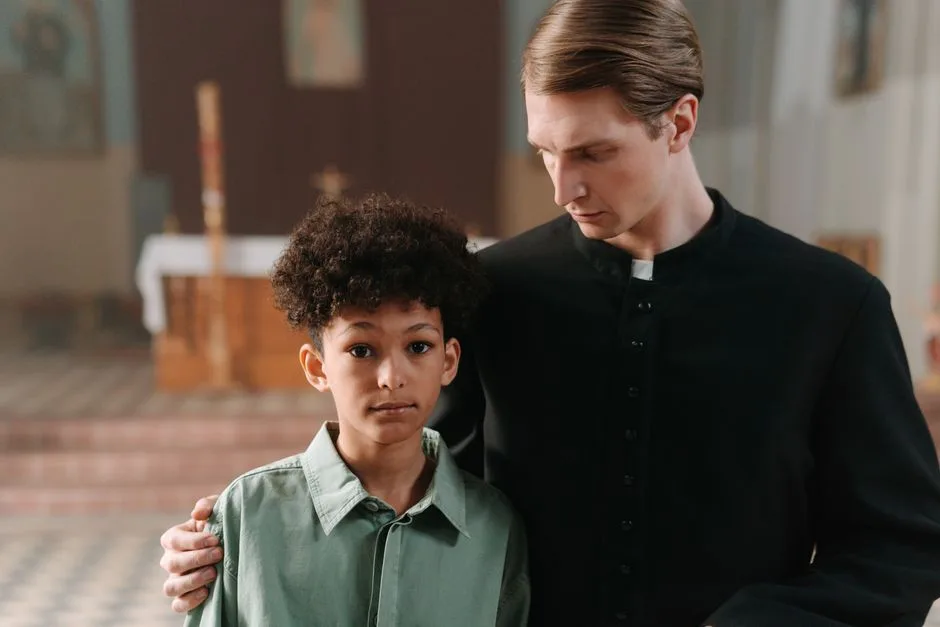
A bishop found out a man was sexually abusing his own children in 2011. He told no one. The abuse continued for six more years. This week, the Arizona Supreme Court said that was perfectly fine.
What Actually Happened to These Kids
The case, as the Guardian reports, centers on the children of Paul and Leizza Adams of Cochise County. Paul Adams admitted to sexually abusing his children to a bishop during confession in 2011. A second bishop presided over a formal church disciplinary hearing about it the following year. Two bishops. A formal hearing. Six more years of abuse.
The church, per a 2022 Associated Press investigation, followed its internal policy: keep it in-house. The second bishop called an LDS church helpline for guidance and was told not to contact police or child welfare officials. So he didn't. Nobody did.
It wasn't until 2017 that the Adams couple was arrested, and only because a video they made of themselves abusing their children turned up in New Zealand. Paul Adams died by suicide in jail awaiting trial. His wife Leizza received a 30-month sentence after pleading no contest to two felony counts of child abuse. The children, who were abused for years while adults who knew stayed quiet, then sued the church.
The Court's Reasoning, Such As It Is
The Arizona Supreme Court's unanimous ruling overturned a lower appeals court decision that had sided with the children. The appeals court had questioned whether the confession and disciplinary hearing even qualified as truly confidential communications. The state supreme court didn't love that reasoning and reversed it.
Vice-Chief Justice John Lopez wrote in the 23-page ruling that the First Amendment's religious freedom protections bar courts and juries from evaluating a clergy member's religious doctrine when deciding whether they should have reported abuse. The Guardian reports Lopez cited a 2020 U.S. Supreme Court ruling about the government's limited ability to interfere with internal church decisions.
Lopez did note that if a church submitted evidence obtained through "fraud" or "collusion," it would lose constitutional protection. He found no such evidence here. So: a bishop was told by a man in confession that he was raping his kids, called a church hotline, was told to stay quiet, and did. No fraud. No collusion. Just policy.
The LDS Church's Statement Is Something Else
The Church of Jesus Christ of Latter-day Saints issued a statement welcoming the ruling. "The abuse of a child or any person is a tragic betrayal of trust," it read. "The abuse at the center of this case was reprehensible, and the church has always condemned it."
It continued: "The church devotes significant resources to preventing abuse, helping victims, and encouraging reporting through safeguarding efforts around the world."
Encouraging reporting. That's the phrase they used. In the statement celebrating a ruling that explicitly protects their right not to report. The statement also said the church "has always been willing to help the victims in this case," which will be news to the victims, who had to sue the church to get here and lost.
This Is Part of a Bigger Pattern
Arizona isn't an island on this. The Guardian notes a parallel case in Washington state, where a law passed in 2025 would have required clergy to report sexual abuse of minors regardless of how they learned about it. The Catholic Church filed legal action against it. The law was permanently withdrawn in October 2025.
The "seal of the confessional" argument is old, and it shows up every time states try to close what is, to be blunt, a well-documented loophole for predators operating in religious communities. The argument is that confession only works if it's truly private. That the sacrament collapses without total confidentiality.
What the argument conspicuously skips is what happens to the child being abused while the church protects its sacramental integrity. Six years happened to these kids. Six years is what the seal of the confessional bought, in this specific, documented case.
Where This Leaves Mandatory Reporting Law
Most states have mandatory reporter laws that cover teachers, doctors, coaches, social workers, and others who regularly interact with children. Clergy are listed as mandatory reporters in many states, but nearly all of them include a confessional exemption. The practical effect is a structured gap in child protection that religious institutions have fought hard to keep open.
Arizona's ruling goes further by invoking the First Amendment to essentially say courts can't even weigh in on whether religious doctrine justifies silence. That's not a narrow ruling about one case. That's a roadblock against future litigation.
The children who brought this case are now adults. They lived with years of abuse that at least two church leaders knew about. They filed a lawsuit. They won at the appeals court level. And now they've lost at the top. The system worked exactly as designed.
The Dingo Take
You are supposed to believe this is about religious freedom. It is not about religious freedom. Religious freedom is the right to practice your faith without government interference. It is not immunity from consequences when you learn a child is being raped and decide your institution's doctrinal preferences outweigh calling the police. Those are different things. The Arizona Supreme Court just treated them as the same thing.
The LDS church called a hotline. The hotline said stay quiet. The bishops stayed quiet. A little girl and her siblings were abused for six more years. And when the court ruling came down protecting all of that, the church released a statement about how much it cares about victims. That's not irony. That's institutional confidence. They knew exactly what they were saying and exactly how it would land, and they said it anyway, because they won and winning means you don't have to pretend very hard.
Some version of this is playing out in every state that still has a confessional exemption, which is most of them. Children are telling parents, parents are confessing to clergy, clergy are calling internal hotlines, internal hotlines are saying don't involve the authorities, and the authorities are never called. The Arizona Supreme Court just made it harder to hold anyone accountable for that chain of events. If you're waiting for a religious institution to voluntarily close that gap, you will be waiting a very long time.



Comments