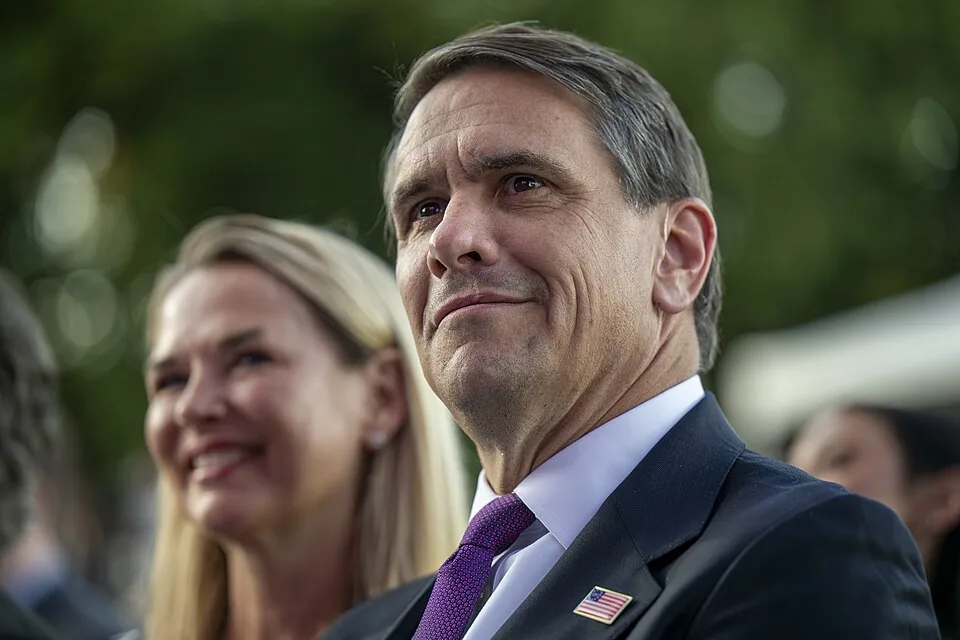
Todd Blanche, the man currently serving as America's top law enforcement officer on a temporary basis, just dismantled his own $1.8 billion slush fund and walked back IRS settlement terms he personally authorized in order to secure the votes to make himself permanent. That's right: he blew up his own policy to save his own career. Washington hasn't seen this kind of self-cannibalization since the buffet at a congressional retreat.
The Fund That Couldn't Survive Its Own Creator
Here's the sequence of events you need to understand. Back on May 18, Blanche issued a directive establishing the so-called Anti-Weaponization Fund, a $1.8 billion pool of money whose name alone should have raised every eyebrow in the building. Then he negotiated an IRS settlement that included sweeping tax protections. Then two Republican senators said they weren't comfortable with any of it. Then Blanche, staring down a Senate Judiciary Committee vote scheduled for Tuesday, quietly killed both.
Fox News reports that Blanche formally rescinded the May 18 directive on Sunday and clarified that tax protections in the IRS settlement apply only retroactively, not to future filings. In other words, the two most controversial things he did as acting AG are now gone, and the confirmation vote is back on track. The spokeswoman for Sen. John Cornyn of Texas confirmed a deal had been reached.
The Two Republicans Who Actually Said No
Give credit where it's due. Sens. John Cornyn of Texas and Thom Tillis of North Carolina held up Blanche's nomination long enough to extract real concessions. That is, technically, how the Senate confirmation process is supposed to work. You flag concerns. You get meetings. You get answers. You either accept them or you don't. In the current Republican caucus, where dissent from anything Trump-adjacent is treated roughly like heresy, two senators actually functioning as a check on an executive branch appointment qualifies as news.
Cornyn's office confirmed the agreement after what Fox News describes as weeks of meetings between Blanche's team and committee members. Blanche's own statement called them "good faith discussions," which is the kind of thing you say when you've just surrendered significant ground and want everyone to pretend it was collaborative.
What Exactly Was the Anti-Weaponization Fund?
That is a genuinely good question, and the fact that it's hard to answer is part of the problem. A $1.8 billion fund with a politically charged name, established by directive from an acting attorney general who was simultaneously trying to get confirmed, authorized to do what exactly? The name tells you the branding strategy. It does not tell you the mechanism, the oversight, the criteria for disbursement, or who was in charge of deciding what counted as "weaponization."
The fund appears to have been created without congressional authorization for the specific appropriation, which would explain why two Republican senators with functional legal backgrounds found it uncomfortable enough to block a confirmation over. Blanche's Sunday order wiping it from existence didn't come with a detailed explanation of why it was wrong, just the implicit acknowledgment that it needed to go if he wanted the job.
The IRS Settlement Problem
The tax protection piece is separately worth scrutiny. Blanche's original IRS settlement terms extended protections not just retroactively but to future filings, which would be an extraordinary thing for the Department of Justice to unilaterally hand out. The clarification he issued Sunday limits those protections to past conduct only.
This matters because it raises the obvious question of who was set to benefit from forward-looking tax protections negotiated by a DOJ under Donald Trump. The settlement details haven't been fully aired publicly, but the fact that a sitting acting AG felt the need to negotiate this, then walk it back to survive confirmation, suggests the original terms were aggressive enough that even senators from his own party couldn't sign off.
What Happens Tuesday
The Senate Judiciary Committee votes on Blanche's nomination Tuesday. With Cornyn's office confirming the deal is done, the expectation is that the nomination clears committee and heads to a full Senate floor vote. Blanche presumably wins that too, because Republican senators who aren't Cornyn or Tillis tend not to break ranks on Trump personnel picks regardless of the underlying record.
Blanche, of course, is the former personal defense attorney for Donald Trump who represented him through two federal criminal prosecutions before those cases were dropped after Trump returned to office. His path to acting AG was cleared when Matt Gaetz's nomination imploded spectacularly in late 2024. His path to permanent AG now apparently required dismantling his own policy architecture. It has been quite a run.
The Dingo Take
You are supposed to believe that this is normal confirmation process functioning exactly as designed. A nominee met with senators, addressed concerns, made adjustments, and earned his votes. Fine. Except what he adjusted was a $1.8 billion fund he created himself, using authority he wielded as the acting version of the job he was trying to make permanent. He spent months building something with DOJ resources and then traded it for his own confirmation in a single Sunday order. That is not a routine policy adjustment. That is a man liquidating his own decisions to close a deal on himself.
The deeper problem is that the fund existed at all. Someone at Main Justice thought it was a good idea to stand up a billion-dollar-plus operation called the Anti-Weaponization Fund, apparently without the kind of congressional buy-in that would have made it survivable. The name was always the tell. Serious policy doesn't need a campaign slogan in the title. The fund was a press release with a budget attached, and when two senators pushed back, there was apparently nothing underneath it worth defending.
Blanche will almost certainly be confirmed. He'll take the oath, shake some hands, and run a Justice Department that has already spent 18 months remaking itself in Trump's image. The fund is gone, but the instinct that created it isn't. The next version won't need its own line item. It'll just be called department policy.

Comments