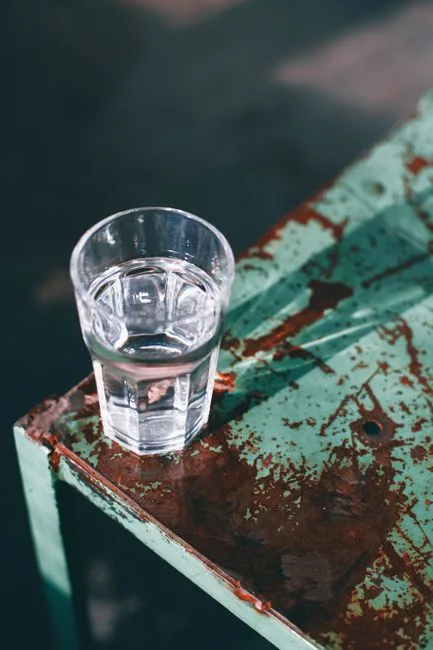
A man locked inside the Adelanto ICE detention facility in California filmed worm-like creatures swimming around inside his drinking water this week. His attorneys shared the footage with the Guardian. This happened weeks after a federal judge had already ordered the facility to provide clean drinking water.
What's Actually in the Bottle
The video comes from Carlitos Ricardo Parias, a Los Angeles man who has been detained at Adelanto for months. According to the Guardian, attorneys filmed him on a video call holding up a plastic bottle filled with water that visibly contained small, moving, worm-like creatures.
Parias described them in a statement, translated from Spanish by his attorney Margaret Hellerstein, as 'worms' or 'larvae.' He said the water came from jugs that staff distributed to residents for drinking, and that he poured the contaminated water into a bottle specifically to preserve it as evidence.
'This is what they give us: contaminated water, water with larvae, water with little black worms, which is slowly killing each one of us who are detained here,' Parias said in the statement. 'We need proper drinking water, better treatment.'
The exact source of the water and how widely it was distributed inside the facility remains unclear. What is not unclear is that a detained person filmed creatures swimming in what he was given to drink.
A Federal Judge Already Said Fix This
Here is the part that should make your jaw hit the floor. The Guardian reports that a federal judge had already ordered ICE, just weeks before this video surfaced, to ensure that people at Adelanto had '24-hour access to clean, potable drinking water.' That order came in response to a class-action lawsuit filed by detained people alleging they were denied sufficient food, clean water, and proper medical care.
The class-action complaint said the tap water at Adelanto was 'discolored and tastes odd, raising serious concerns about its potability,' and that water provided in coolers 'often appears dirty and regularly runs out for hours at a time.' These were not new complaints. Lawyers with the Coalition for Humane Immigrant Rights told the Guardian that the video raised direct questions about whether the government was even complying with the court order.
So to recap the timeline: people sued over dirty water, a judge ordered clean water, and then a man on the inside filmed what appear to be living organisms in his drinking water. Progress.
DHS: It's Fine, Actually
The Department of Homeland Security did not respond to repeated questions about the specific video, according to the Guardian. A spokesperson offered only that the facility draws its water from the city of Adelanto and provides 'the same water used by residents and businesses in the area.' Geo Group, the private prison company that actually runs the facility, did not respond to inquiries at all.
In a court filing made this same week, lawyers for DHS argued that drinking water at Adelanto had been 'sampled and tested at various distribution points by an independent third party and determined to be clean per FDA standards.' DHS has also argued in separate filings that Geo Group, as a contractor, bears responsibility for conditions at the facility. Geo Group is not a defendant in the lawsuit, so that argument lands somewhere between convenient and useless.
Rebecca Brown, supervising attorney at Public Counsel, one of the organizations that brought the class-action case, told the Guardian her team was actively looking into the footage. 'The video is very disturbing,' she said. 'Detained individuals have long complained about the quality of the water. We've heard of water being murky, tasting terrible, having unknown things in it.'
Who Is Carlitos Parias
Parias is not an anonymous face in a detention facility. He is a TikTok creator who goes by Richard LA, and the Guardian reports he drew national attention last October after he was shot by an ICE agent and then charged with assault. A federal judge dismissed that charge. He was then transferred to ICE custody and is now facing deportation.
His attorney, Hellerstein, did not mince words when she saw the footage. 'When I saw the video, I was horrified and disgusted. I felt sick to my stomach,' she told the Guardian. 'This is video evidence. They can't just sweep it under the rug.'
The footage has since spread widely among immigration attorneys and advocates. Lawyers involved in the class-action lawsuit confirmed they had seen it, though they said they had not yet heard direct accounts from other residents about the specific contaminant in this particular bottle.
The Dingo Take
A federal judge ordered clean water. Weeks later, a detainee filmed worms in his drinking water. The government's response was to say the water meets FDA standards and point the finger at a private contractor that nobody can sue. That is not a rebuttal. That is three parties in a circle, each pointing at the other, while a man in a detention cell holds up a bottle of something alive.
The DHS dodge here is worth sitting with for a second. City water, they say. Same as the residents of Adelanto. Fine. If that is true, it still does not explain what is swimming around in that bottle, or how it got there between the municipal source and a detained man's hands. 'We get our water from the city' is not an investigation. It is a press release written to end a conversation.
Adelanto has been in litigation over its conditions for years. People inside have been saying the water is wrong for years. A judge agreed and issued an order. And somehow, despite all of that, the worms showed up anyway. At some point you have to stop calling this a series of oversights and start calling it what it is: a detention system that is structurally indifferent to whether the people inside it have safe drinking water, because those people cannot vote, cannot easily speak to the press, and until someone films evidence on a video call, cannot make anyone care.




Comments