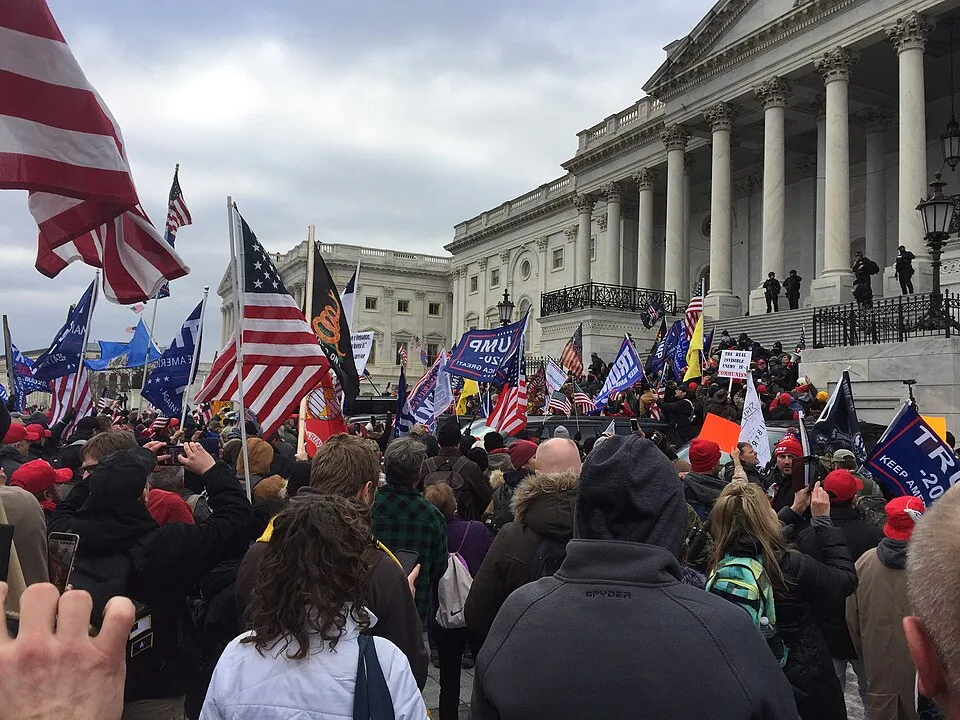
The people who stormed the United States Capitol on January 6, 2021, assaulted police officers with flagpoles, bear spray, and their own bodies, and then spent years claiming they were peaceful tourists, have now filed a class action lawsuit claiming the police hurt them. The Justice Department moved Monday to dismiss the case. Not for the reason you're thinking, though that reason also exists.
The Lawsuit Nobody Should Be Surprised Exists
According to CBS News, a group of January 6 defendants filed a class action lawsuit under the Federal Tort Claims Act alleging that they suffered injuries due to "excessive police force" on January 6, 2021. That is the day they were, to refresh your memory, attempting to stop the certification of a free and fair presidential election by force.
The lawsuit is exactly what it sounds like. People who attacked police officers are now suing because the police officers responded. This is the legal theory being advanced in an American courtroom in the year of our lord 2026. Write it on a wall somewhere so future generations know what this era felt like.
The Statute of Limitations Would Like a Word
Here is where it gets almost funny. The Justice Department's move to dismiss the case has nothing to do with the merits, or the staggering audacity of the premise. It's simpler than that. CBS News reports that under the Federal Tort Claims Act, plaintiffs have two years to bring a lawsuit. Since the alleged injuries happened on January 6, 2021, the deadline to sue the federal government was January 6, 2023.
The earliest claim filed by any of the named plaintiffs, per the DOJ's filing, was dated July 29, 2025. That is two and a half years past the deadline. The DOJ noted bluntly that the plaintiffs "knew that they were injured and knew who injured them, but they instead chose to wait until well past the deadline to file the claims."
Also, CBS News reports the DOJ flagged that many of the submitted forms were "only partially completed," with some lacking signatures and supporting documentation. So the lawsuit is late, incomplete, and unsigned. Sturdy legal work from the victims of excessive force who were definitely just standing there.
The Anti-Weaponization Fund Lurking in the Background
There is a related subplot here that is worth tracking. CBS News reports that on Sunday evening, Acting Attorney General Todd Blanche issued an order rescinding a $1.8 billion "anti-weaponization" fund that had been created to compensate Trump allies. The name alone should tell you everything about the intellectual seriousness of the project.
Blanche's order does not include any language barring government restitution or payouts to convicted January 6 rioters, per CBS News. So even as this particular lawsuit gets tossed on procedural grounds, the door to compensating riot participants through other channels remains open. A former DOJ lawyer told CBS News that Blanche's unilateral rescission of the fund has no legal effect anyway and does not prevent it from being revived later. The whole thing is a shell game, and the prize inside might still be your tax dollars.
What the DOJ Is Actually Doing Here
Let's be precise about this: the Trump-era Justice Department, the same institution currently run by the president's personal lawyer, is moving to dismiss a lawsuit filed by January 6 defendants. That sounds like a contradiction until you read the filing, which is a fairly standard statute-of-limitations argument. The department didn't dismiss the case because the theory is absurd. It dismissed it because the paperwork was bad and four years late.
The government's position is purely procedural. It is not making any moral argument about whether people who assaulted cops should get to sue for being pushed back. It is just saying, correctly, that you had two years and you blew it. Whether that's the DOJ doing the right thing for the wrong reasons, or just doing routine case management, probably depends on how charitable you're feeling today.
The Dingo Take
You are supposed to look at this lawsuit and see aggrieved citizens seeking justice through legitimate legal channels. What you actually see is the logical endpoint of five years of victim mythology built around a mob that left 140 police officers injured. The January 6 defendants have been called hostages, political prisoners, patriots, and heroes by the President of the United States. Now some of them are in court arguing the cops were too rough. At some point the bit has to end.
The fact that this case gets dismissed on a technicality is almost a shame, in a perverse way. A proper hearing on the merits would have required someone to stand in front of a judge and explain, with a straight face, why people who used flagpoles as weapons have a civil claim for excessive force. That would have been something to watch. Instead it dies in a pile of unsigned forms and missed deadlines, which is honestly a fitting end.
The anti-weaponization fund angle is the part that should keep you up at night. Blanche rescinding it means nothing, legally, and a former DOJ lawyer told CBS News it could just come back. The question of whether January 6 participants get paid out of federal coffers is not settled. The lawsuit was the sideshow. The fund is where the real money might actually flow. Pay attention to that one.



Comments