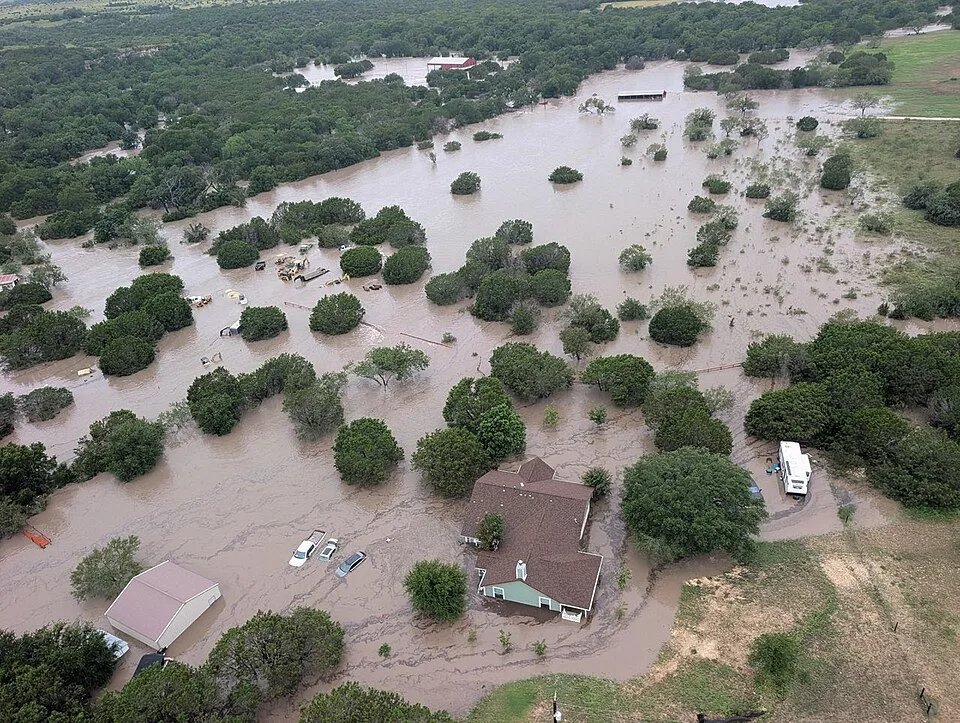
One hundred and thirty people died in Texas Hill Country flooding. Then the state actually did something about it. When the floods came back this July, the death toll was three. That is what it looks like when a government learns a lesson instead of just scheduling a prayer vigil.
What Actually Happened
According to Axios, newly installed warning sirens in Texas Hill Country were directly credited with alerting residents during July's flooding events, which killed three people. The previous catastrophic floods in the same region killed more than 130. That is not a minor improvement. That is the difference between a mass casualty disaster and a terrible but survivable event.
The sirens were installed specifically in response to the prior catastrophe. Someone looked at the body count, decided it was unacceptable, and put metal and electronics in the ground. Simple as that. Or rather, it should be simple. The fact that it counts as news in 2026 tells you everything about how rarely this actually happens.
The Bigger Picture Nobody Wants to Talk About
Axios reports that climate adaptation across the U.S. is shifting from planning documents and committee meetings into actual, physical, real-world action. Heat waves, droughts, wildfires, floods, and hurricanes are no longer theoretical future problems that give us time to commission another study. They are the present tense.
Here's the thing that gets buried in these stories: adaptation is not a concession. It is not an admission that the fight against emissions is lost. Even in a world where every country somehow hit every climate target tomorrow, the carbon already baked into the atmosphere guarantees decades of increasingly punishing weather. Communities that ignore this are not being optimistic. They are being reckless with human lives.
Officials at multiple levels of government are now, according to Axios, investing in infrastructure explicitly designed to reduce future damage. That framing matters. This is not disaster relief. This is disaster prevention. It is the difference between building a levee and showing up with buckets.
The Math is Not Complicated
Three deaths versus one hundred and thirty. Spend a moment with that ratio. Whatever those sirens cost to design, procure, install, and maintain, it is a fraction of the economic cost of a mass casualty flood event, to say nothing of the human cost, which does not fit in a budget spreadsheet at all.
This is the core argument for climate adaptation infrastructure that keeps getting drowned out by the culture war noise around climate policy. You do not have to believe anything about the causes of extreme weather to understand that extreme weather is happening and that warning systems save lives. The sirens do not care whether you voted for. They just make noise when the water is coming.
So Why Does This Feel Rare Enough to Be News?
Because it is. American infrastructure investment, particularly on anything carrying the word "climate" anywhere near it, has spent the better part of a decade getting chewed up in partisan fights that have nothing to do with whether sirens work. The previous federal administration spent considerable energy trying to scrub the word "climate" from government documents while communities downstream were watching their towns wash away.
The fact that Texas, a state whose political leadership has been openly hostile to most climate-related policy, is now getting credited for installing warning systems that saved lives is genuinely complicated. It suggests that when the political cost of inaction becomes visible enough and local enough and deadly enough, even resistant governments will eventually move. One hundred and thirty funerals will do that.
What This Needs to Scale
A single success story in Texas Hill Country does not constitute a national strategy. Axios notes that the broader trend is communities moving from planning to action, which is encouraging, but the pace is nowhere close to matching the speed at which climate extremes are intensifying.
The infrastructure required for serious climate adaptation, flood barriers, early warning networks, heat resilience in buildings, drought-resistant water systems, is expensive and politically unsexy. It does not ribbon-cut well. Politicians do not get photo opportunities in front of a siren mounted on a pole the way they do in front of a new stadium. So it gets underfunded, delayed, and deprioritized right up until the moment people start dying and someone has to explain why the warning system was still in the planning phase.
The Dingo Take
You are supposed to believe that doing something about climate change is a radical political act. That is the frame the last decade of American politics has handed us, and it is completely insane when you hold it up against a story like this one. Three people died instead of one hundred and thirty. Because someone put up sirens. There is no version of that fact that is partisan.
The cruel irony sitting at the center of the climate adaptation conversation is that the communities getting hit hardest are often the ones whose political representatives have done the most to obstruct action. Rural Texas is not a bastion of Green New Deal enthusiasm. It is also now a place where flood sirens work and people are alive because of it. That tension should be uncomfortable for everyone involved, and it should be loud.
What this story does not have is a villain you can point at cleanly, and that makes it harder to write and harder to share. The villain is inertia. It is the decade of meetings that happen before a single pole goes in the ground. It is every local official who looked at the weather getting worse and decided the political cost of acting was too high. One hundred and thirty people paid that political cost for them. Three more paid it in July. The question is how many more communities need a catastrophic first flood before they get the sirens they should have had already.



Comments