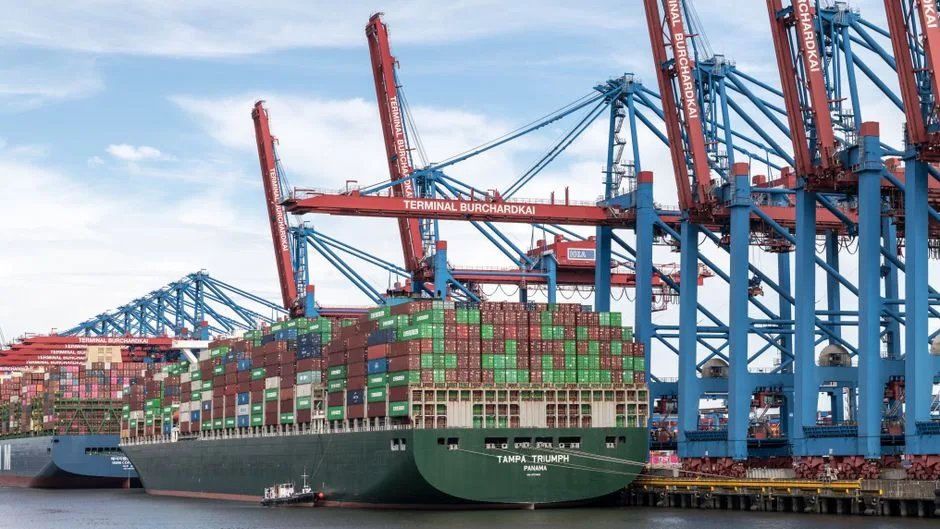
Donald Trump has unveiled his newest tariff justification, and it's a real gem: stopping forced labor around the world. China, the country most associated with forced labor in global supply chains, got a pass. The EU, which passed a law in 2024 explicitly banning imports made with forced labor, got hit. Nearly 1.4 million American prison workers apparently weren't part of the briefing.
A New Excuse, Same Old Numbers
Here's the thing about Trump's latest tariff regime. According to Nobel Prize-winning economist Joseph Stiglitz, writing in The Guardian, the new tariffs track almost exactly with the ones Trump previously imposed based on bilateral trade deficits. The same countries, the same rough proportions, the same basic targets — just with a shiny new rationale stamped on top.
Are we supposed to believe that bilateral trade imbalances and forced labor abuses are just accidentally, perfectly correlated? That the countries America buys the most from also happen to be the ones running sweatshops? What a coincidence. What an extraordinary, legally convenient coincidence.
This comes after the Supreme Court already struck down Trump's previous tariffs. The administration then imposed 150-day temporary tariffs — which courts also deemed illegal — and those expired in late July, conveniently just in time for this new round, fresh off an 'investigation' into other countries' labor practices. The legal strategy here appears to be: keep throwing tariffs at the wall until something sticks, or until enough businesses just give up and comply.
China Did Forced Labor Wrong, Apparently
If you are designing a tariff regime specifically to punish forced labor, and your single largest concern in global trade is China, you might think China would be at the top of the list. You would be wrong.
As Stiglitz notes in The Guardian, China has largely been given a pass under this new framework. The reason isn't subtle. China controls rare earth minerals and critical supply chains, and when Beijing decides to fight back, it can hurt. Trump, for all his strongman posturing, consistently backs down when the other side has real leverage. Economists have started calling this pattern TACO: Trump Always Chickens Out. The administration didn't even try to pick the fight with Beijing this time.
So the country most credibly accused of state-sponsored forced labor skates through, while democratic trade partners who have actually tried to address the problem get tariffed. This is the anti-forced-labor policy. This is what winning looks like.
The EU Already Did What Trump Claims to Want
The European Union part of this story is almost too on-the-nose to be real. In 2024, the EU passed the Corporate Sustainability Due Diligence Directive, which explicitly banned the importation of goods produced with forced labor, including goods made by subcontractors anywhere in a supply chain. The EU, in other words, already did the thing Trump is claiming to want countries to do.
So Trump tariffed them anyway.
But wait, there's a bonus layer. According to The Guardian's reporting on Stiglitz's analysis, US Commerce Secretary Howard Lutnick previously complained that the EU's forced labor import ban placed 'unnecessary negative burdens' on American companies, and warned the US was prepared to use 'all conceivable trade tools' in response. So the official position of the Trump administration was, at one point, that the EU cracking down on forced labor was itself a trade threat to American businesses. Now the official position is that the EU isn't doing enough about forced labor. Both of these things cannot be true. One of them was always a lie.
About Those 1.4 Million American Workers
Here is where the story gets genuinely uncomfortable, and not just for the obvious political reasons. According to research by economist Michael Poyker, cited by Stiglitz in The Guardian, nearly 1.4 million US prisoners were employed in 2005, with roughly 600,000 working specifically in manufacturing — representing 4.2% of the total US manufacturing workforce at the time. That number has not meaningfully improved.
Less than a quarter of US states have laws explicitly forbidding forced prison labor. The United States has 5% of the world's population and accounts for roughly a quarter of the world's prisoners. The 13th Amendment to the Constitution, the one that abolished slavery, contains a carve-out that explicitly permits involuntary servitude as punishment for crime. That loophole has been exploited continuously since Reconstruction.
The list of American companies with prison labor somewhere in their supply chains, as The Guardian reports, includes Burger King, Cargill, and Walmart. Under the logic of Trump's own tariff framework — that countries enabling forced labor deserve trade penalties — reciprocal tariffs on goods from US states with active prison labor programs would be entirely justified. Stiglitz makes exactly that point. Nobody in the administration appears to have read that far.
The Scoreboard on Tariffs, Two Terms In
Let's check in on how the tariff wars are actually going, setting aside all the pretexts and justifications. According to The Guardian's reporting on the latest economic data, US manufacturing jobs have declined by 75,000 since Trump's second inauguration, after rising under President Biden. The reshoring manufacturing boom Trump has been promising since 2016 has not materialized. It has gone in reverse.
The US trade deficit in goods has actually increased during Trump's second term, reaching a record high of $1.24 trillion. This is not a surprise to economists. Trade deficits are driven by macroeconomic factors like national savings rates, and Trump's record-breaking fiscal deficits make America a net capital importer almost by definition. Tariffs don't fix that. Tariffs are, as Stiglitz puts it flatly, a distortionary tax paid by American consumers and businesses.
None of this has changed the political calculus, because the economic damage is diffuse and hard to blame on a single cause, while the rhetorical wins are immediate and loud. That's the whole game.
The Dingo Take
You are supposed to believe that a man who exempted China from his anti-forced-labor tariffs, punished the EU for passing an anti-forced-labor law, and has never once mentioned the 1.4 million people working in American prisons is genuinely, sincerely concerned about forced labor. That is the ask. That is what the press conferences and the Commerce Department statements and the 'investigations' are all designed to get you to accept.
The actual goal, as it has always been, is to grab a larger share of global trade value by using tariffs as a weapon while wrapping them in whatever legal or moral language is currently available and hasn't been fully struck down in federal court yet. Trade deficits, national security, reciprocity, fentanyl, forced labor — the justification rotates, the tariff list barely changes. When the courts kill one version, the administration invents another. When the target country can actually fight back, the target quietly changes. This is not trade policy. It is improvised extortion with a law firm on retainer.
The most damning part isn't even the hypocrisy, though the hypocrisy is spectacular. It's that it's working, slowly, on the margins. Businesses are complying. Governments are negotiating. The EU, which had every tool and every moral argument to hit back hard, mostly exhaled in relief that it wasn't worse. Trump has correctly identified that most institutions, governments, and corporations will absorb punishment longer than they will absorb the uncertainty of fighting back. That calculation will hold right up until the moment it doesn't, and by then the damage will be substantial and the precedent will be set. Great deal.


Comments