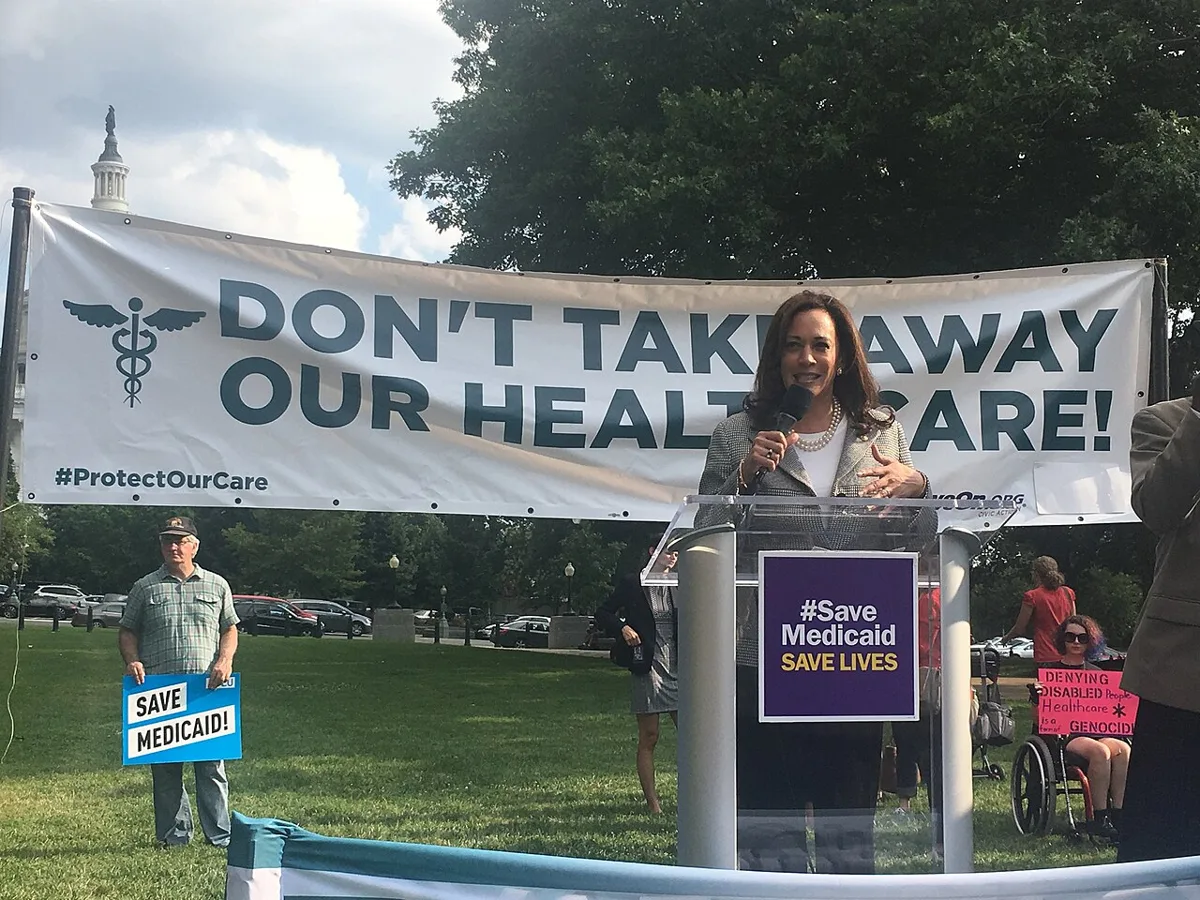
Months after the Trump administration quietly dropped a rule forcing 42 states and Washington D.C. to make poor people prove they deserve healthcare, the Senate Budget Committee finally decided to ask some experts whether this was, in fact, a good idea. Spoiler: the experts were not enthusiastic. The hearing Tuesday morning was the kind of Washington theater that happens when a policy is already baked in and the people it will hurt are already sweating.
What the Rule Actually Does
Here's the thing you need to understand before the spin machine gets to you. According to The Hill, the Trump administration issued a new rule directing 42 states and the District of Columbia on how to implement Medicaid work requirements, the centerpiece of the so-called One Big Beautiful Bill's healthcare cuts. That means the overwhelming majority of states running Medicaid programs now have federal instructions telling them to add an eligibility gatekeeping layer before low-income residents can access coverage.
In plain English: if you are poor enough to qualify for Medicaid but the state decides you haven't documented enough hours of work, job training, volunteering, or other approved activity, you can be dropped. Or never enrolled in the first place. The rule doesn't make anyone healthier. It makes the paperwork harder. That is the entire mechanism by which it saves money on paper.
Work requirements for Medicaid are not a new idea. They were tried during Trump's first term, blocked in federal court, and have been a conservative policy priority ever since. The research on what they actually do is fairly consistent: they don't move people into jobs at any meaningful scale, and they do move people off health insurance. That research existed before this rule was issued. The administration issued the rule anyway.
Why a Budget Committee Is Holding This Hearing
The Senate Budget Committee is not the Senate Health Committee. That distinction matters. This hearing landing in the Budget Committee's hands is a tell about exactly how the GOP has framed Medicaid cuts from the start: not as a healthcare policy debate, but as a spending problem to be solved. Medicaid is not a budget line item with a human face in this framing. It is a number to be reduced.
What that framing conveniently sidesteps is the other side of the ledger. When people lose Medicaid coverage, they do not become healthier or more employed. They show up in emergency rooms without coverage, they skip preventive care until a condition becomes a crisis, and they sometimes die from things that were entirely treatable. These outcomes cost money too, they just cost it somewhere the federal spreadsheet doesn't have to acknowledge directly.
Bringing health experts in to testify is, on one level, the system doing what it is supposed to do: hearing from people who know things before implementing policies that affect millions. On another level, in August 2026 with the rule already issued and guidance already flowing to 42 states, it has the distinct energy of asking your structural engineer whether the load-bearing wall was important after you've already knocked it down.
Who Is Actually in the Crosshairs
Medicaid covers roughly 80 million Americans. These are not, as a rule, people with a lot of political power. They are low-income adults, children, pregnant women, people with disabilities, and elderly people in nursing homes whose costs have exhausted their savings. The work requirement piece targets non-elderly, non-disabled adults specifically, but the administrative burden of proving compliance has a well-documented history of sweeping up people who are actually exempt and just couldn't fill out the paperwork correctly.
Arkansas ran the only Medicaid work requirement program that actually went into effect at scale before courts shut it down, back in 2018. A Georgetown University Health Policy Institute analysis of that program found that over 18,000 people lost coverage in just a few months, and virtually none of them lost it because they weren't working. They lost it because they didn't know about the new requirement, couldn't access the online reporting portal, or faced other bureaucratic barriers. That's not a bug the Trump administration has promised to fix. That is, functionally, the feature.
The states now being handed guidance on implementation include some with some of the highest Medicaid enrollment rates in the country. The ripple effects, if the rule survives legal challenges and gets fully implemented, will not be subtle.
The Legal Road Ahead Is Messy
Work requirements have not had a great time in federal court, historically. During Trump's first term, the D.C. Circuit Court of Appeals struck them down twice on the grounds that the administration hadn't adequately considered whether the requirements actually furthered Medicaid's core objective of providing healthcare coverage. The answer, the courts found both times, was obviously no.
This new rule has been written with more care, specifically to address the procedural objections that sank its predecessors. Whether that is enough to survive review is genuinely unclear. What is clear is that legal challenges are coming, and the states that move fastest on implementation are going to be caught in the middle of a legal fight that could stretch years.
In the meantime, real people are going to be navigating real bureaucratic requirements, and some of them are going to fall through the cracks before any court weighs in. That is the part of this that never quite makes it into the budget math.
The Dingo Take
You are supposed to believe this is about encouraging self-sufficiency and getting people back to work. Set aside for a moment that the vast majority of Medicaid recipients who can work are already working, a fact documented by the Kaiser Family Foundation repeatedly and not seriously disputed by anyone who has looked at the data. Set aside that the rule doesn't create jobs, doesn't provide childcare, doesn't fix transportation deserts, and doesn't do a single thing to address the structural reasons people cycle in and out of low-wage employment. Even on its own terms, as a work promotion mechanism, this policy does not work. It has never worked. What it does do, reliably, is reduce Medicaid enrollment.
That is the whole thing. That is the policy. Dress it up in whatever bootstrap language you'd like, the mechanism is administrative burden as a coverage reduction tool. And the Senate Budget Committee is now holding a hearing about it after the fact, which is a little like the Titanic's maritime review board scheduling a seminar on iceberg detection for the following Thursday.
What would actually be worth watching in this hearing is whether any Republican senator engages seriously with what the health experts are saying, or whether this is political theater designed to generate a quote about fiscal responsibility while the rule does its quiet work across 42 states. History suggests the latter. Prove us wrong.




Comments