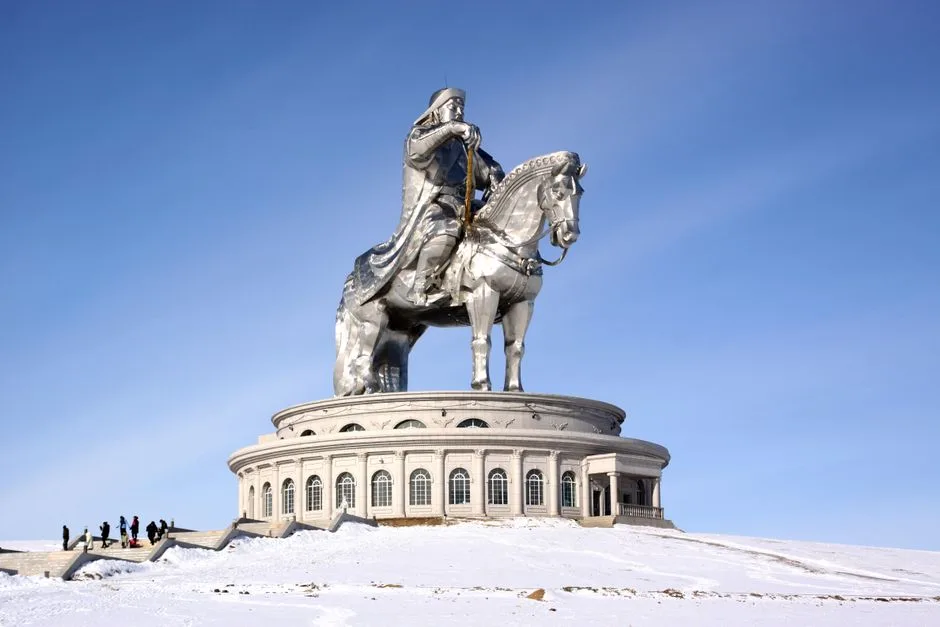
Donald Trump keeps a document asserting he is the most powerful person to ever walk the earth, ranked above Attila the Hun, Genghis Khan, Napoleon, Stalin, and Hitler. He also cannot stop publicly complaining that judges he personally appointed are hurting the country and that his own attorney general nominee dropped a fund he really, really liked. The most powerful man in history, ladies and gentlemen.
The Man Who Does Both Jobs Badly
According to the Guardian's David Smith, Trump has pioneered an entirely new mode of governance: running the country while simultaneously providing color commentary on running the country. Sports figures go from the arena to the booth after their career ends. Trump refuses to wait.
He is president, narrator, and critic all at once. His public statements are riddled with phrases like "people are saying," "I hear," and "some people think" — the verbal tics of a pundit, not a chief executive. When things get difficult, instead of making decisions, he explains what he thinks about the decisions being made around him.
It would be charming, almost, if he weren't the guy with the nuclear codes.
The Reflecting Pool Is Now a Monologue
The Lincoln Memorial reflecting pool turned green with algae this summer, which is a maintenance problem. Trump turned it into a crime thriller. Per the Guardian, he posted on Truth Social that visitors should "look for yourselves at the VANDALISM" and claimed the material was "being cut with a knife or a box cutter, for all to see." There is no evidence of any such thing.
Then his own US attorney, Jeanine Pirro, moved to drop charges against a former Olympian connected to the case. Trump's response, delivered from the Oval Office, was that Pirro "choked" and "folded like an umbrella." He then blamed Barack Hussein Obama, Joe Biden's $58 million in spending, and the Potomac River, which he described as "putrid" twice in the same breath.
He is the president. The reflecting pool is a federal responsibility. He has the authority to direct its maintenance, to fire people, to order investigations. Instead he went on Truth Social and invented a knife attack.
The Epstein Files, Handled With Maximum Chaos
When pressure mounted over his administration's handling of the Jeffrey Epstein files, the Guardian reports, Trump did not take the restrained route his predecessors might have chosen. He did not issue a statement and let the Justice Department handle questions. He launched himself directly into the news cycle.
He attacked critics. He dismissed the concerns. He expressed sympathy for people who had "innocently met" a convicted pedophile. He told supporters to move on. This is the executive style of a man who genuinely believes the best response to any scandal is to produce a louder, more confusing scandal immediately adjacent to it.
So far, it has worked more often than anyone should be comfortable admitting.
Guest Analyst Laments Policy He Totally Controls
The attorney general situation is where the commentator-in-chief bit really breaks the absurdity meter. Trump's AG nominee Todd Blanche agreed to drop Trump's proposed $1.8 billion "anti-weaponization fund" to win over Republican senators John Cornyn and Thom Tillis, according to the Guardian.
Trump's response was to express his feelings like a frustrated sports analyst watching a coaching decision he disagrees with from the booth. "All I know is that Todd Blanche is great," he told reporters, per the Guardian. He then said the fund was "very popular among many quarters" and lamented that people who spent years in prison deserved "some solace." He added, for good measure, that he personally was treated badly but did not participate in the fund himself.
This is the man who nominated Blanche. This is a fund his own administration created. The Senate is controlled by his own party. At no point did it seem to occur to him that he could, as president of the United States, have opinions about this before the deal was done.
Most Powerful Man Alive Sad His Judges Won't Listen
Here is the document. During an interview with New York Times reporters Maggie Haberman and Jonathan Swan for their book Regime Change, Trump reportedly showed off a ranking that places him as the most powerful person to ever exist, above Stalin, Mao, Napoleon, Genghis Khan, and Hitler.
Also, according to the Guardian: when the Supreme Court ruled against him on tariffs, Trump publicly complained "They were appointed by me, and yet have hurt our Country so badly!" The man ranked above history's most brutal conquerors is posting sad reactions to court losses like someone whose fantasy football pick got benched.
The Guardian frames this as a paradox, and it is, but it is also just a very specific kind of American television personality. He wants the drama of power without the accountability of exercising it. The commentary is the point. The commentary has always been the point.
The Dingo Take
You are supposed to believe this is a man who demands total loyalty, crushes opposition, and bends institutions to his will. That is the brand. That is what his supporters love. And then he goes on Truth Social to invent a knife attack at a reflecting pool and complains on live camera that his own attorney general nominee didn't do what he wanted.
The Guardian's piece nails something real here. The constant commentary is not confidence. It is the opposite. A secure executive with actual control does not need to narrate every setback in real time. Trump fills the silence because silence is where accountability lives, and he has spent his entire political career running from accountability at a dead sprint. If he keeps talking, no single story can stick. It is a media strategy that happens to be completely incompatible with governing a country.
He will probably be on Fox and Friends within three years, calling in to rate whoever comes after him. He will absolutely have opinions. He will describe them as a disaster. He will say it was putrid. He will say it twice.



Comments