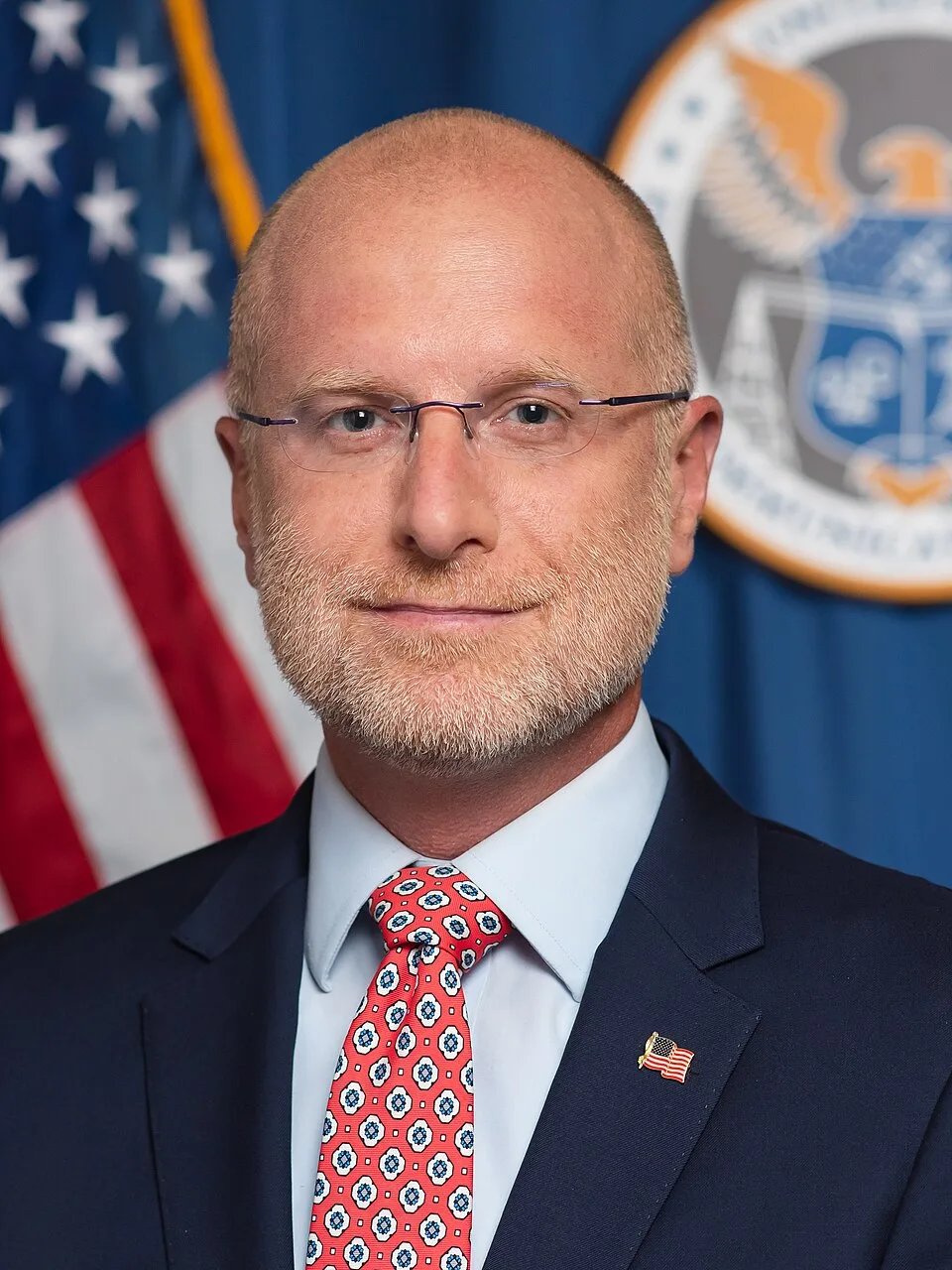
The Federal Communications Commission voted Thursday to eliminate the rule that stopped any single company from owning TV stations reaching more than 39% of American households. It was a 2-1 party-line vote. The one dissenting commissioner apparently still believes that handing a single corporate entity the ability to beam propaganda into nearly half the country's living rooms is, at minimum, worth a conversation.
What the FCC Actually Did
The rule that just died had one straightforward job: prevent a single broadcaster from gobbling up so many local TV stations that they could effectively become the only voice in the room for tens of millions of Americans. That cap sat at 39% of U.S. TV households. It wasn't perfect, but it was something.
According to Axios, the FCC voted Thursday to eliminate that cap entirely. FCC Chairman Brendan Carr, a Trump appointee, has argued for years that the ownership limit was outdated and was handcuffing broadcasters trying to compete with streaming giants and tech platforms. The commission says individual deals will still be evaluated case by case, which sounds reassuring right up until you remember who is doing the evaluating.
The vote broke entirely along party lines. Two Republicans in favor. One Democrat against. Democracy in action, if your definition of democracy includes two people deciding how concentrated American media can become.
The 'Competing With Netflix' Defense
Carr's argument, as Axios notes, is that local broadcasters need the freedom to consolidate so they can punch back against the streaming platforms and tech companies eating their lunch. It's not a crazy argument in isolation. Traditional broadcast TV has taken a real beating from Netflix, YouTube, and every other screen competing for eyeballs.
But there's a significant logical problem here. The threat that streaming poses to local broadcasters is a business model problem. Letting Sinclair or Nexstar or whoever comes next swallow up stations in fifty markets doesn't solve that problem. It just means that when local news dies, it dies under one very large corporate roof instead of many smaller ones. That's not a fix. That's an acquisition strategy dressed up as a rescue mission.
The people who benefit most obviously from this rule change are the large broadcast ownership groups already positioned to expand. The people who benefit least are the viewers in Tulsa, Fresno, and Baton Rouge who rely on local stations for weather, elections, and school closings, and who are about to find out what happens when their news director answers to someone three time zones away.
A Brief History of Media Consolidation Promises
We have been here before. When the Telecommunications Act of 1996 loosened radio ownership restrictions, the industry promised that consolidation would mean more resources, better programming, stronger local coverage. What actually happened was that Clear Channel, now iHeartMedia, hoovered up over a thousand stations, gutted newsrooms, and replaced local voices with syndicated content piped in from national studios. Markets that used to have distinct radio identities became nearly identical.
The pattern is not complicated. Large companies buy smaller companies. They promise to maintain local character. Then they install cost-cutting executives whose quarterly targets have nothing to do with whether your city council meeting gets covered. This is not a prediction. It is a documented historical outcome that plays out the same way every single time.
None of that history appears to have weighed particularly heavily on the two commissioners who voted yes on Thursday.
What Happens Next
The FCC's statement, per Axios, says that deals will be evaluated on a case-by-case basis. This is the kind of reassurance that sounds meaningful until you press on it. Case by case according to what standard? Under what chairman? Enforced by which administration?
The current administration has demonstrated a fairly consistent approach to regulatory oversight: announce that guardrails are unnecessary, remove the guardrails, then promise to watch very carefully as the car rolls toward the cliff. The case-by-case framework is only as strong as the willingness to actually stop a bad deal, and this FCC just signaled pretty loudly which direction it leans.
Expect merger activity. Expect consolidation announcements dressed up in language about synergies and competitive positioning. Expect a lot of press releases about how this is actually great for local journalism. Watch the local journalists.
The Dingo Take
You are supposed to believe that the best way to protect local news is to make it easier for large companies to own more of it. Sit with that for a second. The argument being made, with a straight face, by a federal regulator whose job is theoretically to serve the public interest, is that the public interest is best served by removing the limits on how much of the public's airwaves any one company can control.
Brendan Carr is not a villain in a movie. He's something more mundane and more dangerous: a true believer in deregulation as an end in itself, whose policy instincts line up with the financial interests of the industry he oversees in ways that never seem to bother him. The 39% cap was not some radical left-wing invention. It was a modest speed bump. And it's gone now, because two people voted to remove it.
Local news is already in serious trouble. Hundreds of newsrooms have closed in the last decade. The communities left without local coverage see measurably worse civic engagement, higher municipal borrowing costs, and less accountability for local officials. That's not rhetoric, that's research. Handing the remaining broadcast infrastructure to whoever can afford to buy the most stations is not going to reverse any of that. It's going to accelerate it. But it will look very good in somebody's earnings call.


Comments