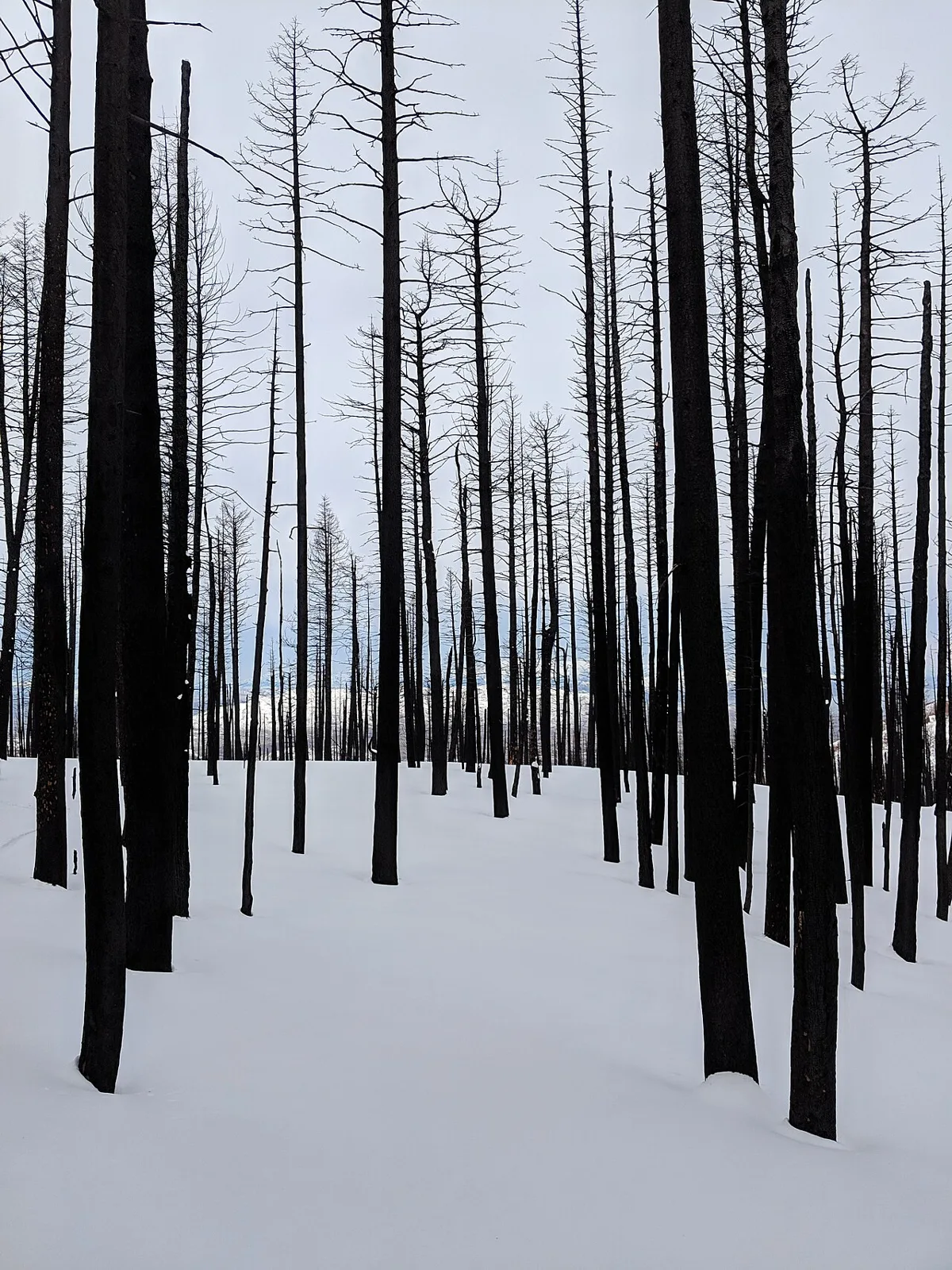
Someone is going to burn down a forest to win a bet. That is not a hypothetical. That is the explicit concern Democratic senators from six states put in writing this week, demanding the federal government do something about prediction market platforms that let users wager money on how wildfires spread, how many acres burn, and which neighborhoods get swallowed by flames.
The Bet That Should Not Exist
When the Palisades and Eaton fires were tearing through Los Angeles in early 2025, Polymarket had live markets running. Users could bet on when the fires would be contained, whether flames would reach specific neighborhoods by a specific date, and how many acres would ultimately burn. According to Jamie Pietruska, a historian at Rutgers University who tracked those markets, the total amount wagered on the LA fires topped $1.2 million.
And if that wasn't enough, this summer a site called Wyldfyre launched, billing itself as the first prediction market dedicated exclusively to California wildfires, offering trades on what the Guardian describes as "what fire does next." That's a business model. Someone built that on purpose and is currently operating it.
Senators Are Finally Paying Attention
A group of Democratic senators sent a letter this week to the chair of the Commodity Futures Trading Commission, the independent agency that oversees platforms like Polymarket and Kalshi, urging them to rein in wildfire betting. Signatories included Oregon's Jeff Merkley, California's Adam Schiff and Alex Padilla, and Nevada's Catherine Cortez Masto, among others.
The letter didn't mince words. According to the Guardian, lawmakers warned that such bets pose a risk that "individuals could be tempted to commit arson in order to make sure their bets are successful." They called on the CFTC to evaluate whether these contracts serve any public interest and gave the agency until August 14 to answer a list of questions.
The timing is not abstract. Massive wildfires in Washington state and Oregon have already burned more than 2 million acres this summer and forced tens of thousands of people from their homes. The fire season is ongoing. The markets are still open.
Experts Say the Arson Risk Is Real
Ann Skeet, the senior director of leadership ethics at Santa Clara University's Markkula Center for Applied Ethics, told the Guardian she backed the senators' push and was direct about the danger. "Somebody could place a bet and then be motivated to actually start a fire," she said. "There's just the practical reality of what it is you might be motivating people to do."
Pietruska, who has studied the history of weather gambling, told the Guardian that betting on weather is not a new phenomenon. People have been wagering informally on temperature and precipitation for centuries. What's different now is the speed, the scale, and the stakes. She pointed to a police investigation in France involving unusual temperature readings at Charles de Gaulle airport that coincided with suspicious winning bets on Polymarket. Someone may have interfered with weather forecasting equipment to win a prediction market. Think about that for a second.
Pietruska was glad to see lawmakers acting but said the response was, bluntly, "a year and a half late" given that the LA fire markets were running wide open while people were still evacuating.
Polymarket Has Been Here Before
This is not the first time Polymarket has attracted federal scrutiny. The Wall Street Journal reported in June that the CFTC had opened an investigation into the platform earlier this year, which would be the agency's third inquiry into Polymarket in recent years. In 2022, Polymarket was fined $1.4 million for operating in the United States without a license.
Polymarket did not respond to the Guardian's request for comment. Neither did the CFTC. So the world's largest prediction market and its federal regulator have both declined to address the question of whether it's acceptable to let people bet money on the behavior of active natural disasters that are killing people and destroying homes. Great. Glad everyone's on top of this.
Who Actually Benefits From This?
The prediction market industry has spent considerable energy arguing that these platforms generate useful data, surface crowd wisdom, and serve a legitimate economic function. And there's a version of that argument that holds in limited contexts. Election forecasting. Commodity prices. Fine.
But wildfire betting is a different animal entirely, and the senators' letter frames it correctly. These aren't abstract markets pricing in risk that helps farmers hedge crop losses. These are real-time wagers on ongoing disasters, accessible to anyone with a phone, with payout structures that could in theory be manipulated by someone willing to light a match. The CFTC has the authority to address this. The question is whether they will bother before someone actually does it.
The Dingo Take
You are supposed to believe that a platform letting users bet $1.2 million on how many neighborhoods burn during an active wildfire is a financial innovation deserving regulatory restraint and thoughtful deliberation. You are supposed to weigh the free market benefits carefully before drawing any hasty conclusions about whether arson-for-profit is a foreseeable consequence of this business model. Respectfully: no.
The senators' letter is right, but Pietruska is also right that it's late. These markets were running in real time while families were losing their houses in the Palisades. The CFTC has been investigating Polymarket on and off for years and fined them once, and the platform kept growing. At some point, "ongoing investigation" stops being reassuring and starts being a description of regulatory failure.
The August 14 deadline the senators set for the CFTC to respond will come and go. The agency may answer or it may not. The fires will keep burning either way. And somewhere out there, Wyldfyre dot com is still open for business, offering trades on "what fire does next," which is a sentence that should make everyone involved in approving that product ashamed of themselves for the rest of their lives.


Comments