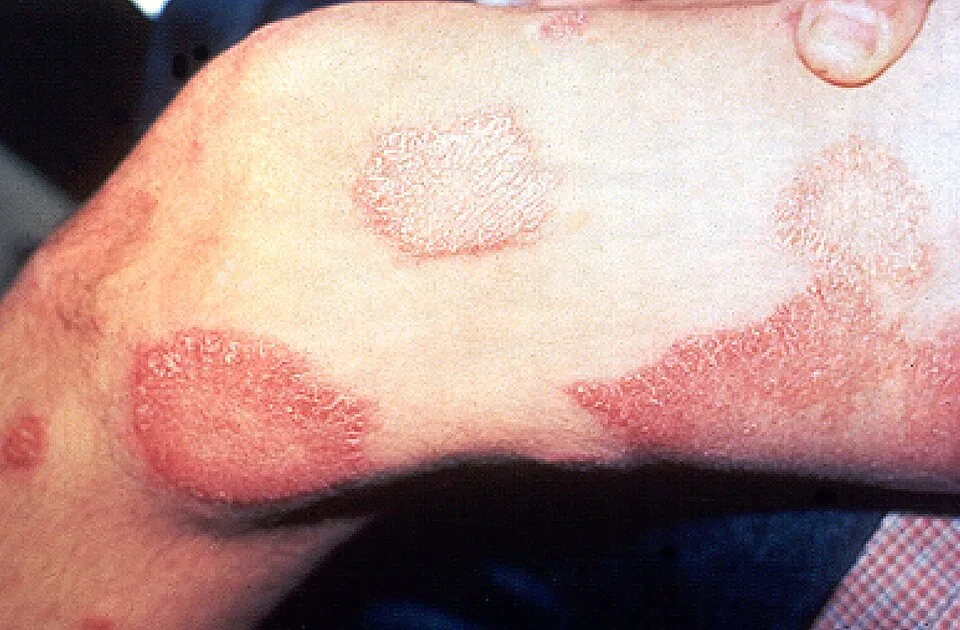
Florida has given us hurricanes, election chaos, and Guy Fieri. Now it's giving us leprosy. State health data shows 17 active cases so far this year, on the heels of a record-breaking 36 cases in 2023, the highest number since Florida started tracking the disease in 1992. The culprits include untreated patients, close contact with infected individuals, and, in a twist that feels almost cosmically appropriate for this particular state, armadillos.
Yes, This Is Actually Happening
Leprosy, clinically known as Hansen's disease, is a bacterial infection that has been tormenting human beings for roughly 4,000 years. It attacks the nerves, skin, muscles, eyes, and respiratory tract. Left untreated, it can cause large skin lesions, paralysis, and blindness. It is not a metaphor. It is a real disease, and it is spreading in the continental United States in 2024.
According to the Health Resources and Services Administration, which runs the federal leprosy care program, there were 174 cases across the entire country last year. Florida alone accounted for more than 20 percent of them. The state has been tracking this disease since 1992, and last year's numbers were the worst they've ever seen.
The Armadillo Problem Is Real and Somehow Underreported
Here is a sentence that should probably be on the Florida state flag: some armadillos are naturally infected with the bacteria that cause leprosy. The CDC confirms it. The nine-banded armadillo, an invasive species that lives underground and apparently has terrible taste in geography, carries M. leprae, the bacteria responsible for Hansen's disease.
According to the CDC, people can be exposed when they touch soil around armadillo burrows, or more directly, by actually holding the animals. The CDC adds that the risk is still very low, and most people who come into contact with armadillos are unlikely to get leprosy. But in a state where people apparently interact with armadillos regularly enough for this to be a public health talking point, "unlikely" feels like it's doing a lot of heavy lifting.
The Independent reports that untreated patients infected with M. leprae are believed to be the main transmission vector, spreading the disease to other humans even months after initial infection. So the armadillo is not the whole story. Just the most Florida part of it.
How This Disease Actually Spreads
Florida health authorities are clear that casual contact is not how this disease moves. Transmission requires prolonged, close contact with someone who is infected and not receiving treatment. The incubation period is one of the most unsettling things about leprosy: it can take up to 20 years after contact with the bacteria for symptoms to appear. Twenty years. You could have caught this during the Obama administration and be finding out now.
The good news, if there is good news here, is that 95 percent of people are not susceptible to leprosy at all because of natural immune defenses. Those most at risk are immunocompromised individuals and people living in regions with historical rates of the disease, which includes the American South and Southeast. Florida sits squarely in that zone.
This Is Older Than You Think
If you assumed leprosy was something that only existed in Bible verses and medieval European history, a study out of Colorado State University would like a word. According to The Independent's reporting on that research, leprosy has been spreading in the Americas for more than a thousand years, with origins that predate European contact entirely. This is not a disease we imported. It's been here.
There are typically around 225 cases in the United States per year. Last year's 174 cases actually came in below that average nationally, but Florida's record-breaking share of those cases is what's drawing attention. State officials are still working to understand what is driving the concentration of cases in this particular state.
There Is a Cure, Which Helps, Though Stigma Remains a Separate Problem
Leprosy is curable with antibiotics. Treatment takes up to two years, which is a long time, but the disease is not the death sentence or the social exile it once was. That said, The Independent notes that stigma surrounding leprosy has historically spread wider and faster than the disease itself. The late Mother Teresa spent a significant part of her life trying to counter that stigma and draw attention to the suffering caused by discriminatory attitudes toward people with Hansen's disease.
The CDC recommends that anyone in close contact with a potentially infected person seek a blood or nerve test. People in Florida should also, and the CDC is very calm and reasonable about saying this, avoid holding armadillos.
The Dingo Take
You are supposed to hear "leprosy outbreak in Florida" and think it is a joke. It is not a joke. It is a disease with a 4,000-year track record of human misery, it is rising in one of the most populous states in the country, and the state's own health data is right there confirming it. The federal program responsible for tracking it is still operational. Researchers are still studying it. And the answer to "why Florida" remains, publicly, a shrug.
What makes this particularly uncomfortable is the timing. The Trump administration has spent the past several years gutting public health infrastructure, dismantling CDC programs, and running off the kinds of scientists and epidemiologists who would normally be the first people you call when a medieval disease starts hitting record numbers in a major state. Whether those cuts have directly impacted leprosy surveillance and response is not something this article can confirm. But asking the question feels less paranoid by the day.
The practical upshot is this: leprosy is curable, the risk to the average person is low, and washing your hands after touching soil near an armadillo burrow is, apparently, advice you now need in your life. Florida has always been a special place. It just keeps finding new ways to prove it.




Comments