Here is a sentence that should break the internet: abortion rates have gone UP since Roe v. Wade was overturned. And one possible explanation is that the same corner of the internet screaming about abortion is also convincing women to ditch the pill.
The Number That Breaks the Narrative
The Supreme Court handed the anti-abortion movement its biggest win in fifty years in 2022. States rushed to ban or severely restrict abortion. And then, according to research NPR covered this week, the number of abortions went up anyway.
Pause on that for a moment. The people who spent decades fighting to overturn Roe v. Wade did so, and the result was more abortions. Whatever you think about any of this politically, that outcome is a policy failure by anyone's definition of the goal.
So what is going on? There are a few competing theories, and they are not mutually exclusive. One involves TikTok. Of course it does.
Your Favorite Wellness Influencer Is Not a Doctor
Dr. Caitlin Bernard, an OB-GYN practicing in Indiana, tells NPR that she has noticed a shift in what her patients are actually worried about. It is no longer the abortion ban, which has been in effect for years now and has settled into what Bernard calls "the normal status quo." What IS coming up in her exam rooms is social media. Specifically, the Make America Healthy Again crowd and trad wife influencers, who have made attacking hormonal birth control one of their signature moves.
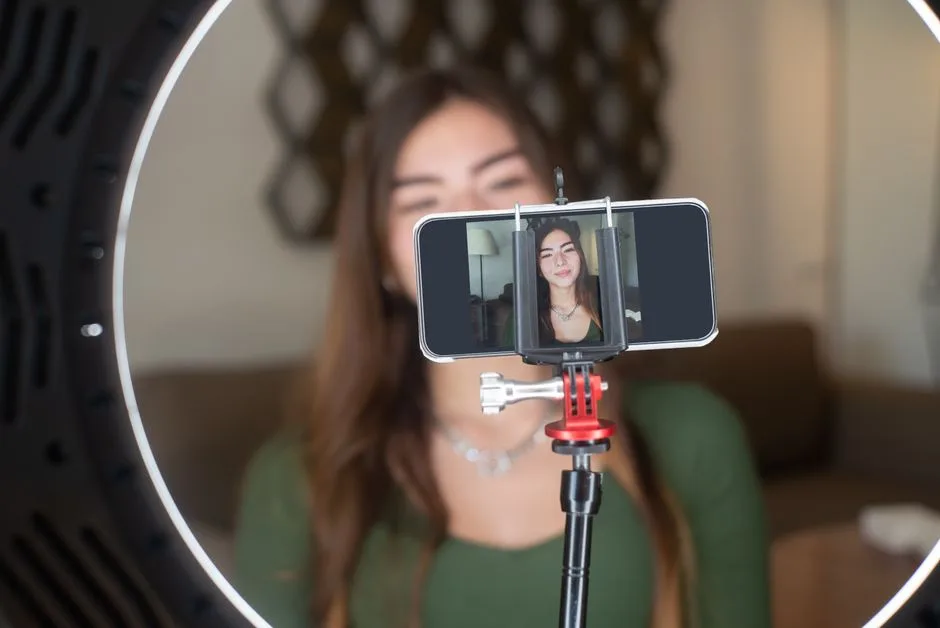
Researchers looked at who is posting these videos. According to NPR, most of them are not medical professionals. They are people with ring lights and opinions, telling their followers that the pill is poisoning them, that IUDs are dangerous, that natural methods are the answer. The videos are everywhere, the claims are exaggerated, and the audience is massive.
Cynthia Harper, a contraception researcher at the University of California San Francisco, put it plainly to NPR: "Contraception has never been so maligned." She describes a collision between wellness influencer culture and pronatalist ideology, where women are supposed to be home having babies young. Two movements with different aesthetics and the same destination, and they found each other on Instagram.
The Trump Administration Is Doing Its Part Too
It is not just influencers. The Trump administration has cut funding for reproductive health providers across the country, as NPR reports. Harper says those cuts have a tangible impact on access, even if the full effect has not shown up in survey data yet.
KFF, the nonpartisan health policy organization, runs a women's health survey every two years. Researcher Brittni Frederiksen tells NPR that in 2024, 82% of sexually active women of reproductive age were using contraception. She got an early look at the 2026 data and says the numbers look similar so far. But she is careful to note that funding cuts and shifting cultural attitudes may be doing damage that is not yet visible in those figures.
So the picture is: access is quietly eroding, misinformation is actively spreading, and we may be watching a slow-motion contraception crisis that the data has not caught up to yet.
The Telehealth Factor Nobody Wants to Talk About
Frederiksen does not actually think the birth control backlash is the main driver of rising abortion numbers. Her read, shared with NPR, is more straightforward: telehealth medication abortion has gotten dramatically easier to access since the COVID-19 pandemic normalized it, and more access means more procedures.
Patients can now get abortion pills mailed to them after a telehealth visit, or pick them up at a pharmacy. That option has exploded in use. It is also currently under legal attack. A high-profile case out of Louisiana is working its way through the courts with the goal of eliminating telehealth medication abortion nationally, which would be a far more concrete blow to abortion access than any of the state bans that generate more headlines.
The irony is almost too much to sit with. The mechanism that is actually keeping abortion numbers up is the one the courts are quietly targeting, while everyone argues about whether the state bans are working.
Right After Roe, People Got Serious About Contraception
To be fair to the actual record: right after Roe fell, there was a real and documented surge in people taking contraception seriously. NPR's reporting confirms the trend was not just anecdotal. IUD insertions went up. Implants went up. Vasectomies spiked. Tubal ligations spiked. People responded to the political moment with practical decisions about their own bodies.
That wave appears to have crested. Bernard says her patients have stopped connecting their birth control decisions to the abortion ban in any active way. It has been years. Life moves on. Other concerns, like whether insurance covers their preferred method or how to avoid a surprise medical bill, have moved back to the front of the line.
Which means the moment when political fear was driving smarter contraception choices may be fading, right as cultural forces pushing in the opposite direction are picking up steam.
The Dingo Take
The anti-abortion movement wanted fewer abortions. It got the opposite. That is not an opinion, it is what the numbers show. And rather than asking hard questions about why their strategy failed, significant chunks of that same coalition are busy on social media telling women that hormonal birth control is a globalist conspiracy or whatever the current framing is. It is an ideological ouroboros eating itself in real time, and real people are caught in the middle of it.
Harper's framing from her NPR interview deserves to be repeated loudly: two things have converged. Wellness culture that medicalizes fear of hormones, and pronatalist ideology that wants women pregnant and domestic. They found common cause in attacking contraception. Neither camp cares much about the actual outcome data. If they did, they would look at those abortion numbers and reconsider the strategy immediately.
Meanwhile, the one thing that is genuinely keeping abortion accessible for people in ban states, telehealth medication abortion, is the thing the courts are methodically trying to destroy. When that option goes, the numbers will change again. Just not in the direction the movement is celebrating.




Comments