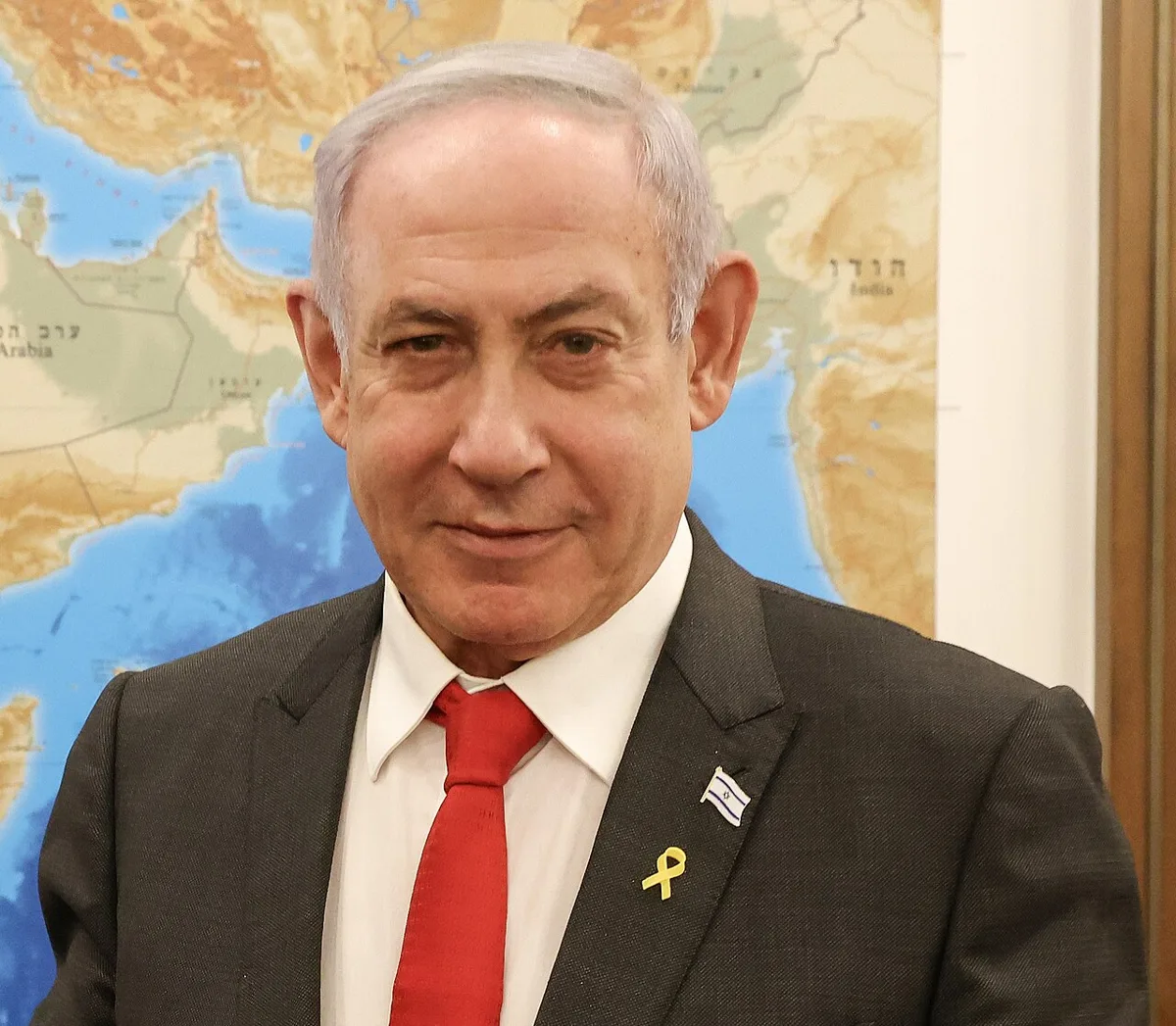
Benjamin Netanyahu stood up in a cabinet meeting on Sunday and, in case anyone missed it the first time, rejected Donald Trump's 15-point Gaza peace plan directly to its face. The plan that Trump has spent months touting as a signature foreign policy triumph is now, formally, in the trash. The White House had no immediate comment, which honestly says everything.
Netanyahu Makes It Crystal Clear, Twice
"I want to clarify this: Israel rejects the 15-point document. I have heard people saying, 'You didn't say that.' So here I am saying it again." That is a direct quote from the Israeli prime minister, delivered at a cabinet meeting, as NBC News reports. He then added that the IDF will not carry out any withdrawal until Hamas is fully disarmed.
This is not ambiguity. This is not diplomatic hedging. This is a head of state looking directly at a peace framework backed by the President of the United States and saying, out loud, on purpose, in front of cameras: no. Netanyahu even spelled out what he means by disarmament. "Heavy weapons, lighter weapons, all weapons," he said. "We are talking about genuine disarmament, not a fictitious one."
The problem, of course, is that Hamas has said it will disarm only after Israel withdraws completely and stops all hostilities, and that heavy weapons come off the table only after a Palestinian state is established. Netanyahu, meanwhile, reaffirmed Sunday that "as long as I am prime minister, there will be no Palestinian state." So that's a clean impasse, then.
Trump's Big Win, Quietly Exploding
Trump touted a breakthrough in this very peace plan just last month, claiming Hamas had agreed to lay down its arms. He has leaned on it heavily as evidence that his foreign policy muscle actually works, that his Board of Peace is delivering results where decades of diplomacy failed. The plan itself called for a phased Israeli troop withdrawal running alongside Hamas disarmament, a sequence both sides agreed to in principle.
Both sides have now, in practice, agreed to nothing. Hamas says disarmament comes after withdrawal. Netanyahu says withdrawal comes after disarmament. Trump said it was a done deal. It is not a done deal.
Mohammad Dahlan, a member of the Palestinian Legislative Council, told NBC News that Netanyahu's announcement "represents a challenge, contempt, and deception of the American administration and President Trump's team," and that Washington "now realizes that Netanyahu is an obstacle to achieving security and stability." That is a Palestinian official explaining Trump's own peace plan back to him.
The Election Math Nobody Wants to Say Out Loud
Here is the part that academic researchers are willing to say even if politicians aren't. Ronni Shaked, a research fellow at the Harry S. Truman Institute at Hebrew University of Jerusalem, told NBC News that Netanyahu may calculate it worthwhile to "enter a new confrontation with President Trump" precisely because his own popularity is cratering ahead of October's Israeli elections.
"After three years, he is without any victory, and he just wants to show now to the people of Israel, before the election, that look at me, I have victory," Shaked said, calling the strategy an "illusion." The man has been running a war for nearly three years, more than 73,000 people are dead in Gaza according to the enclave's health officials, and the political calculation being made is: how does this help me in October?
Netanyahu's far-right finance minister Bezalel Smotrich, who has been pressing Netanyahu to take a harder line, responded to Sunday's announcement by congratulating the prime minister on X. So at least someone is happy.
The Ceasefire That Isn't
Backdrop to all of this: Israel and Hamas agreed to halt attacks in October. According to NBC News, Israel has continued striking Gaza anyway. On Saturday, recovery operations at the Karam Building in Gaza ended after 19 bodies were pulled from the rubble, per Gaza civil defense. More than 1,200 people have been killed in Gaza since the ceasefire technically began. Both sides accuse the other of breaching it.
Senior Hamas official Basim Naeem responded to Netanyahu's Sunday statement by calling on mediators and the U.S. to "exert pressure" on Netanyahu to stick to the road map and "prevent him from obstructing the process for domestic political and electoral considerations." Egypt's foreign minister also weighed in, calling on all parties to fulfill their commitments and avoid actions that could "hinder the implementation process."
Washington, per NBC News, did not immediately comment. The administration that declared this plan a breakthrough is currently watching it get dismantled in public and has, so far, said nothing.
The U.S.-Israel Relationship, Such As It Is
This rejection does not arrive in a vacuum. NBC News notes it comes after months of growing tensions between the White House and Israel's leadership over Iran, a separate and equally tangled crisis. Netanyahu acknowledged the friction with characteristic diplomacy: "We are currently discussing this issue with the Americans. They have ideas; some of them are acceptable to us and some are not, and we know how to stand firm on these matters."
Translation: thanks for the ideas, some of them are garbage, we'll do what we want. That's Netanyahu speaking about the sitting U.S. president whose peace plan he just publicly buried.
Trump has shown a remarkable tolerance for Netanyahu's maneuvering over the years, and it remains to be seen whether this particular humiliation lands differently. The White House silence is either strategic or stunned. Possibly both.
The Dingo Take
You are supposed to believe this is a foreign policy success story. The Trump administration declared Hamas had agreed to disarm, declared a breakthrough, took the victory lap, moved on. The only problem is that the Israeli prime minister just stood in front of his cabinet and said the plan is rejected, full stop, and the reason he's doing it is almost certainly to shore up his right flank before an election. A researcher at a respected Israeli university is saying this out loud. It is not a secret. The whole thing is being performed in plain daylight.
There are 73,000 people dead in Gaza since October 7, 2023. The ceasefire that supposedly started in October has killed 1,200 more. Netanyahu's own coalition partners are cheering him for blowing up an American peace proposal because it helps them politically. Hamas is calling on the U.S. to pressure Israel into following its own agreement. Egypt is telling everyone to please just do the thing they said they would do. And the White House is quiet.
This is what a failed foreign policy looks like when the administration in charge refuses to admit failure. It doesn't blow up in a dramatic moment you can point to. It just slowly disintegrates while everyone insists the plan is fine, the plan is great, the plan is a major achievement, until one day a prime minister says into a microphone, twice, that the plan is dead. That day was Sunday.




Comments