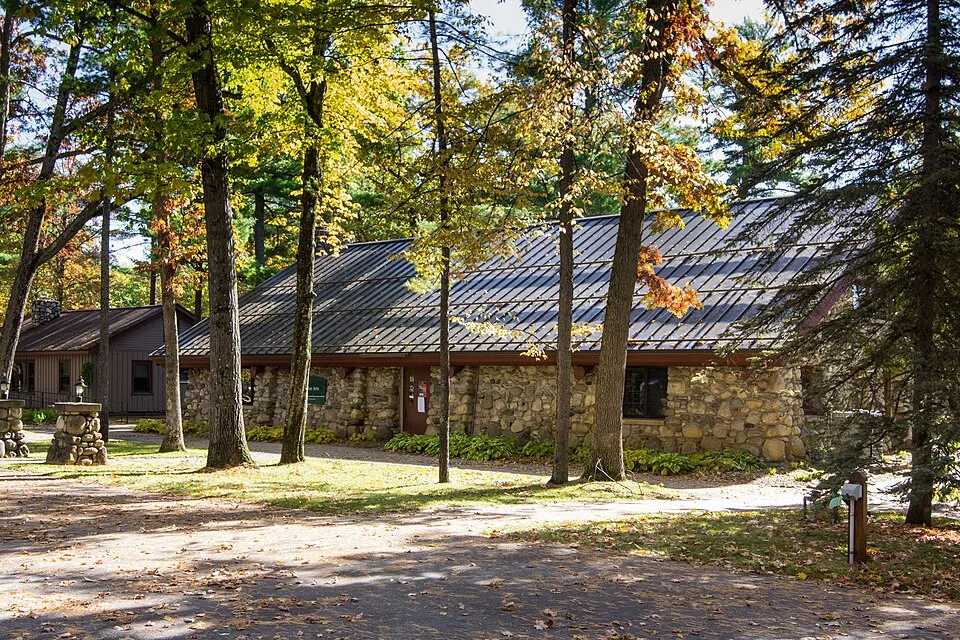
Everyone already knew Jeffrey Epstein used the Interlochen Center for the Arts as a hunting ground. What they didn't know — what a new independent report has now laid out in sickening detail — is that Epstein was barely a footnote in the full story. According to NPR, former students have come forward with roughly 70 allegations of sexual abuse against nearly 50 adults affiliated with the prestigious Michigan boarding school, stretching from the 1950s all the way to the 2010s.
The School That Launched Careers — and Enabled Predators
Interlochen is the kind of place parents dream of sending their artistically gifted kids. Josh Groban went there. Norah Jones. Chappell Roan. Felicity Huffman. Da'Vine Joy Randolph. The school has spent decades cultivating an idyllic image: young, talented students in the Michigan woods, discovering their gifts under the guidance of devoted instructors.
That image, according to the independent report released last month, was a lie sustained for decades. NPR reports that Interlochen hired the Sanghavi Law Office in 2024 to investigate abuse at the school after an alumna came forward about her experiences in the 1970s involving a longtime faculty member and administrator. What the investigators found was not a single bad actor. It was a system.
The Conditions That Made It Possible
The report doesn't just catalog abuse. It explains, methodically, how it kept happening across six decades without being stopped. According to NPR, the investigation found that adults routinely had one-on-one access to students. Children at the school had limited contact with their families. Many students were vulnerable because of their age, their sexual identity, their inexperience, and the fact that they had left home specifically to pursue a dream that the adults around them controlled entirely.
The report called it a "permissive environment" with "gaps in oversight." That is the careful, lawyerly way of saying: this school created the exact conditions predators look for, and then left kids alone inside them for seventy years.
Epstein and Ghislaine Maxwell are named in the report. NPR had already reported in February that Epstein recruited two young teenagers on the campus. But the report makes clear their involvement was one chapter among many. Epstein died in prison in 2019. Plenty of the other adults named in the report did not.
Paul Busch Has Spent 21 Years Waiting to Say This Out Loud
Paul Busch was 16 in 2005 when his ballet teacher, Thomas Clower, sexually abused him. He is 37 now, living in Nashville, and he told NPR he is sharing his story publicly for the first time.
Busch had been recruited by Clower directly from a ballet studio in Dayton, Ohio. Clower secured him a partial scholarship as a boarding student. Busch told NPR he felt special — the summer students dream of being invited to stay, he said. "It was, at that point, my prayers being answered." Then Clower requested to be his mentor, started meeting with him regularly in his office, and began sending emails NPR describes as "inappropriate," asking about Busch's personal life and sexual activity.
"A lot of my desire was to prove that I was enough," Busch told NPR. "That I was worthy of love." He said that need made him the perfect target. Busch stayed at Interlochen for two more years after the abuse. He says no one from the school asked if he was okay. He received no counseling. He spent two decades carrying what happened to him before deciding the world needed to hear it.
The Teacher Who Was Still Working With Kids in Texas
Thomas Clower pleaded guilty to abusing Busch. He is named in Interlochen's letter to the community as one of four former staff members and one former trustee accused of sexual misconduct. He is, according to NPR, the only one of those named who is still alive.
Here is the part that should make your stomach drop. At the time the independent report was released, Clower's name was still listed as an instructor on the website of a dance school for children and teenagers in Texas. It has since been removed. NPR made multiple attempts to contact Clower, including through his attorney. He did not respond. Interlochen declined to comment on the specifics of his case.
Interlochen Says It Has Changed. Survivors Say That's Not Enough.
In a letter to the community released alongside the report, Interlochen said the school today is "fundamentally different from the institution described in this report." The school told NPR it has put safety measures in place, along with a network of resources including school counselors, social workers, and a psychologist.
Busch's response to that was blunt. "They get to say, 'Case closed,'" he told NPR. "That is completely unacceptable because — guess what? — my life is still open."
That is not a rhetorical flourish. That is a man in his late thirties who was abused at 16 by a teacher who was still listed on a children's dance school website in another state until very recently, watching the institution that failed him issue a press release about how much it has grown.
The Dingo Take
You are supposed to believe that the Epstein connection was the scandal at Interlochen. The famous name, the famous monster, the easy story about one uniquely evil man who infiltrated a school. That framing is comfortable because it has a clear villain and a tidy ending: Epstein is dead, case closed, let's move on.
Seventy allegations. Nearly fifty adults. Spanning from the 1950s to the 2010s. That is not one monster's story. That is an institution that, for six decades, made choices — about supervision, about oversight, about who got access to children and under what conditions — and those choices kept producing the same result. The report calls it a "permissive environment." A more accurate term is a failure of institutional will. Nobody accidentally creates a permissive environment for child sexual abuse across six decades. You have to keep choosing not to fix it.
The piece of this that won't leave you alone is Thomas Clower's name on that Texas dance school website. A man who pleaded guilty to abusing a 16-year-old was working, as of the report's release, with other people's children. The school removed his name after the report became public. Not before. After. If Paul Busch hadn't spent 21 years building up the courage to go on the record with NPR, that name might still be there.




Comments