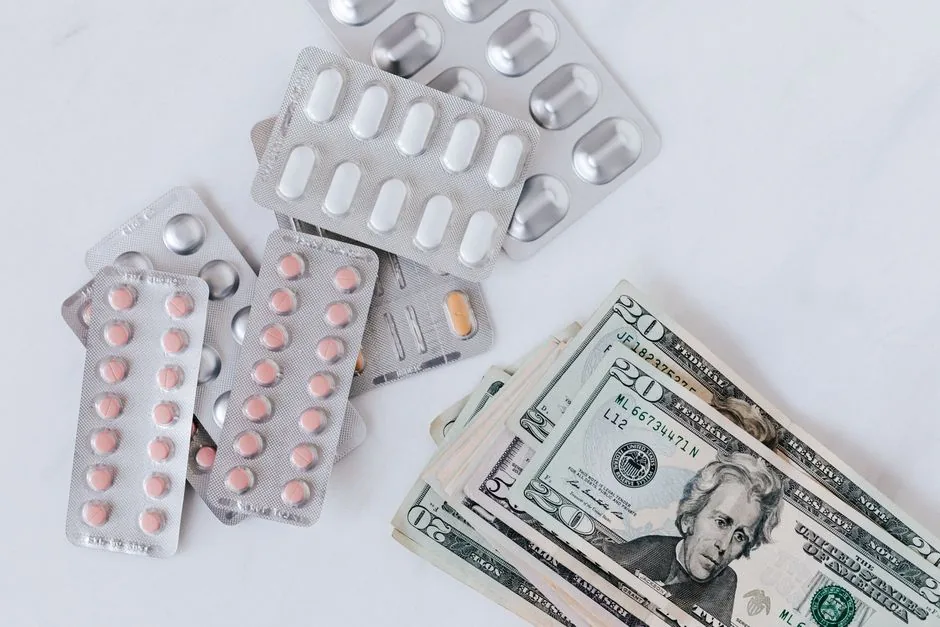
There is a federal program that will cap what you pay for generic prescription drugs at $5.10, wipe out your Part D premium entirely, and eliminate your deductible down to zero. Millions of Americans who qualify for it have never applied. As CBS News reports, it's called Medicare Extra Help, and the income thresholds are higher than most people realize.
What This Program Actually Does
Medicare Extra Help, formally known as the Part D Low-Income Subsidy, targets one of the most brutal pressure points in retirement budgets: prescription drug costs. It's not a coupon. It's not a discount card. It's a federal program that can fundamentally change what someone on a fixed income pays every single month.
According to CBS News, qualifying beneficiaries in 2026 can get their Part D plan premium reduced to $0, their deductible cut to $0, and their per-prescription costs capped at $5.10 for generics and $12.65 for brand-name drugs. Once their total drug spending hits the $2,100 annual Part D out-of-pocket limit, they pay nothing for covered prescriptions for the rest of the year. Nothing.
For context, the median Social Security retirement benefit is just over $1,900 a month. A single expensive prescription, before any of this assistance kicks in, can eat a meaningful chunk of that. Extra Help exists precisely because Congress, at some point, acknowledged that asking people to choose between medication and groceries is a policy failure. The program is the acknowledgment in action.
Who Gets In Automatically
Some people already qualify and don't know it because the enrollment is automatic. CBS News reports that Medicare beneficiaries who receive full Medicaid benefits, get help from a Medicare Savings Program to cover their Part B premiums, or receive Supplemental Security Income don't need to submit a separate Extra Help application. The benefit flows to them without any additional paperwork.
If you're in one of those categories and you're not seeing reduced drug costs, that's worth a phone call to Social Security or your state Medicaid office. The benefit is supposed to be there. If it isn't showing up, something has gone sideways administratively, and you're owed a fix.
The Income Limits Are Higher Than You Think
Here's where a lot of people get tripped up. The assumption is that a program called a "Low-Income Subsidy" must be for people who are nearly destitute. The actual income thresholds tell a different story.
For 2026, CBS News reports the annual income limit for Extra Help eligibility is $23,940 for individuals and $32,460 for married couples. Resource limits are $18,090 for individuals and $36,100 for married couples. And critically, not everything you own counts as a resource. Your home doesn't count. Your car doesn't count. Household items and personal possessions don't count. What counts is liquid and semi-liquid assets: bank accounts, stocks, bonds, mutual funds, and retirement accounts.
So a retiree who owns their modest home outright, has a car, and keeps $15,000 in savings might look financially comfortable on paper but still qualify for Extra Help under these rules. The program is designed to reach people who own things but don't have income, which describes a substantial portion of the American retirement population.
The Part D Cap Doesn't Solve Everything
The broader Medicare prescription drug story is genuinely a bit better than it used to be. CBS News notes that federal law now caps annual out-of-pocket Part D spending, a limit that sat at $2,000 in 2025 and rose to $2,100 in 2026. A few years ago, there was no cap at all, and people with expensive drug regimens could spiral into catastrophic costs with no floor beneath them.
But the cap doesn't eliminate premiums. It doesn't eliminate deductibles. It doesn't touch the monthly costs that hit before someone reaches that annual threshold. For people on the tightest budgets, the out-of-pocket maximum is almost theoretical. They're drowning in the costs that precede it.
Extra Help addresses the costs the cap doesn't. The two programs work in sequence, not instead of each other, and that's the part of the picture that often gets lost in the translation from policy to reality.
Extra Help Plus Medigap: The Full Picture
Extra Help only covers Part D drug costs. It doesn't touch what Original Medicare leaves behind on the medical side: the deductibles, copayments, and coinsurance from Parts A and B, which have no annual out-of-pocket maximum of their own. That's a separate, significant vulnerability.
CBS News walks through how Medigap, supplemental insurance sold by private companies, can fill some of those gaps. The two programs aren't interchangeable. Someone can carry both simultaneously, using Extra Help to slash their drug costs while a Medigap policy covers some of the out-of-pocket exposure from doctor visits and hospital stays. But Medigap has its own monthly premiums, so it's a cost-benefit calculation that depends heavily on individual health needs and budget constraints.
The short version: Extra Help is worth applying for if you're anywhere near the income and resource thresholds, even if you can't separately afford Medigap. Getting one piece of the puzzle right beats getting none of it right.
The Dingo Take
A federal program caps your drug costs at five dollars and ten cents for generics, eliminates your premium, and wipes your deductible, and a significant portion of the people who qualify for it are not enrolled. That is not a personal failing. That is a communication and outreach catastrophe that the federal government has allowed to persist for years because, frankly, the people it most affects are not a particularly powerful lobbying constituency.
The income limits here are not vanishingly small. Nearly $24,000 a year for an individual, nearly $32,500 for a couple, with home equity and personal property excluded from the resource calculation. That describes a lot of American retirees who have been quietly assuming they don't qualify because the word "subsidy" sounds like something for someone else. It is not for someone else. It might be for you or for your parents or for someone you know who is quietly skipping doses because the math doesn't work.
Apply. Or help someone you love apply. The Social Security Administration handles the applications. The eligibility check takes minutes. The alternative is leaving hundreds or thousands of dollars a year on the table because nobody told you the door was open.





Comments