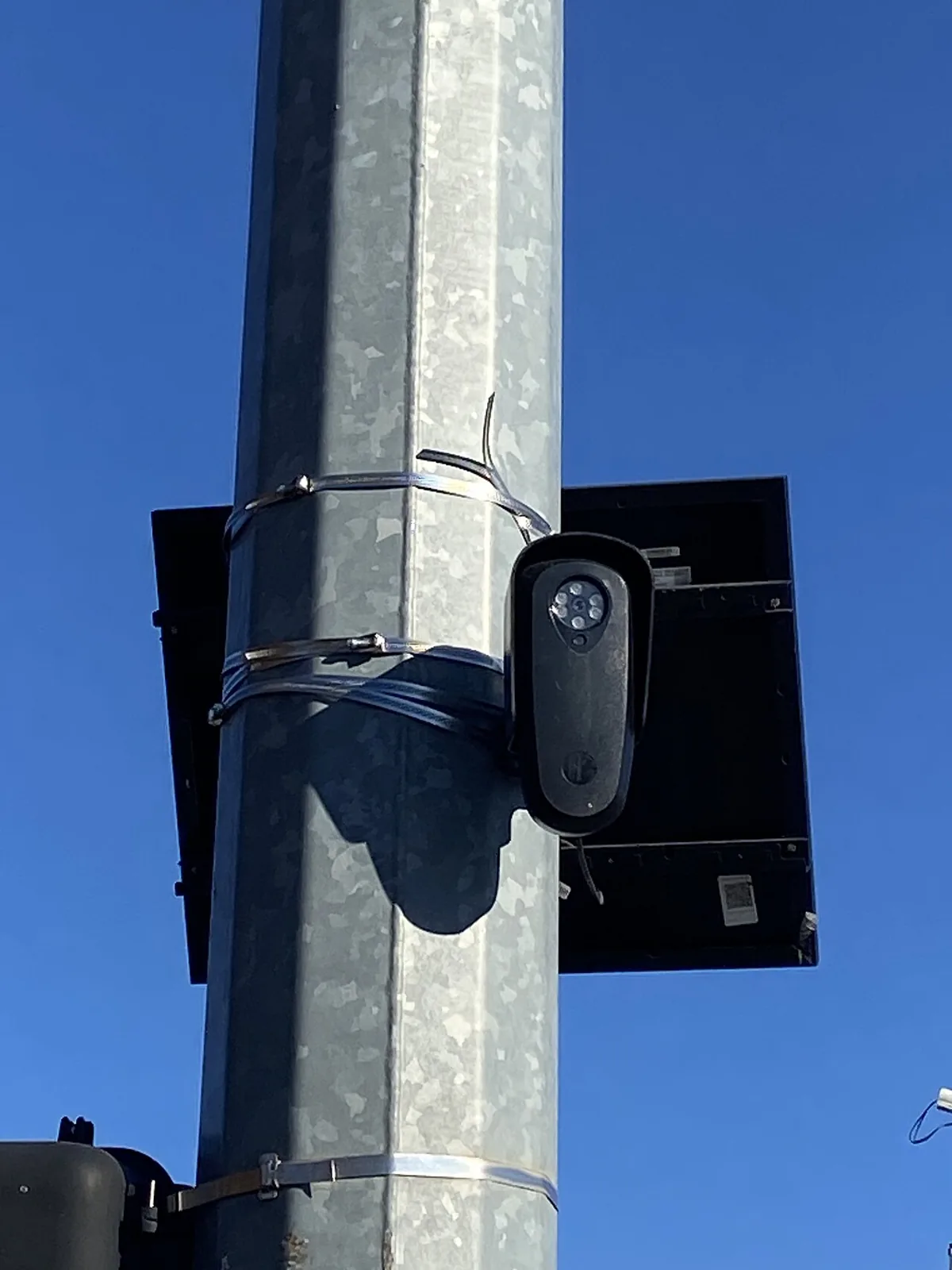
A company that built one of the largest vehicle surveillance networks in American history just admitted the people operating it cannot be trusted to use it responsibly. Flock Safety, whose 120,000 license plate cameras are threaded through communities across the country, is slashing data retention from 30 days to seven and making it mandatory for cops to log a justification before every single search. The CEO's explanation for why this is suddenly necessary is either reassuring or terrifying, depending on how you feel about the previous nine years.
What Is Actually Changing Here
The New York Post reports that starting now, Flock's automated license plate reader network will only hold vehicle location data for seven days instead of thirty. Officers who want to search that data will have to enter a case code first. No case code, no search. There is an emergency override for situations like a missing child, but those searches get automatically flagged for review, which is the kind of oversight that apparently did not exist before.
Flock CEO Garrett Langley told the Post that roughly 90% of investigative searches on his platform already happen within seven days, which is a useful statistic and also raises an obvious question about what the other searches were for. The company is also making its internal audit system mandatory. Previously, only about a third of agencies had voluntarily switched it on. That system watches for unusual search patterns and can lock a user out while an administrator reviews what they were doing.
Flock is calling this the toughest license plate reader policy in the country. Given that the previous policy was essentially "cops can look at whatever they want for a month," the bar was not exactly set at Olympic height.
The CEO Said What Now
Here is the quote that should be on the front page of every newspaper in America. Garrett Langley, founder and CEO of a company whose cameras have captured the movements of millions of American drivers, told the Post: "I think sadly, police abuse has been a problem for longer than people want to talk about."
Read that again. The man who built the infrastructure and sold it to law enforcement agencies for nine years is now saying police abuse is a real problem that he is stepping in to address. That is not a criticism from an outside activist. That is the vendor acknowledging that his own product has been handed to people who cannot always be trusted with it.
Langley's framing is that the solution is accountability, not removal. "The solution is not to remove the tools they need to do their job," he told the Post. "The solution is to hold them accountable. Not enough cities are running audits. Not enough cities are actually checking what's happening. So we're just gonna force it." That is a reasonable position. It is also an admission that for years, cities were not checking, and Flock was not forcing anything.
120,000 Cameras and a Mass Surveillance Debate
The ACLU has been sounding the alarm on Flock specifically and automated license plate readers generally for a while now. Their argument, as the Post summarizes it, is that this technology can reveal where people live, work, worship, and travel. With 120,000 cameras nationwide according to the ACLU's count, the network is large enough that avoiding it in most American cities is basically impossible unless you never drive anywhere.
That is not a small concern. License plate reader data has been used in ways that go well beyond stolen car recoveries. Law enforcement agencies have shared it across jurisdictions, sometimes without warrants, and in states where certain activities are legal, that data can theoretically be sought by states where those same activities are not. The ACLU's concern is structural: you cannot build a mass surveillance network and then trust that every single person with access to it will use it wisely, forever.
Flock's counter-argument is that the technology solves real crimes and that better rules can address the abuse without throwing out the tool entirely. The new mandatory audit system is, at minimum, a more honest response to that tension than pretending the tension did not exist.
Los Angeles Is a Whole Separate Mess
While Flock is announcing these sweeping national policy changes, it is simultaneously getting dumped by its most high-profile customer. Mayor Karen Bass has called for ending LAPD's contract with Flock, saying the company lost the trust of Angelenos. Langley pushed back hard, telling the Post that Bass's description of how the system works was inaccurate and pointing out that LAPD owns its own data, not Flock.
"What's changed?" Langley asked, noting that Bass had previously supported the technology. It is a fair question with a complicated answer. What changed in Los Angeles is probably less about Flock specifically and more about a broader political reckoning over surveillance infrastructure that the public never really consented to in the first place. The policy announcements are Langley's attempt to get ahead of that reckoning nationally.
The Post reports that Langley believes LAPD officers will be "quite happy" with the new safeguards and is hoping the department reinstates the system. Whether that happens probably depends less on the merits of the new policy and more on whether Bass wants to spend political capital defending a surveillance company right now. The answer to that question seems pretty obvious.
California Lawmakers Are Already Moving
Flock's voluntary reforms are also happening against the backdrop of mandatory ones potentially coming by law. Senate Bill 1013, authored by California state Senator Sabrina Cervantes, would require public agencies using license plate readers to train officers, maintain search logs, undergo annual audits, and delete data after 30 days unless connected to an active investigation. The bill has passed the state Senate and is now in the Assembly, according to the Post.
The irony is thick. Flock is now voluntarily going further than the California legislation requires, cutting retention to seven days versus the bill's thirty. Langley is clearly trying to position the company as the responsible actor in this space, ahead of lawmakers who might impose less business-friendly rules. Whether that gambit works depends on whether the ACLU and privacy advocates accept that a surveillance company self-regulating is good enough, which historically has not been a winning argument.
The Dingo Take
A company with 120,000 cameras tracking American vehicle movements for nine years just announced that its previous setup did not have enough safeguards against police misuse. The CEO said so himself. That is the story. Everything else, the seven-day retention window, the mandatory case codes, the audit lockouts, is Flock trying to survive the inevitable political moment when the public fully grasps how much infrastructure got built while nobody was watching.
Langley is not wrong that the technology solves crimes. He is also not wrong that accountability beats elimination as a policy approach. But "we are going to force the accountability we probably should have forced years ago" is a strange thing to present as a selling point. The one-third of agencies that had voluntarily turned on the audit system were the ones catching misuse. What was happening at the other two-thirds? Langley knows the answer. He just declined to say it out loud.
The ACLU will not be satisfied with this, and they should not be. Mandatory audits and shorter retention windows are better than nothing, but they are being implemented by the company that profits from the network, enforced through contract terms rather than law, and covering a system that law enforcement agencies have been operating with minimal public scrutiny for nearly a decade. The California bill is probably the floor here, not the ceiling. And if Bass killing the LAPD contract turns into a trend, Langley is going to find out very quickly whether the new rules were enough.





Comments