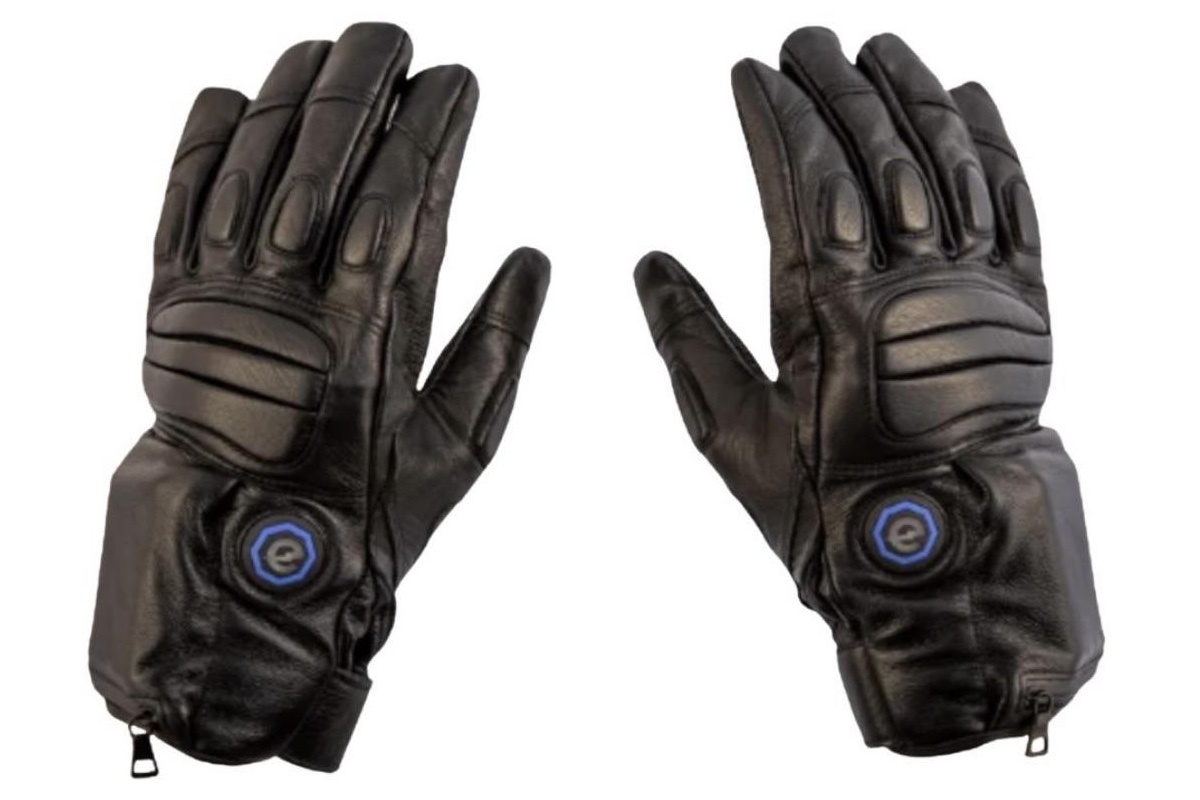
Immigration and Customs Enforcement is planning to spend up to $20 million on gloves that electrocute people on contact, dropping them to the ground and leaving them, in the words of one police officer who got hit with one, with "no control" over their own body. The Department of Homeland Security posted the plans this week. Nobody appears to have stopped and asked whether this is a good idea.
What These Things Actually Do
The device is called the G.L.O.V.E., which stands for Generated Low Output Voltage Emitter, because someone apparently decided this needed a name that sounds like it belongs in a Marvel movie. According to NPR, which first reported on DHS's posted plans, a small button on the wrist activates the shock when the glove touches skin. No prongs, no projectiles. Just contact, electricity, and then the floor.
The Associated Press first broke the news of ICE's plans to equip officers with the technology. The gloves are made by Compliant Technologies, a veteran-owned company out of Kentucky. Their Instagram is, apparently, a catalog of cops being shocked and collapsing. In one video highlighted by NPR, a founder of the company demos the glove on an officer from the Oklahoma County Sheriff's Department. The officer screams. He hits the ground. The company's website describes this as a tool to "de-escalate tense situations quickly and effectively."
Kenneth Corey, who spent more than thirty years at the NYPD and now leads the Policing Leadership Academy at the University of Chicago Crime Lab, told NPR he has personally been hit with the glove. "I'm a big guy. I'm 6'3", about 250 pounds. It made my knees buckle." The man's knees buckled. From being touched.
The Part Where ICE Is Involved
Here's where the story stops being a weird technology item and becomes something more alarming. ICE has been on an unprecedented hiring binge, bringing on more than 12,000 officers in less than a year as the Trump administration has dramatically scaled up its deportation operations. Federal immigration officers have fatally shot multiple people this year, including two last month alone.
Naureen Shah, director of policy and government affairs for immigration at the ACLU, put it plainly to NPR. "My immediate reaction was, why would you give this kind of novel dangerous technology that's hard to train people on to agency personnel who have a track record of abuse and even cruelty?" Shah recently authored a report documenting widespread use of force by federal immigration agents during Trump's first year, including tasers being deployed hundreds of times.
"The idea of arming ICE agents with limited training and a recent track record of misusing force and using it way too much, to hand them this kind of weapon is reckless and surprising," Shah said. DHS, for its part, told NPR in a statement that ICE officers are "highly trained in de-escalation tactics." That statement exists in a world where two people were shot dead by ICE last month, so interpret it however you'd like.
The Expert View: The Glove Isn't the Whole Problem
To be fair, Corey, the former NYPD official, told NPR that the glove itself is not necessarily the issue. His framing is useful: use of force operates like a ladder, with each rung offering a more intense option. If someone is rushing at you with a knife, he says, a higher rung of force might be appropriate, and an electric shock glove could theoretically fit that moment.
"It doesn't matter if it's ICE or any other agency," Corey told NPR. "Any new piece of equipment that's being introduced, you have to have strong policies that govern its use. And then you have to make sure that your people are being held accountable, that they're following those policies." Without those guardrails, he says, almost any tool becomes ripe for abuse.
The question, then, is whether ICE has those guardrails. The ACLU's documented record of ICE's force usage this year suggests the honest answer is no. Corey's framework is sensible in the abstract. Applied to an agency that has been rapidly expanded, inadequately trained, and already catching people in grocery store parking lots and their own driveways, "strong policies" starts to sound like wishful thinking.
Oh, and Schools Have These Too
Buried in NPR's reporting, almost casually, is the fact that this technology is already in American schools. At least one city, Omaha, Nebraska, has purchased the electric shock gloves for its public schools. A list of buyers reviewed by NPR at a school safety conference last year showed more than 50 police departments across roughly 20 states, plus prisons, jails, and several hospitals.
The company's website suggests the gloves can be a "game-changer in healthcare settings" for managing "agitated or combative patients." Compliant Technologies declined to comment to NPR on anything, but notes on its website that no documented injuries from the glove have been recorded. The glove technology has existed for less than a decade, so that data set is not exactly robust.
The $20 million price tag NPR reported is the ceiling of what ICE could spend. Whether the full contract is awarded depends on how procurement proceeds. Compliant Technologies did not respond to NPR's request for comment.
The Dingo Take
An agency with a documented pattern of excessive force, a chaotic year-long hiring surge, and two fatal shootings last month is about to receive $20 million worth of gloves that make grown, trained police officers scream and collapse. You are supposed to read DHS's statement about "highly trained" officers and find that reassuring. You are not required to.
The expert framing here is genuine and worth respecting: a tool is not inherently abusive, and strong accountability structures can make almost any use-of-force option reasonable. But those structures require, at minimum, time, oversight, and a baseline culture of restraint. ICE, as currently configured and as currently deployed, has demonstrated none of those things at scale. Giving them electric shock gloves right now is roughly equivalent to handing car keys to someone who just totaled three vehicles and saying, trust us, we gave them a pamphlet.
Compliant Technologies named their product the G.L.O.V.E. They built an acronym around a word that means soft and protective. A cop on their own Instagram screamed and hit the floor. The company calls this de-escalation. Language is doing a lot of heavy lifting in this story, and the people who will feel the weight of it won't be the ones writing the press releases.




Comments