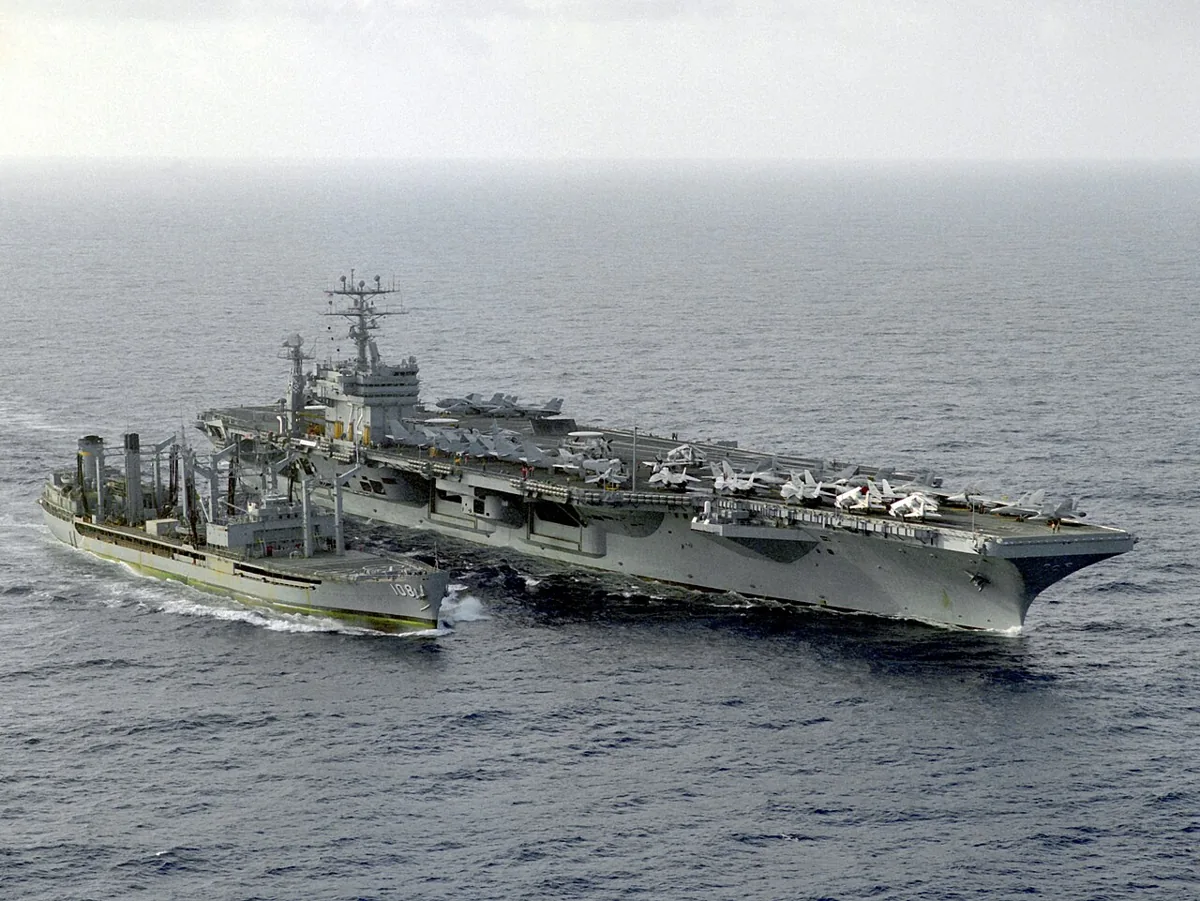
More than 5,000 American sailors have been floating in the Middle East for 250 days, running low on fresh food, rarely seeing sunlight, and losing their minds quietly below deck. Back home, federal regulators are busy investigating whether people are making too much money betting on which exact words the President reads off a teleprompter. This is where we are.
250 Days. One Port Stop. No Produce.
The USS Abraham Lincoln left San Diego in November. According to NPR, it has made exactly one brief port visit since then and has been parked in the Middle East ever since, supporting military operations against Iran. That's more than eight months at sea for over 5,000 sailors.
Ships like this are supposed to return to port roughly every month to resupply. That's not a luxury. That's how you keep a military crew functional. But NPR's Steve Walsh, reporting for network station WHRO, explains that the war with Iran blew up that routine almost immediately. After the conflict started in February, Iran attacked the Navy's main logistics hub in Bahrain, forcing the Navy to abandon its traditional supply center in the region. The Lincoln has been improvising ever since.
Fresh produce is the first thing to disappear. Then morale. Walsh describes sailors spending weeks below deck without seeing sunlight. Democratic lawmakers are now calling on the Pentagon to formally investigate the conditions, citing shortages of food, poor sanitation, and a near-total lack of mental healthcare. They should not have had to make that call. Someone should have been paying attention long before this.
The Carrier Swap Nobody Wants to Talk About
Here's a detail that deserves more attention than it's getting. NPR reports that Navy planners had already been discussing the possibility of swapping the Lincoln with the USS George Washington, currently in the Pacific, even before the latest round of public concern about conditions on board.
So the Navy knew. They were talking about it internally. And still, 5,000 people kept floating. The difference between 'we discussed it' and 'we did it' is the part that members of Congress are now furious about, and reasonably so.
This is not a supply chain puzzle. This is a workforce of 5,000 human beings who enlisted, deployed, and are now trapped in deteriorating conditions while the Pentagon plays logistics chess. The Lincoln situation is a slow-motion institutional failure that got ignored until lawmakers made enough noise that it couldn't be anymore.
Meanwhile, the Feds Are Investigating Bets on Trump's Word Choices
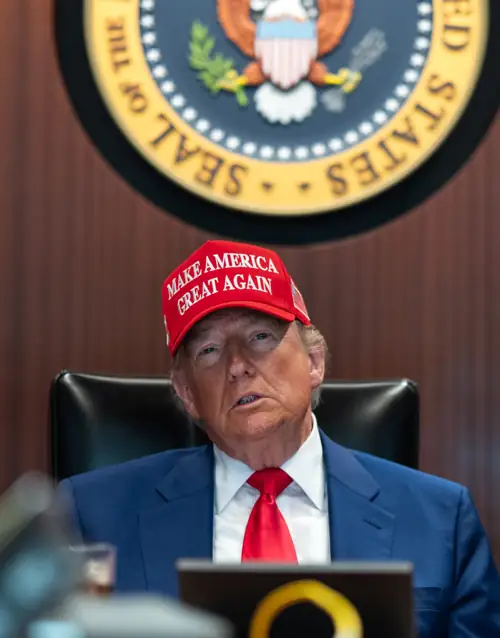
The Commodity Futures Trading Commission is now investigating so-called 'mention markets' on prediction sites like Kalshi, according to two sources who spoke to NPR on condition of anonymity because they weren't authorized to go on the record. Mention markets let people bet real money on the specific words public figures will say out loud. Including the President of the United States.
Kalshi has pulled all mention markets from its platform while the probe proceeds, though NPR reports the site is still accepting wagers on what people say at political events, earnings calls, and live TV. The CFTC's inquiry comes on the heels of a revelation last month that Trump's own teleprompter operator had been pocketing money by betting on his boss's exact word choices during public appearances. Read that sentence again. The man controlling what words appeared on Trump's teleprompter was betting on which words Trump would say. That is either the most elegant financial crime of the decade or the most obvious conflict of interest since someone invented insider trading.
Kalshi has not been charged with anything. The CFTC is still reviewing. But the fact that this market existed, grew to the point where millions of dollars were being wagered, and apparently attracted at least one person with direct editorial access to a sitting president's speeches before anyone noticed is the kind of regulatory gap you drive a truck through.
Ukraine Is Making Crimea Miserable on Purpose
Russia has held Crimea since 2014. Ukraine wants it back and has spent years running drone strikes at the peninsula with limited results. That changed recently. NPR's Greg Myre reports that Ukraine has dramatically escalated its campaign in recent months, turning daily life in Crimea into something that looks a lot less like a Russian beachfront resort and a lot more like a prolonged, grinding siege.
As of yesterday, Ukrainian drones cut electricity to Sevastopol, Crimea's largest city. Power came back hours later, but Myre notes that outages like this are now routine. Electricity and cell service go dark for days at a time. Water gets cut. Fuel is scarce. Shops stay closed. The summer tourist season, which usually draws Russian families to Crimea's beaches, has essentially been erased.
Ukraine has also been hammering Russian naval logistics. According to NPR, Ukraine claims it has hit more than 200 Russian ships in the past month alone. Russia is responding by attacking international cargo ships collecting Ukrainian grain from Odesa. These are civilian vessels from other countries with no weapons. Ten sailors died in one Russian attack. Nearly all international shipping has now abandoned the route, leaving Ukraine struggling to export its harvest by sea at exactly the moment it needs to.
Kennedy Center Closes for Two Years, Adds Trump's Name Back to the Door
The Kennedy Center's board voted for the second time to shut down most of the complex for a two-year renovation, NPR reports. The $250 million project covers structural repairs, new marble floors, nearly $12 million in acoustic upgrades, and plans to temporarily relocate the eight-foot bronze bust of John F. Kennedy from the main foyer. The main campus is expected to reopen in summer 2028.
The board also voted to restore Donald Trump's name to the center's entrance. A federal judge still needs to sign off on these decisions. So the cultural institution named after a president who was assassinated will now also bear the name of a president who was convicted of 34 felonies. History is something else.
The REACH, a 2019 addition to the complex, will stay open for limited programming during the closure. Small comfort for anyone who actually wanted to attend something at the Kennedy Center in the next two years.
The Dingo Take
Five thousand sailors have been at sea for eight months. They are running out of food. They are not seeing sunlight. Their mental healthcare is described as inadequate by the lawmakers who are now demanding someone in the Pentagon explain themselves. And the Navy, by its own internal discussions, knew a swap was possible before things got bad enough to make headlines. That is not a supply chain failure. That is a leadership failure, dressed up in logistics language to avoid accountability.
The mention markets story is funny in the darkest possible way. The CFTC apparently needs a federal investigation to notice that letting people bet on a president's exact words creates a fairly obvious incentive for anyone near that president's words to manipulate them. The teleprompter operator thing should have set off alarm bells the moment it happened. Instead it took weeks and a congressional news cycle to get regulators moving. The same government that can't feed its sailors has also been hosting a de facto prediction market for presidential speeches. These failures are not unrelated. They are symptoms of an administration that is comprehensively better at generating spectacle than at running anything.
Somewhere in the Middle East, a sailor who hasn't seen fresh vegetables or direct sunlight since spring is reading about bets on Trump's teleprompter words. We'd like to think that sailor finds it funny. We suspect they do not.



Comments