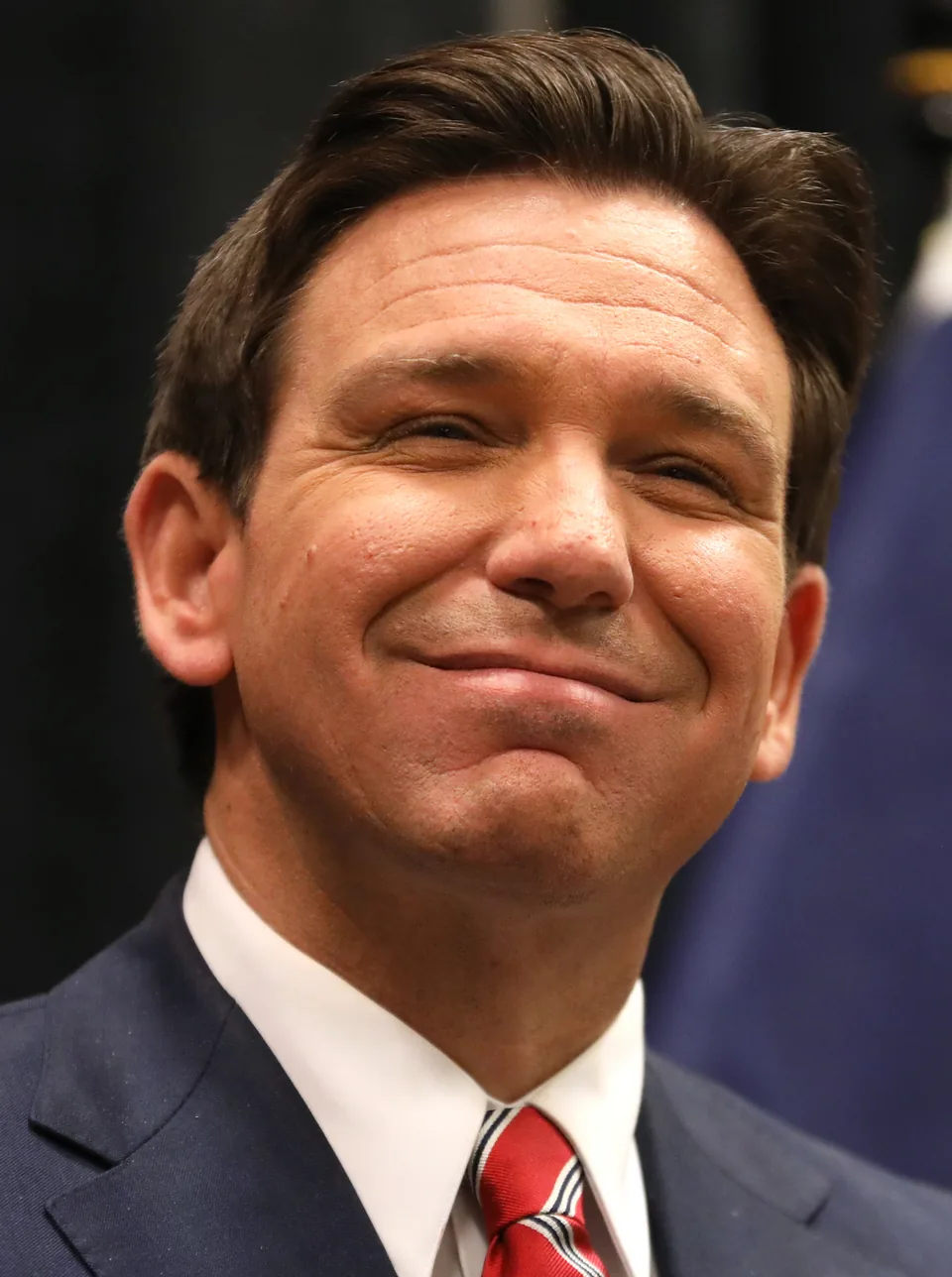
Florida executed its 13th prisoner of the year on Tuesday, which means one state is responsible for more than half of every execution carried out in the United States in 2026. Ron DeSantis, in the final stretch of his gubernatorial tenure and apparently determined to leave a particular kind of legacy, has two more scheduled for September. The assembly line is running.
Who William Silvia Was and What He Did
William Frances Silvia, 61, was executed by three-drug injection at Florida State Prison near Starke on Tuesday evening, according to The Guardian. The US Supreme Court declined earlier that day to halt the execution.
Silvia was convicted of first-degree murder for the 2006 shooting of his estranged wife, Patricia Silvia, and the attempted murder of her mother, Betty Woodard. Court records show he bought a shotgun, drove to Woodard's Orlando-area home where Patricia had been living since their separation, showed up in the middle of a family cookout, attempted to reconcile, failed, walked back to his truck, and shot both women. Patricia died. Her mother survived.
He was first sentenced to death after his 2008 trial. That sentence was later vacated on appeal due to issues with Florida's death penalty sentencing procedures. A new sentencing phase in 2018 put him back on death row. He stayed there until Tuesday.
The Legal Fight That Didn't Work
Silvia's attorneys made a last-ditch argument that deserves at least a mention before we move on. The Capital Collateral Regional Counsel, the Florida state agency legally required to represent death row inmates, was already representing another prisoner, and Silvia's lawyers argued the conflict meant he couldn't get adequate legal assistance. The Florida Supreme Court rejected the appeal.
The Supreme Court of the United States agreed with Florida by doing nothing. It denied the request to halt the execution Tuesday without comment, which is how the court usually handles these things and which tells you roughly everything about the current court's appetite for intervening in capital cases.
This is the part where someone notes that having one overworked public agency represent every condemned prisoner in Florida is a structural problem with obvious implications for the quality of representation those prisoners receive. Someone notes it. Nobody does anything about it.
The Numbers, Because They Are Genuinely Staggering
Florida has now executed 13 people in 2026. The entire United States has executed 22. Do the math: one state, accounting for roughly 6% of the US population, is responsible for 59% of all executions in the country this year. The Guardian reports that Florida also led the nation in 2025 with 19 executions, a state record since capital punishment was reinstated in 1976.
In July, Florida executed two prisoners on the same day. That was the first time any state had done that in nearly a decade. It barely made a ripple in the news cycle, which itself says something.
Two more executions are already on the calendar. Harold Gene Lucas, 74, is scheduled to die on September 1. Daniel Owen Conahan Jr., 72, follows on September 10. By the time September is over, Florida will have executed 15 people this year. That number will keep going.
What DeSantis Gets Out of This
Ron DeSantis is in the final chapter of his time as Florida's governor, and he has made no secret of the fact that he views aggressive use of the death penalty as a feature, not a bug. The political logic is not complicated. Executing people polls well with the Republican base. It signals toughness. It costs him nothing with voters he's already lost and consolidates him with voters he wants to keep.
It also, not coincidentally, keeps his name in the news. DeSantis took a beating during his failed 2024 presidential run and has spent the subsequent period trying to rehabilitate his national profile. Running the country's most active death chamber is a way of staying relevant to a Republican Party that currently defines strength in the most literal terms possible.
Whether any of this rehabilitates him for a future national run is unclear. What is clear is that the executions are happening regardless of whether they serve any political purpose at all.
The Broader Context No One Wants to Sit With
The United States executed 47 people in 2025. Florida did 19 of them. To put that in comparative terms: Texas, the state that defined American capital punishment for decades, is no longer the one setting the pace. Florida took that title and ran with it.
Capital punishment opponents have spent years arguing that the death penalty is applied unevenly, that the legal representation available to death row inmates is inconsistently adequate, and that the machinery of execution has very little to do with justice and very much to do with prosecutorial discretion, geography, and which governor happens to be in office. Florida in 2026 is not exactly a counterargument to any of those points.
William Silvia shot two women at a cookout and one of them died. That is not in dispute. What is worth at least asking is whether the pace at which Florida is currently executing people reflects a functioning justice system or a governor trying to run up a score before the clock runs out.
The Dingo Take
Fifteen executions in a single state in a single year. Think about what that number actually means. Florida is not responding to a crime wave. It is not clearing some sudden backlog of freshly convicted murderers. It is working through death row cases that have been sitting in the legal system for years, decades in some cases, and it is doing so at a pace nobody has seen from any American state in living memory. The men being executed in September are 74 and 72 years old. This is not urgency. It is a choice.
The choice belongs to Ron DeSantis, who signs the death warrants, and to the Republican political culture that rewards him for it. There is an argument, a real one, that some of the people Florida is executing committed crimes so terrible they forfeited any claim on public sympathy. Fine. Make that argument. But the argument for executing thirteen people in eight months, in a state with documented problems providing adequate legal representation to death row inmates, is a much harder case to make. The speed itself is the problem. Justice administered this fast isn't justice. It's a production schedule.
Two more in September. Then whatever DeSantis has planned after that. Florida has officially become the place where American capital punishment goes to set records nobody was trying to break.



Comments