A 21-year-old recent college graduate built a fake polling website using AI, published completely fabricated election data for three states, and watched a sitting mayor brag about the results on social media. The website was called Median Strategies, it had 20 followers on X, and it fooled the California political press anyway. The Guardian identified the man behind it as Rahil Prakash, and he has some thoughts.
The Experiment, If You Want to Call It That
Prakash told the Guardian he built Median Strategies after watching a significant polling miss in the Michigan Senate primary, where surveys showed Abdul El-Sayed with a commanding lead before he ended up winning by a much smaller margin. That got him wondering: how hard would it actually be to inject fake polling data into the political information ecosystem?
So he built a website using artificial intelligence, registered a domain, made it look professional enough, and started publishing polls. He was, apparently, the only person involved. The whole operation had 20 followers on X as of Thursday morning and began posting on August 9th, according to the Los Angeles Times. That's less than two weeks of existence before it had already done real damage.
"I wanted to see if fake polls could really penetrate the ecosystem that easily," Prakash told the Guardian. "And as it turned out, it could." He said he did not expect the California political press to pick up the data on their own. He also said he was "a bit shocked, perhaps, at how fast this sort of information can spread." Join the club, buddy.
What the Fake Polls Actually Said
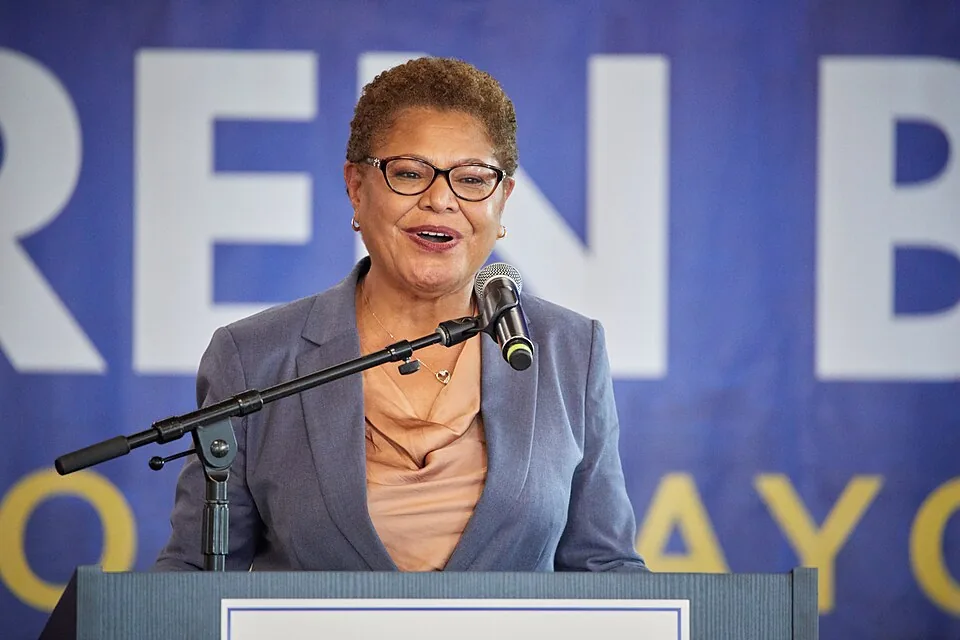
Median published fabricated polling across three states. In California, it put Los Angeles Mayor Karen Bass ahead of her challenger Nithya Raman by more than 10 percentage points. Bass's campaign touted the poll publicly. The California Post cited it. A widely followed polling aggregator on X shared the group's Nevada poll, which showed Governor Joe Lombardo up by five points ahead of November's general election.
The Wisconsin poll was arguably the most damaging. Median claimed Democratic primary candidate Francesca Hong was leading the Wisconsin governor's race by more than 20 percentage points. Hong went on to lose that primary. Prakash has since apologized to the campaigns of Bass, Raman, and Hong directly, which is a nice gesture that absolutely does not undo any of it.
Several credible polling organizations did not aggregate Median's data because they could not verify its methodology. Good for them. The fact that this needs to be noted as a mark of distinction tells you everything about where the bar currently sits.
How the Guardian Actually Found Him
Median Strategies shut itself down earlier this week after the Los Angeles Times started asking questions. It posted an unsigned statement describing the whole thing as a "short-term social experiment" to test how fake polling "could enter and spread through the political information ecosystem without independent verification." It also claimed no one involved received any financial benefit and that no campaign, party, or outside organization funded or directed the project.
The Guardian found Prakash through domain registration data. By reverse-searching two nameservers tied to the Median Strategies website, reporters obtained a list of thousands of other domains using those same nameservers. About 115 domains shared both nameservers, but only one also used the same domain name registrar. That domain now shows a GitHub 404 page. Web records tied it to a GitHub profile containing a file with Prakash's name. Digital forensics contributed by Aaron Zolla.
Prakash, when reached by phone, confirmed he was behind Median and said he had not traded on any prediction markets using the fabricated data. That question needed to be asked. The fact that it needed to be asked should probably haunt you a little.
The Industry Reacts, Mostly With Justified Fury
On Wednesday, before the Guardian contacted Prakash, the American Association of Political Consultants condemned the project in unambiguous terms. "Publishing fabricated survey data as independent research is not a social experiment," the group said. They called it "a deception directed at voters, at the press, and at the campaigns that rely on public data to make decisions."
That framing is correct. Campaigns make resource allocation decisions based on polling. Candidates change their messaging. Donors shift their money. Voters in Wisconsin went to the polls in a primary with fake data floating around about who was ahead. Calling this a social experiment implies a kind of detached academic curiosity that the downstream consequences do not support.
What Prakash Actually Wants You to Take Away
To his credit, Prakash was not defensive about what he did. He was, in fact, pretty direct about the broader implication. "I think my overall takeaway was that if you just make it look a bit pretty, it's rather easy for it to spread," he told the Guardian. "And I hope it gives a really good lesson going forward in that we need to be very serious about these things."
He went further: "If one person can do this, what can a serious operation do in the future? A real, you know, operation for an organization, country, whatever." That question is not rhetorical. It is the entire problem. A 21-year-old with a laptop, some AI tools, and a couple of free weeks just demonstrated that the verification infrastructure around public polling is held together with tissue paper and ambient trust.
The Dingo Take
You are supposed to read this story and feel relieved that it was just some curious recent grad and not a foreign intelligence operation or a well-funded domestic ratfucking campaign. Do not feel relieved. Feel the opposite of that. Because the lesson of Median Strategies is not that a young man did a dumb thing and got caught. The lesson is that the dumb thing worked. Completely. For nearly two weeks. With 20 followers and an AI-built website and zero budget.
Karen Bass, the mayor of one of the largest cities in the country, looked at a poll from an anonymous website that had existed for less than a week and promoted it to her supporters. The California Post ran it. A polling aggregator with a large following on X pushed the Nevada numbers. Nobody checked. Nobody asked who Median Strategies was, who funded them, who their pollsters were, what their methodology looked like, or why a brand-new organization had suddenly appeared to cover three unrelated states. They just... shared it. Because it looked pretty and said something someone wanted to hear.
Prakash is right that this should scare people. A solo operation by a recent college graduate with good intentions caused genuine confusion in real elections. Now imagine the same template with money behind it, or a state actor running it, or a network of fake firms all releasing coordinated data in the final weeks before a close race. The infrastructure to stop that does not exist. The habits of verification that would catch it are clearly not widespread enough. And the political press, starving for data and clicks, will apparently amplify whatever lands in front of them if it's formatted correctly. That is not a social experiment. That's a blueprint.




Comments