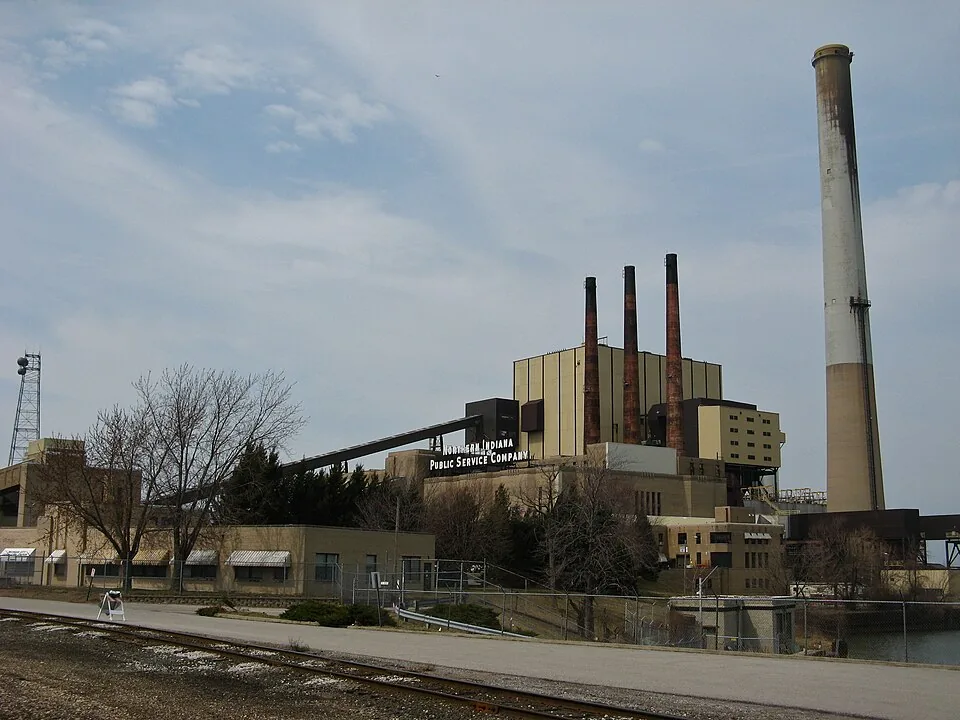
Nine days. No power, no school, no cold food, no answers. Tens of thousands of families in northwest Indiana are still living in the dark after a storm tore through on August 11, and the utility company is telling some of them to hold on until Tuesday. Tuesday. That is eleven days without electricity in the middle of an August heat wave, in one of the most economically vulnerable communities in the Midwest.
68,000 Customers Still Dark, Mattresses Too Hot to Sleep On
As of Thursday morning, Northern Indiana Public Service Co. reported 68,000 customers remained without power, with the bulk of them clustered in Lake County along the Illinois border. According to the Associated Press, NIPSCO says it has restored electricity to 306,500 customers since the storm hit, which sounds impressive right up until you remember that tens of thousands of people are still throwing out spoiled food and sleeping on their floors.
Kevin Mejia, a 30-year-old East Chicago resident who runs a community Facebook page, told the AP he is literally sleeping on the floor because his mattress traps too much heat. He posts one update and gets 500 comments. Elderly neighbors do not know who to call. People are reporting hundreds of dollars in lost groceries. And some residents, like Mejia, had the extra cruelty of watching their power come back briefly before losing it again.
The utility has called the damage "unprecedented and widespread" and says crews from around the country have come to help repair downed wires, snapped poles and blown equipment. That is good. It does not make eleven days of darkness acceptable.
Gary Has Always Been in Survival Mode. That Is Exactly the Problem.
Here is the quote that should stop you cold. Shatiya Hardin, a hair stylist who has worked in Gary for 25 years and has not been able to open her salon since August 11, told the AP: "We're always in survival mode in Gary. And I think that's probably why it wasn't so much of an uproar because the first few days, it was like, 'OK, we're used to this.'" She paused. "But this is the second week now. It's not OK for us to continually be in survival mode."
Read that again. A community's pain was muted because they are so accustomed to neglect that the first few days of a catastrophic multi-week power failure felt normal to them. Gary is a majority-Black city with decades of deindustrialization, poverty and infrastructure decay baked into its bones. The storm did not create those conditions. It just made them impossible to ignore for a news cycle or two.
Volunteers and community groups have stepped up, according to the AP, with organizations like the Flourish Community Hub in Gary running food distribution and support. Raydia Martin, the assistant director there, called it the "silver lining." And that is genuinely moving. But the fact that church volunteers are the primary safety net for tens of thousands of Americans nine days into a disaster is not a silver lining. It is an indictment.
Kids Aren't in School and Families Are Paying for It
The school situation is its own separate disaster. Gary's school district, which serves roughly 4,300 students, started the year in early August and has been shuttered since August 13, the AP reports. The district says schools will remain closed through at least Friday. Portage Township Schools had to cancel its August 12 start date entirely and is now aiming for August 25, assuming storm damage across school properties gets cleared in time.
Courtney Page-Tan, a professor at Indiana University Indianapolis who studies community resilience, put it plainly to the AP: for households living paycheck to paycheck, missing work because there is no childcare is not an inconvenience. It is a financial crisis. The storm hit, the power went out, the schools closed, and now parents who cannot afford to miss shifts are being forced to choose between keeping their kids safe and keeping the lights on. Assuming the lights ever come back.
Page-Tan also flagged the growing health risks that come with prolonged outages: carbon monoxide poisoning from poorly ventilated generators, medical devices losing charge, refrigerator food crossing the line from sketchy to dangerous. Nine days, she told the AP, is a long time for a community to be without power. That is the scientific term for it. The colloquial term is a catastrophe.
Meanwhile, Ohio Got Hammered Too
About 250 miles southeast of Gary, Columbus, Ohio got more than three inches of rain in twelve hours on Thursday, according to the AP. Columbus Mayor Andrew Ginther confirmed the flooding. Fire crews rescued two women trapped on foot in a flooded creek, and first responders pulled a 12-year-old bicyclist out of high water after the kid was swept off a bridge. The child survived.
These are not unrelated stories. The same broader weather system that battered Indiana is churning through the Midwest, and the region is getting hit from multiple directions at once. Indiana is also reportedly seeking federal disaster aid, according to separate AP reporting. How fast that aid materializes, and for whom, will tell you everything you need to know about how seriously the federal government is taking this.
Why Is Illinois Already Recovered and Indiana Still Suffering?
NIPSCO's parent company executive Melody Birmingham offered a telling explanation to the AP for why Illinois, hit by the same storm, recovered faster. Part of it, she said, was fewer trees in the affected Illinois territory. Part of it was different infrastructure, including some buried power lines.
Buried power lines. The kind of infrastructure investment that costs money upfront but pays off every single time a storm rolls through. The kind of investment that lower-income communities historically do not get. Birmingham's quote was "No storm is created equal. No service territory is the same." True enough. But the reason some service territories have buried lines and others do not is not a meteorological mystery. It is a policy choice, stretched across decades, that consistently leaves the poorest communities holding the bag.
The Dingo Take
You are supposed to believe that eleven days without power for 68,000 households in 2026, in the wealthiest country in the history of human civilization, is just one of those things. A natural disaster. Nobody's fault. The storm was unprecedented, the utility is working around the clock, crews came from all over the country, what more do you want. That is the framing NIPSCO is counting on.
What actually happened is this: a storm exposed, with brutal clarity, the gap between communities that have resilient infrastructure and communities that do not. Gary did not end up with aging above-ground power lines and a grid that buckles for nearly two weeks because of bad luck. It ended up that way because of a long sequence of decisions, disinvestments and priorities that placed other places, other people, ahead of it. The storm is the emergency. The infrastructure is the crime.
Shatiya Hardin has been doing hair in Gary for 25 years. She has watched her community absorb blow after blow and keep moving because that is what you do when nobody is coming to save you. The least the rest of us can do is be honest about why Gary keeps getting hit this hard and this long while places with buried power lines bounce back in days. That is not bad luck. That is a choice. And choices have authors.




Comments