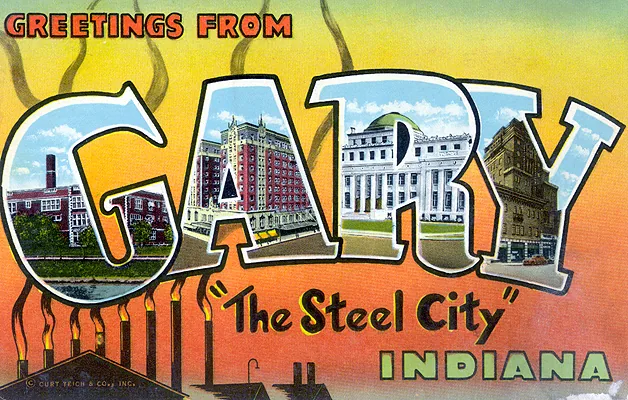
Thousands of people in Gary, Indiana have been sleeping in their cars for air conditioning, walking to dollar stores that have run out of candles, and crying through nights too hot to sleep in — for eleven straight days. The utility company responsible for restoring their power described the situation, with a straight face, as "substantial progress." Bridget Sanders, a Gary resident, had a different word for it: "Ridiculous."
What Actually Happened Out There
On August 11th, a brutal storm system tore through Indiana, Ohio, Illinois and Kentucky. The National Weather Service's Storm Prediction Center recorded straight-line winds hitting 99mph in Gary. Three confirmed tornadoes. Flash flooding. Rainfall topping 11 inches in some areas. The Guardian reports that about 300 power poles were damaged across the region.
The storms killed several people, including a four-year-old child whose home was struck by a falling tree in Geneva Township, and a person who died in a suspected weather-related house explosion in Portage. These are not statistics. These were people.
At the storm's peak, 374,500 customers lost power. By Saturday, the Northern Indiana Public Service Company, known as Nipsco, reported restoring service to 341,376 of them. That leaves 33,124 still in the dark, eleven days later. And residents in Gary specifically were told by Nipsco that full restoration might not come until Tuesday. That's two weeks. Two full weeks.
Life Without Power in a City Already on the Edge
Gary is not a wealthy place. About one-third of its residents are estimated to live in poverty, according to The Guardian. When the power goes out for two weeks in a city like that, the cascade of consequences is brutal and specific: spoiled food, dead phones, no schools, closed businesses, dry gas pumps, no way to do laundry. The basics of modern life, gone.
Renita Theus, 41, told the New York Times: "Every day I'm crying. It's hot in the house. I toss and turn and can't sleep. I walked to the dollar store and they're all out of candles and batteries." Her car was trapped under a fallen tree. She had nowhere to go and no way to get there anyway.
"I feel bad for newborn babies and people on ventilators," she said. "I think if this was a richer area, it would be different."
That sentence is doing a lot of heavy lifting. It should not have to.
Nipsco's Response, Which Is Something
Nipsco's official statement called the restoration effort a demonstration of "substantial progress." The company noted that its vegetation management spending has more than doubled since 2016, said it was suspending disconnections for customers having trouble paying bills, and described the storm damage as "unprecedented."
Residents filed a proposed class-action lawsuit against Nipsco accusing the utility of failing to trim trees that brought down the power lines. "This situation was predictable. It was obvious and it was preventable," attorney Otto Shragal of the Allen Law Group said, as The Guardian reports. Nipsco denied the allegations.
In the Aetna neighborhood of Gary, one of the hardest-hit areas, downed trees still line the streets eleven days later. Cynthia Hunter described charging phones in her car and spending multiple nights sleeping in the truck just to get air conditioning. "It's hard, guys," she told a CBS affiliate. "It's really, really hard."
The Government's Role, Such As It Is
Indiana Governor Mike Braun posted on X that he had formally requested an expedited major disaster declaration from FEMA for 54 counties. The Guardian reports the Trump administration granted an emergency declaration, and a state relief fund is providing emergency aid grants of up to $5,000.
Five thousand dollars. For families who have lost refrigerators full of food, missed two weeks of work, and slept in their vehicles to survive the August heat. That is what the government is offering. Emergency aid, in the most technical sense of the phrase.
Tasha Harris, from neighboring Griffith, summed up the grinding daily calculus of surviving this: "We gotta go back-and-forth and get ice. Fill it with a cooler. Going back-and-forth to get something to eat. It's too much. But we're still here so we're blessed." The bar has been set so low that still being alive counts as a win.
The Dingo Take
"I think if this was a richer area, it would be different." Renita Theus said that. She is right. She knows it. Everyone reading this knows it. The reason Gary, Indiana is heading into a fifteenth potential day without power while a utility company issues press releases about its vegetation management spending is not a mystery. It is a choice. It is the accumulated result of decades of decisions about where infrastructure investment goes, who gets prioritized when the crews roll out, and whose discomfort registers as an emergency.
Nipsco doubled its vegetation management budget since 2016, which is great. It also left 33,000 people without power for two weeks after a storm that, yes, was severe, but was not unprecedented in the history of bad weather hitting the Midwest. A class-action lawsuit will now argue in court what residents already know in their bodies: this was preventable. That litigation will take years. The ice coolers are needed now.
Governor Braun asked FEMA for help. The Trump administration granted emergency status. Up to $5,000 in aid is available from the state fund. And people in Gary are still sleeping in their trucks. The machinery of government disaster response is technically in motion, which is different from it actually working. Bridget Sanders called Nipsco's statement "ridiculous" and said her community is being left behind. She was being polite.



Comments