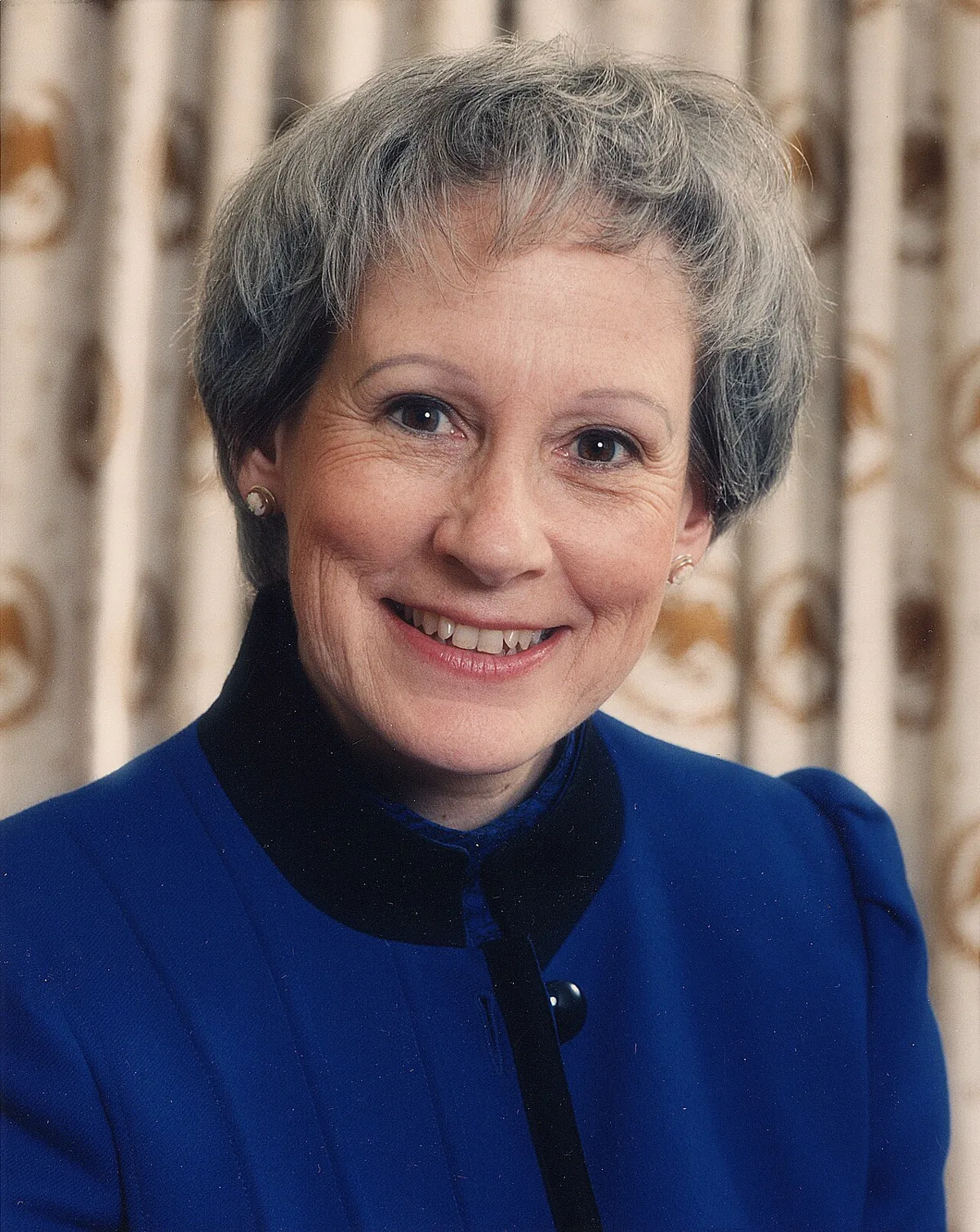
Nancy Kassebaum Baker, the first woman ever elected to the United States Senate without riding a husband's coattails to get there, died Friday in Kansas at age 94. She was, depending on your politics, either a relic of a more decent era or living proof that the Republican Party used to be capable of producing decent human beings. Both things are true.
Who She Was, and Why It Mattered
According to the Associated Press, Kassebaum Baker died of natural causes. Her son Bill told the AP she was 'an independent-minded Republican who was willing to stand up for what she thought was right, even if that meant going against the party.' Read that sentence slowly. Let it land. In 2026, that description sounds less like a politician and more like a mythological creature.
She was elected to the Senate in 1978 from Kansas, won with less than 31 percent of a crowded Republican primary, and then won her general election with nearly 54 percent of the vote. She served three terms. She chaired the Senate Labor and Human Resources Committee. She was, by every measure, genuinely popular in a way that had nothing to do with grievance or performative outrage or culture war points.
Her father was Alf Landon, the Kansas governor who ran against FDR in 1936 and lost in one of the most spectacular electoral blowouts in American history. She apparently inherited his moderate politics and none of his electoral misfortune. She won re-election in 1984 with 76 percent of the vote and in 1990 with 74 percent. Those numbers look fake in 2026. They are not fake.
The Kind of Republican Who No Longer Exists
Here is the part that should embarrass an entire political party: Nancy Kassebaum Baker co-authored a major health insurance reform law with Ted Kennedy. Ted Kennedy. The liberal lion of Massachusetts. The man who was, for decades, the right's designated boogeyman. They worked together. They produced legislation. The law bore both their names. Nobody primary-challenged her into oblivion for it.
She also voted for the assault weapons ban championed by Bill Clinton. The New York Post notes that vote 'inspired the angriest mail of her career.' She did it anyway. When conservative activists pushed back, she pushed back harder. She won by 74 points in 1990 regardless.
That was the Republican Party she came from. Not the one that exists now. The one she belonged to believed that governance was the point of holding office, that working with the other side was not treason, and that a ban on military-style weapons wasn't a communist plot but a sensible response to gun violence. That party is gone. Kassebaum Baker outlived it by decades.
She Got Out Before Things Got Ugly
She retired from the Senate in early 1997, which, in retrospect, was extremely good timing. She'd contemplated not seeking a third term and only ran because Republican leaders begged her to. When she finally left, she said she wanted to 'cuddle up and do needlepoint all day' and go back to a 90-year-old farmhouse in the Kansas Flint Hills. When someone floated the idea of naming a highway after her, she responded, 'Oh, goodness. Absolutely not.'
That's the quote. That's the whole character in one sentence. The woman who had just spent 18 years in the most powerful legislative body on earth did not want a highway named after her. She wanted to go home and babysit grandchildren. The contrast with her successors, who treat elected office as a personal branding exercise and a grievance platform, does not need to be spelled out.
She married former Tennessee Sen. Howard Baker in 1996, the first time in American history that two ex-senators had married each other. Howard Baker died in 2014. She kept going. She served on a bipartisan campaign finance reform commission. She accompanied her husband to Japan when President George W. Bush appointed him ambassador. She told a reporter before leaving for Tokyo that she would 'miss the Kansas prairie.' Of course she would.
She Saw What Her Party Became and Said No
The New York Post reports that later in life, Kassebaum Baker broke with the Republican Party as it lurched rightward, endorsing Democratic candidates for Kansas governor and U.S. Senate. She was not a Democrat. She did not become one. She simply looked at what the GOP had become under the MAGA banner and decided she wanted no part of it.
This is a woman who spent her entire adult life as a Republican, who won three Senate terms as a Republican in a deeply red state, who chaired committees and co-wrote legislation and was a genuine institution of the party. She looked at the current version of that party and endorsed Democrats. That is not a small thing. That is a verdict delivered by someone who had standing to deliver it.
She was 94 years old and sharp enough to know exactly what she was doing. The party she built her career inside had become unrecognizable to her. She said so, in the clearest possible terms, by casting her support to the other side. Some Republicans will call that a betrayal. The more honest reading is that she was the one who stayed put while the party ran away from her.
The Dingo Take
You are supposed to look at Nancy Kassebaum Baker's career and feel nostalgic for a bipartisan golden age that, if we're being honest, was never quite as golden as obituaries make it sound. And fine, there is some truth in that. But the more useful thing to take from her life is not nostalgia. It is a precise diagnosis of exactly what has been lost and who is responsible for losing it.
She was not a saint. She was a politician who had the basic professional competency to distinguish between 'things I disagree with' and 'things that will destroy the republic.' She could work with Ted Kennedy without believing Ted Kennedy was a Marxist plant. She could vote for a gun measure that made her constituents angry and survive the political consequences because she'd built enough genuine trust over enough years that people believed she meant well even when they disagreed. That is not a superpower. That used to be the baseline.
The Republican Party that exists right now would not recognize her. It would not tolerate her. It would primary her into retirement inside of one term. The MAGA movement she quietly repudiated before she died has replaced every instinct she embodied with the opposite: loyalty over governance, grievance over legislation, performative fury over sensible solutions. She spent her last years watching that happen and endorsing Democrats to stop it. Rest easy, Senator. You gave it your best shot.

Comments