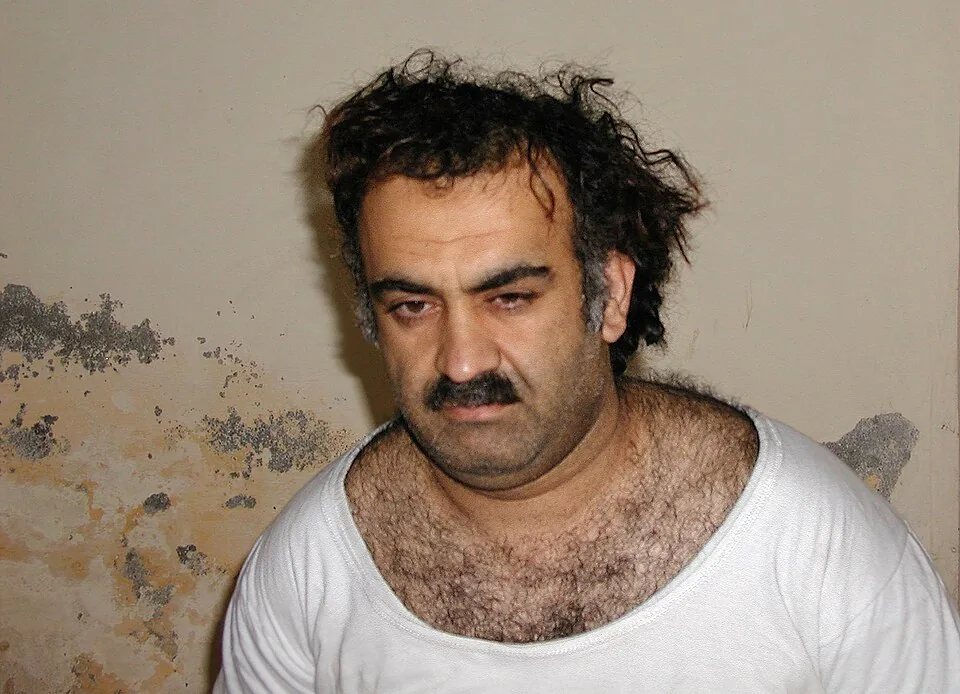
Twenty-seven years after Khalid Sheikh Mohammed allegedly helped murder nearly 3,000 people, a military judge has finally set a trial date. Mark your calendars for June 2028, assuming this one sticks — which, given the track record here, is a very large assumption.
The Ruling, Such As It Is
Air Force Lt. Col. Michael Schrama, a military commissions judge, ruled Wednesday that Mohammed will stand trial alongside three co-defendants: Walid bin Attash, Ali Abdul Aziz Ali and Mustafa Ahmed al-Hawsawi. The four men are accused of conspiring to crash hijacked commercial airplanes into the World Trade Center and the Pentagon on September 11, 2001, killing nearly 3,000 people.
Government prosecutors had asked for a January 2027 start date. The judge rejected that and pushed it back 18 months, citing pre-trial rulings the court still needs to work through before proceedings can begin. According to the New York Post, Schrama is the fifth judge to oversee this case. Fifth. The revolving door of judges handling this thing has itself become part of the story.
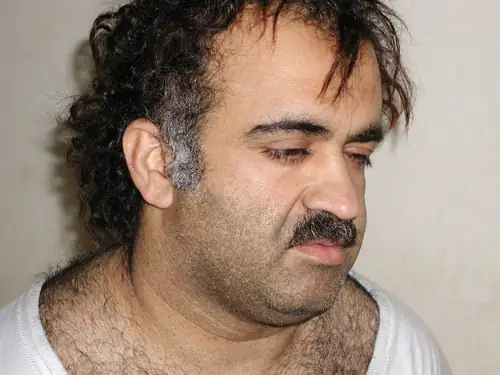
Mohammed has been held at Guantanamo Bay since 2006. The other defendants have been there since 2003. They have been detained, without trial, for over two decades. Whatever you think about these men — and there is very little reason to think charitable thoughts — that is a genuinely extraordinary fact about how this country has handled the single most significant criminal prosecution of the 21st century.
A Timeline Only Kafka Could Love
This case has been in pre-trial proceedings so long that two full presidential administrations have come and gone since it started generating serious legal activity. Trial dates have been set before. They have evaporated before. Families have been promised resolution before.
The closest thing to an actual conclusion came in 2024, when Mohammed, bin Attash and al-Hawsawi reached a plea deal with the Biden administration. They would admit their roles in the attacks, take life sentences, and avoid execution. Some victims' families supported it as the only realistic way to guarantee these men faced any formal accountability before dying in custody. Many others were furious, insisting death was the only acceptable outcome.
The Biden administration, apparently surprised by the volume of the backlash, tried to pull the deal back. Years of additional litigation followed. A federal appeals court officially killed the deal in June 2025, according to NBC News, and Mohammed's lawyers have signaled they intend to ask the Supreme Court to weigh in. So even this new trial date exists inside a live legal grenade.
The Torture Problem Nobody Wants to Talk About
One of the central reasons this case has dragged for so long is a legal issue the government created for itself: whether confessions obtained through torture can be used in court. Mohammed was waterboarded 183 times by the CIA. That is not a disputed fact. It is in the government's own records.
That reality has complicated every single phase of this prosecution and will continue to complicate the trial itself. Courts have spent years sorting out what evidence is admissible, what was tainted by interrogation techniques that the U.S. government has since acknowledged amounted to torture, and whether any of that affects Mohammed's ability to receive a fair proceeding. There are no clean answers. There were never going to be clean answers, because the people running the early post-9/11 detention program made sure of that.
The Families Have Been Waiting Long Enough
Whatever abstract legal arguments exist about due process and admissibility, there are real people who lost real family members 25 years ago who have not seen a single day of trial. The New York Post spoke with several of them Wednesday, and their exhaustion is completely understandable.
Retired NYPD officer Jim Smith, whose wife Moira Smith died responding to the attacks, told the Post: "We have been asking for a trial date for 20 years. Hopefully, this time it is for real." He added that the case needed someone to "man up and take charge," noting that several judges had seemingly wanted nothing to do with it.
Retired officer Kathy Vigiano, whose husband Detective Joseph Vigiano also died on September 11th, put it more bluntly: "We have waited 25 years. Why do we have to wait another two years? How much time do you need for pre-trial? Why can't they start the trial now?" She also raised the entirely reasonable concern that the current judge might not still be on the case by the time June 2028 arrives. Given that Schrama is the fifth judge assigned to this prosecution, that is not an idle worry.
What Happens Now
The June 2028 date is real in the sense that a judge wrote it down. Whether it survives is a separate question. Mohammed's attorneys have not yet responded publicly to the ruling. His legal team has already signaled they plan to seek Supreme Court review of the appeals court decision that killed the plea deal, which means there is an active legal proceeding that could theoretically upend everything again.
The military commission system itself remains deeply controversial. Critics across the political spectrum have argued for years that this hybrid legal structure, created specifically to try terrorism suspects outside the normal federal court system, has produced exactly the kind of endless procedural quagmire on display here. Federal prosecutors have successfully tried and convicted terrorism defendants in civilian courts. This system has produced, in nearly a quarter century, zero completed major trials.
June 2028 is the date. It is also, at this point, just a number on a calendar.
The Dingo Take
You are supposed to read this story and feel reassured that justice is finally on its way. A trial date has been set. The system is working. Please ignore the 27 years.
This is a catastrophic institutional failure dressed up in procedural language. Nearly 3,000 people were killed in the most documented mass murder in American history, with a confessed planner sitting in U.S. custody for two decades, and the government still cannot get this case to trial. The torture program that the CIA ran in the early 2000s didn't just violate basic human rights norms — it actively sabotaged the prosecution. The people who designed that program handed future defense attorneys a weapon they have been swinging ever since. That accountability has never fully arrived either.
Jim Smith and Kathy Vigiano and every other family member who has been waiting for this trial since 2001 deserve better than a press release about a date that might not hold, issued by the fifth judge to touch a case that has become a monument to institutional cowardice. June 2028. Put it in the calendar. Try not to laugh.


Comments