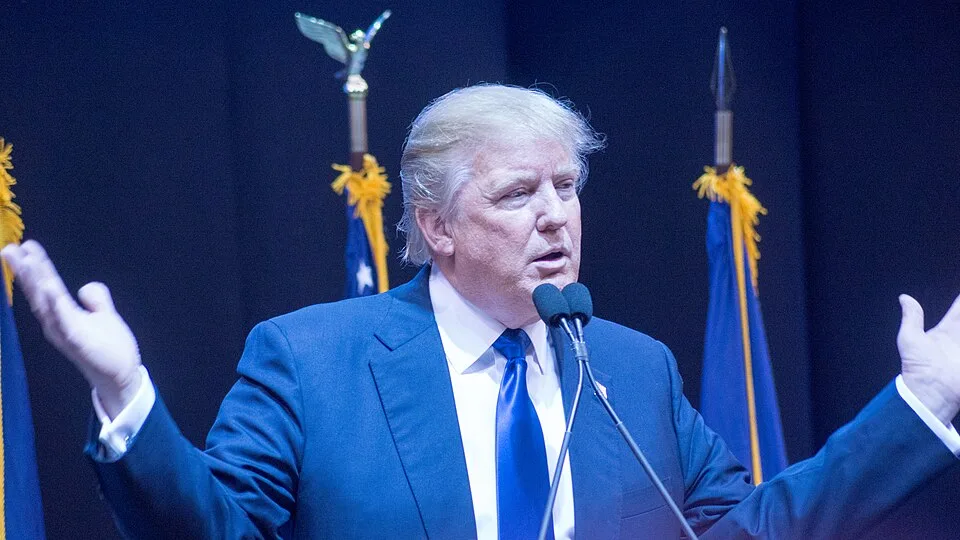
Six months into a war with no exit ramp, Donald Trump told Al Jazeera on Wednesday that the U.S. is 'achieving a very big victory' in Iran, and that the conflict 'will continue for as long as necessary.' No timetable for peace talks. No definition of victory. Just vibes and a blockade.
The 'Victory' Nobody Can Define
CBS News reports that Trump gave his assessment of the Iran war to Al Jazeera this week with all the precision of a man describing a dream he's already half-forgotten. Big victory. Going great. Could last forever. The president offered no metrics, no benchmarks, no articulation of what winning actually looks like when you're six months deep into a war with a country of 90 million people sitting on top of the world's most important shipping lane.
Israeli Prime Minister Benjamin Netanyahu, for his part, told Trump recently that a diplomatic deal with Iran is 'not possible,' calling the Islamic Republic's leadership 'savages.' That's a useful thing to tell the guy who controls whether the war ends. Very helpful. Extremely constructive. Nothing could go wrong here.
The Strait Nobody Can Open
Here's where it gets genuinely complicated. Iran and Oman have apparently been in serious talks about reopening the Strait of Hormuz through a temporary shipping route, and Iran's Islamic Revolutionary Guard Corps spokesman said Wednesday that the two countries actually reached an agreement on terms roughly a month ago, according to CBS News. The deal would have Iran and Oman jointly controlling shipping traffic through the strait and splitting the fees.
The catch? The U.S. hasn't accepted the arrangement. Iran's position is that the naval blockade has to end and the war has to stop before ships transit the strait again. Washington's position, as best anyone can tell, is that Trump is achieving a very big victory and there's no timetable. So the most important waterway in global energy markets stays closed, and the two sides are negotiating the terms of a deal that neither government has actually agreed to sign.
U.N. Secretary General Antonio Guterres isn't exactly riding to Iran's rescue here either. He said Monday that Iran must end its attacks on Hormuz and restore navigational rights. Iran's foreign minister Abbas Araghchi fired off a letter to Guterres this week anyway, asking the U.N. to 'condemn and reject' U.S. actions and warning that Iran 'reserves its right to pursue all available avenues' for retaliation. Guterres has so far declined to take the bait.
China Tells Bessent to Get Lost
Last week, Trump said he expected all countries to get on board with the new round of sanctions announced Monday. Treasury Secretary Scott Bessent went on CNBC and told China specifically to 'get with the program.' China's response, delivered within roughly the time it takes to make a pot of tea, was a flat no.
'China has already stated many times that it firmly opposes illegal unilateral sanctions,' foreign ministry spokesman Lin Jian said at a news briefing, per CBS News. 'China will take all necessary measures to firmly safeguard its own rights and interests.' Iran's Parliament speaker Mohammad Bagher Ghalibaf got on X to personally thank China for the rejection, invoking their 'comprehensive strategic partnership' and noting, with obvious pleasure, that 'this relationship needs no one's permission.' That is a diplomatically phrased way of telling Scott Bessent where to go.
Meanwhile, Iran and Russia Are Getting Cozy
While the U.S. tries to economically isolate Iran from the rest of the planet, Iran is in St. Petersburg this week having what its state news agency IRNA described as 'constructive' talks with Gazprom about advancing gas cooperation. The Iranian ambassador to Russia and the CEO of the National Iranian Gas Company sat down with Gazprom's Alexey Miller on Wednesday to discuss implementing an overland natural gas transfer agreement that was signed back in July 2024.
The plan, as Iranian Oil Minister Mohsen Paknejad has previously described it, routes Russian gas overland through Azerbaijan into northern Iran via a terminal on the Caspian Sea. Iranian officials have called it a 'win-win' that could help cement Iran's role as a regional energy hub. The irony of a U.S. naval blockade designed to strangle Iran's energy sector running concurrently with Iran signing long-term gas deals with Russia is, apparently, lost on no one except the people designing the strategy.
The Sanctions Math Doesn't Add Up
The basic theory of the sanctions campaign is that enough economic pressure will force Iran to the table on terms favorable to the U.S. The problem, which CBS News reporting makes vivid, is that the two largest potential enforcement gaps, China and Russia, have both now explicitly declined to participate. China is Iran's largest trade partner. Russia is now actively building energy infrastructure to supply Iran from the north.
So the sanctions squeeze Iran's access to Western financial systems and anyone who wants to stay in Washington's good graces. But China isn't asking for Washington's permission, Russia isn't asking for Washington's permission, and Iran's Parliament speaker is publicly celebrating that fact. The blockade closes the strait. The strait stays closed. Global energy markets continue to absorb the chaos. And Trump tells Al Jazeera it's a very big victory.
The Dingo Take
Six months in, and the Iran war has produced exactly one thing with any clarity: a very long list of things nobody has agreed to. No peace talks. No definition of victory. No enforcement mechanism for sanctions that China and Russia have openly refused to follow. A Strait of Hormuz deal that two countries apparently reached and a third country hasn't accepted. This is not a strategy. This is a bar argument that somehow has a naval blockade attached to it.
The Trump administration's approach here follows a pattern that has become deeply familiar. Maximum pressure campaigns that treat 'pressure' as the end state rather than a means to one. Sanctions announced with fanfare and enforced by willpower alone. Allies told to 'get with the program' by a Treasury secretary who then watches those allies publicly decline on the internet. And throughout all of it, a president who measures success by whether the vibes feel like winning, regardless of what the situation on the ground actually looks like.
Iran is bleeding. Its economy is getting crushed and its people are suffering real consequences from both the war and the sanctions. That part is not in dispute. But a wounded country that is deepening energy ties with Russia, receiving public backing from China, and reportedly within arm's reach of a Hormuz deal the U.S. hasn't accepted is not a country that is about to surrender on American terms. If there is a big victory coming, Trump might want to start explaining what it looks like before the war hits year one.


Comments