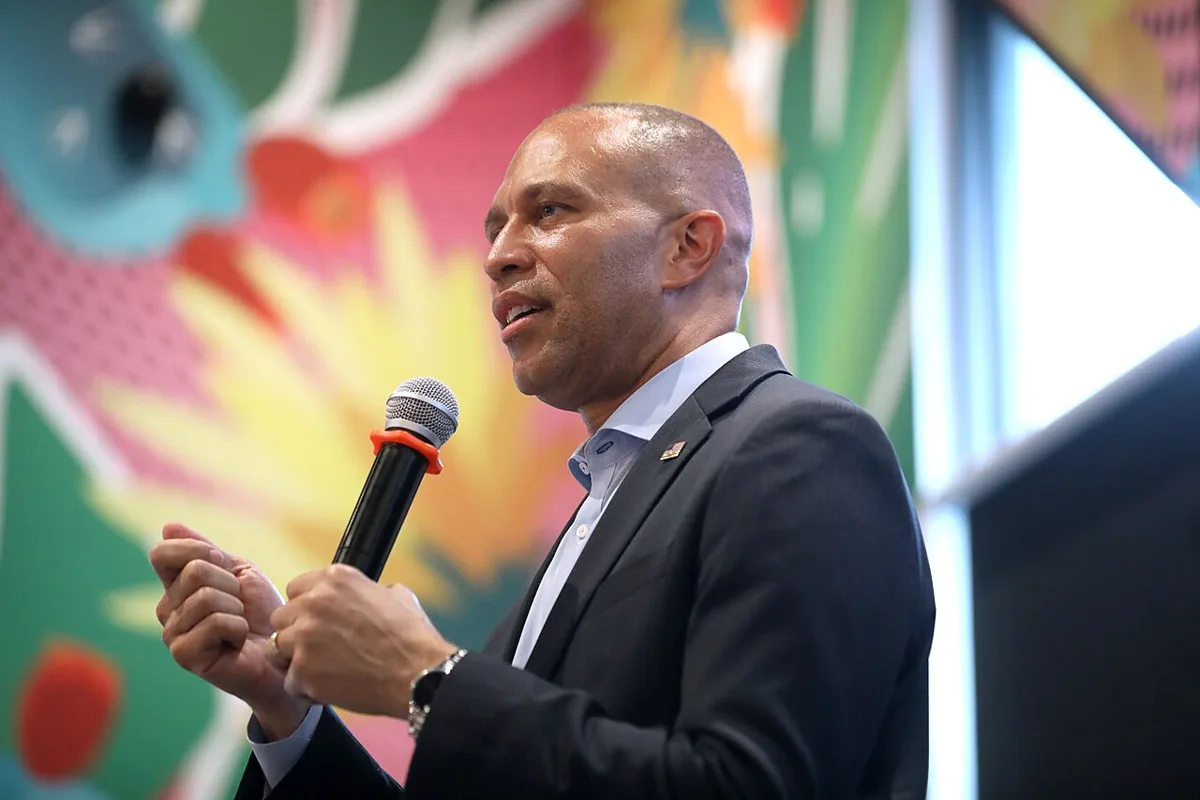
Ten weeks out from the midterms, House Minority Leader Hakeem Jeffries sat down with Wolf Blitzer and said the quiet part at a reasonable volume: if Democrats take back the House, impeachment is not off the table. He called it "moments of accountability," which is either a very careful legal phrase or a very good band name, and either way it's the most honest thing a Democratic leader has said about their post-November plans in months.
What Jeffries Actually Said
According to Axios, Jeffries laid out a three-part agenda for a Democrat-controlled House during his CNN appearance. Hold "every single member of the Trump cartel accountable." Address the affordability crisis. And on impeachment specifically: "we haven't ruled anything in and we haven't ruled anything out."
That last line is doing a lot of work. It is simultaneously a warning shot, a base-energizer, and a carefully hedged non-commitment designed to avoid handing Republicans a "DEMS WANT IMPEACHMENT" attack ad before a single vote has been cast. Jeffries has been in this game long enough to know exactly what he's doing with that phrasing.
The affordability angle is the thing his team keeps hammering on the stump, Axios notes, and it makes sense. Voters who are drowning in rent and grocery bills don't always lead with constitutional accountability as their top-of-mind concern. Jeffries is trying to hold both lanes simultaneously: the bread-and-butter economic pitch and the "yes, someone is going to answer for all of this" promise.
The 'Trump Cartel' Line Is Not an Accident
Let's talk about word choice for a second, because "Trump cartel" is not a slip. That is a prepared phrase from a man who has been a careful, disciplined communicator for his entire tenure as minority leader. Jeffries doesn't freewheel on cable news. When he calls the administration a cartel, he means to call it a cartel.
The word carries specific weight. Cartels are criminal enterprises. They operate outside the law for the benefit of a small group at the expense of everyone else. Calling the Trump operation a cartel is an accusation, not a metaphor, and Jeffries said it on CNN in front of Wolf Blitzer without blinking. That is a signal about how Democrats intend to run the next ten weeks.
Whether that framing breaks through to persuadable voters or just fires up the base is the whole ballgame. The frustrating reality of midterm politics is that the people who most need to hear "yes, someone is going to be held accountable" are often the least likely to be watching CNN on a Tuesday afternoon.
Ten Weeks Out, and the Math Still Matters
Democrats need a net gain of seats to flip the House, and the national environment has been pointing in their direction for most of the year. But pointing in your direction and actually winning are two different things, and Democrats have a long and distinguished history of finding ways to complicate the former.
The strategic tension in Jeffries' interview is real. Lead too hard on impeachment and you give Republicans the one issue that could scramble a favorable map by making swing-district voters nervous about chaos. Lead too soft and you depress turnout among the people who are furious and want to know someone is going to do something about it. "We haven't ruled anything out" is the needle-threading answer, and it is probably the correct one for late August.
By October, the answer is going to need to be sharper. Voters heading into the booth in close districts are going to want to know what a Democratic House actually does on day one, and "moments of accountability guided by the facts" is not a bumper sticker.
What 'Accountability' Could Actually Look Like
Impeachment is the nuclear option and everyone knows it. What Jeffries is almost certainly keeping warmer on the front burner is the investigative apparatus: subpoenas, hearings, select committees, the whole machinery of congressional oversight that has been essentially dormant under Republican leadership. A Democratic majority could reopen investigations that were shut down, compel testimony that was never given, and put people under oath on national television.
That is not nothing. That is, in fact, quite a lot. The Trump administration has operated for years with a legislative branch that functionally declined to do its job of oversight. The first thing a Democratic House majority actually restores is the question: why did nobody ask about this, under oath, on the record?
Impeachment, if it comes, would come from that process. Jeffries is describing a sequence, not a day-one vote, and the "moments of accountability" framing is the tell. He's saying: we follow the evidence where it goes. Whether voters find that reassuring or insufficiently bold is probably the central argument inside Democratic strategy rooms right now.
The Dingo Take
You are supposed to believe that "we haven't ruled anything in and we haven't ruled anything out" is a vague non-answer. It is not. It is a very specific kind of answer from a very specific kind of politician, the kind who has watched his party get burned before by promising things before they have the votes to deliver them. Jeffries is telling you exactly what a Democratic House majority would look like: methodical, investigative, and willing to go wherever the facts point. That is the responsible answer. It is also, depending on your patience level, an infuriating one.
The "Trump cartel" line is the thing worth taking seriously. Democratic leaders spent years threading the needle on how to describe this administration without sounding hysterical. Jeffries just called it a cartel on cable news and walked away. That framing, if it sticks, changes the rhetorical temperature of the next ten weeks considerably. It's not "we have concerns" language. It is prosecutorial language, and it is intentional.
Here is the honest assessment: ten weeks is a long time, and a lot can happen between now and November. What Jeffries did on CNN was plant a flag, carefully, in the direction of accountability without committing to a specific mechanism that Republicans could weaponize against him. It was smart politics. Whether the Democratic Party is capable of converting smart politics into actual seats is a question that has broken a lot of hearts over the last decade, and nobody should answer it with confidence either way.


Comments