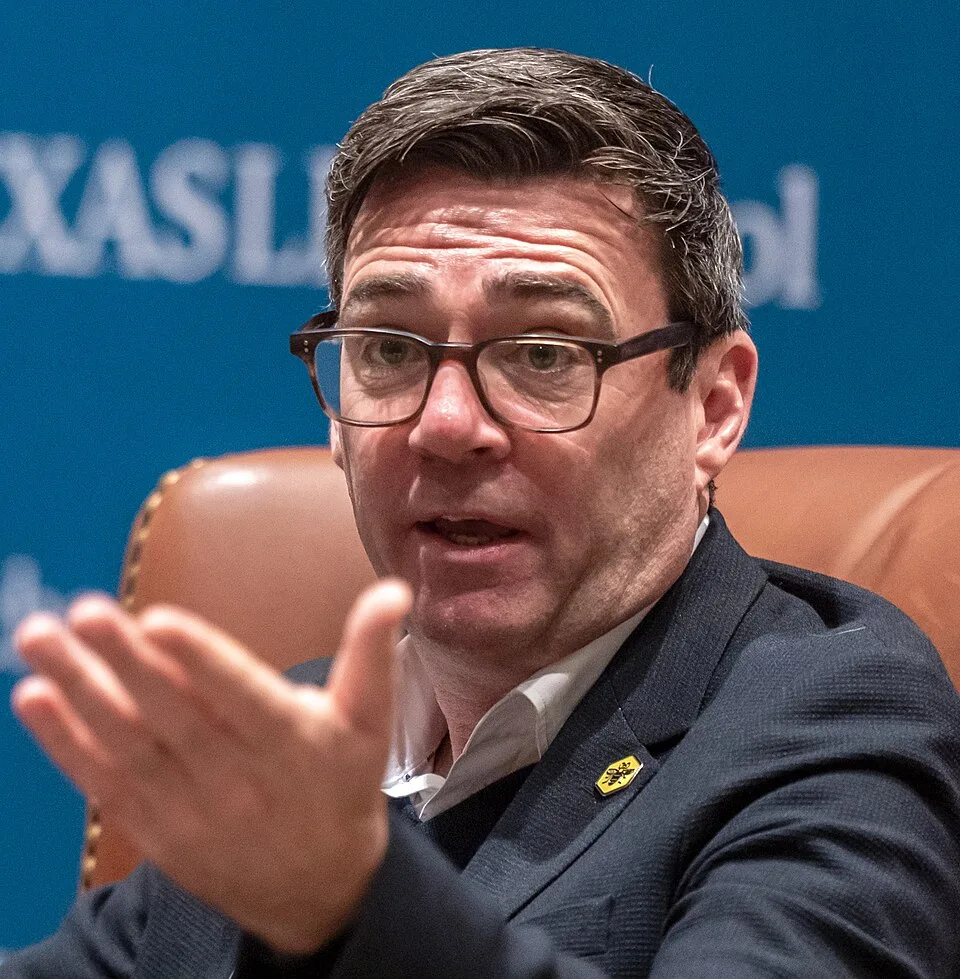
Andy Burnham once told Donald Trump he wasn't welcome in Manchester and could take his poisonous politics elsewhere. Now Burnham is Britain's prime minister, Trump is still Trump, and the two are about to meet face-to-face at the UN General Assembly in New York. Burnham's position on all of this? 'Shit happens.' That's it. That's the whole apology.
What Burnham Actually Said, Then and Now
When Burnham was mayor of Greater Manchester, he told Trump in no uncertain terms that he wasn't welcome in his city and could take his poisonous politics with him on the way out. This landed well with a British public that had grown exhausted watching their government perform an endless, dignity-free curtsy in the direction of Mar-a-Lago.
Now, as prime minister preparing for his first in-person meeting with the US president, Burnham has been asked whether he regrets any of it. The Guardian reports his answer amounted to: not even slightly. No apology is coming. No walk-back. Just a very blunt acknowledgment that politicians say things, Trump has said plenty of things about him too, and the world keeps turning.
Trump's contribution to this bilateral warmth, for what it's worth, was to describe Burnham as the mayor of 'some town' and flag that he was 'extremely liberal,' which in MAGA terms is roughly equivalent to accusing someone of crimes against the state. So they're starting from a solid foundation.
Contrast This With the Starmer Years
To understand why Burnham's approach is being received as some kind of radical act, you have to remember what came before it. The Guardian's John Crace lays it out without mercy. Keir Starmer, during his tenure as prime minister, offered Trump a second state visit within minutes of their first meeting. The marching bands. The Windsor silver service. The whole humiliating production.
Trump took all of it, made polite conversation for three days, and went straight back to trash-talking Britain the moment he was wheels-up. Starmer's response was to keep talking about the 'special relationship' as if Trump had ever given it a single thought before doing whatever he was going to do anyway. It was only when Trump chose to bomb Iran that the penny finally dropped. Even then, Crace notes, Starmer 'looked pained by the apparent betrayal' as he resisted calls from Kemi Badenoch and Nigel Farage to join the war.
You can run foreign policy like a hostage negotiation, offering concession after concession in hopes of warmth that never comes. Or you can try something else. Burnham is trying something else.
The Logic of Not Groveling to a Narcissist
Here is the actual theory of the case, as Crace describes it. Trump craves fawning but has contempt for those who offer it. He reads deference as weakness. No amount of flattery fills whatever is missing in there. The more you give, the less you get, and the less he respects you for giving it.
Burnham's approach is different by design. He has told Trump exactly where he stands, has no intention of pretending otherwise, and plans to show up at the UN ready to do business without offering any performance of friendship that neither man would believe anyway. According to The Guardian, Burnham's pitch is essentially this: be polite, address the matters that actually matter to Britain, and get out. No weekly WhatsApps after New York. No lingering.
Crace makes the somewhat counterintuitive argument that this is more likely to earn Trump's respect than anything Starmer tried. Two leaders treating each other like adults with competing interests rather than one leader treating the other like a golden calf that needs to be kept happy at all costs. Whether that's optimistic or genuinely shrewd is a question that gets answered in New York.
Trump's Grip Is Loosening, Which Helps
The timing matters too. The Guardian points out that the Trump who Burnham is meeting is not the same terrifying wild card who took office and had the entire world holding its breath. The shock has worn off. His habits are priced in. His never-ending war with Iran has jacked up the cost of living for ordinary Americans, and Crace notes that voters are furious about petrol prices, which is a reliable way to get Americans' attention.
Midterm elections are coming. Trump is under domestic pressure. He is, Crace argues, 'in danger of becoming a lame duck.' A man who has spent years making the world bend to his will is discovering that it doesn't always, and the strain is showing.
For Burnham, that context is useful. This meeting carries less existential weight than the early Starmer encounters did. It's a first introduction between two leaders who already know roughly what to expect from each other, with Trump holding somewhat less leverage than he did two years ago.
What Burnham Still Has to Prove
None of this means Burnham is in a comfortable spot at home. The Guardian's piece is careful to note that good vibes at the UN are a decent start, but Britain's new prime minister still has to explain what he is actually going to do differently from Starmer while working within the same fiscal rules that constrained his predecessor.
That is the longer game and the harder one. A successful Trump meeting, or at least a non-humiliating one, gets Burnham some early goodwill. It does not get him a budget surplus or solve whatever the next domestic crisis turns out to be.
Still, 'I called him poisonous, I meant it, I'm not sorry, and I'm looking forward to the meeting' is at minimum a different energy than Britain has projected toward Washington in a while. Burnham told The Guardian he is genuinely looking forward to it. And according to Crace, he probably is. His cards are on the table. He has nothing to hide. And he has, crucially, a sense of humor, which is something Trump is reportedly unable to locate in himself.
The Dingo Take
You are supposed to believe that the correct way to handle Donald Trump is to shower him with pageantry, tell him he's wonderful, offer him state visits like appetizers, and then absorb his contempt in dignified silence when he goes back to insulting you anyway. Keir Starmer tried this. It did not work. It was never going to work. You cannot buy warmth from someone who only respects people who don't need his approval.
Burnham stumbled onto the correct answer almost by accident, or maybe not by accident at all. He said what he thought, got caught saying it, and refused to apologize because he still thinks it. That's it. That's the sophisticated diplomatic strategy. Don't lie about what you believe to flatter a man who will not respect you for it. Trump, of all people, should find this refreshing. He built an entire political career on saying what he wanted and never apologizing. Now someone is doing it back to him, and we're all watching to see if he likes it when the boot is on the other foot.
The real headline here isn't the UN meeting. It's that Britain spent years tying itself in knots trying to manage Trump's feelings, and the guy who just walked in and said 'I called you poisonous and I'm not taking it back' might actually get further. If that's the lesson, it took long enough to learn.


Comments