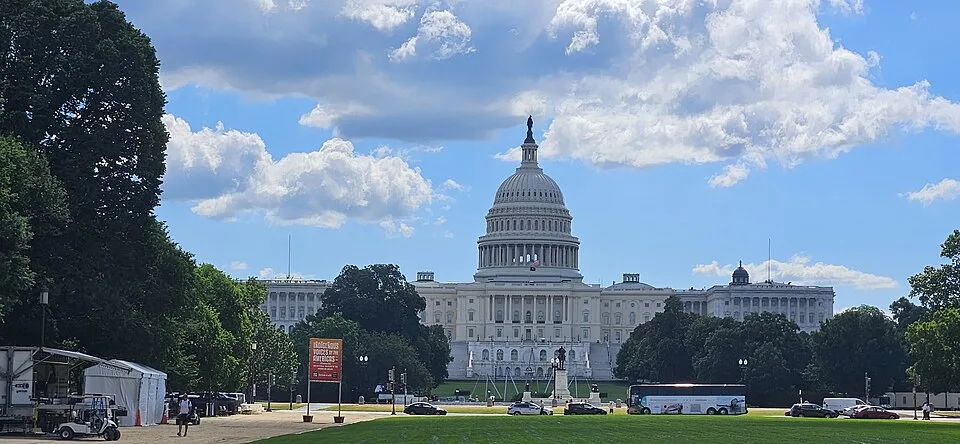
After two record-long government shutdowns in the past year totaling 119 days of collective dysfunction, Congress has heroically agreed to not shut down the government for another ten weeks. The House voted 370-48 on Tuesday to extend federal funding through December 11, safely clearing the finish line past November's midterm elections. Profile in courage, this is not.
What Actually Passed and Why
The legislation is a continuing resolution, which is Washington-speak for "we couldn't agree on anything real, so here's a patch." It extends federal spending at current levels through December 11, with a handful of exceptions. Federal funding was otherwise set to expire on September 30.
According to CBS News, the Senate passed its version of the bill back in early August before disappearing on a five-week recess. The House, also on its summer break at the time, returned Monday and fast-tracked the measure Tuesday, requiring a two-thirds majority for passage. They cleared that bar easily. The White House has encouraged support and President Trump is expected to sign it.
The Senate version that ultimately passed included a few Democratic demands, per CBS News, notably a provision to close a loophole that Democrats argued let the Trump administration funnel money to Border Patrol, plus language that would temporarily prevent political appointees from canceling federal grants. Not nothing. Not much, but not nothing.
The Year That Was: Two Shutdowns, Zero Wins
To appreciate how low the bar is right now, you need the context. As NPR reports, this Congress has already lived through two record-long government shutdowns in the past year. The first ran 43 days, ending in November, after Democrats withheld votes to pressure Republicans into extending expiring health insurance premium subsidies. The second, a 76-day shutdown at the Department of Homeland Security, ended in April after Democrats tried to force legislation curbing federal immigration enforcement tactics.
That is 119 days of government shutdown in under twelve months. For reference, the previous record for a single shutdown was 35 days, set during the first Trump administration. This Congress blew past that twice.
And what did Democrats actually get for their trouble? NPR reports that while the shutdowns put health insurance costs and Trump's immigration crackdown in the national spotlight, Democrats came away without concrete concessions from either standoff. They elevated the debates. They did not win them. The scoreboard after all of that is: disruption achieved, leverage lost.
Republicans Are Blaming the Senate. Specifically, Senate Democrats.
House Appropriations Committee Chairman Tom Cole, Republican of Oklahoma, did not hold back on Tuesday. "The Senate has wasted the entire year and a half. They have not passed a single bill," he told reporters, according to CBS News. "There's no excuse for not having a single one done."
He's not entirely wrong about the numbers. CBS News reports that since April, the House Appropriations Committee has advanced all 12 annual spending bills, and three have passed the full House. In the Senate, none of the 12 have made it out of committee. Zero. The Senate Appropriations Committee has been effectively parked.
Cole was also refreshingly blunt about what comes next. He told reporters there will either be a yearlong stopgap measure in December or a shutdown. "We're going to be in a crunch time," he said. Which, yes, is a pretty honest summary of a situation where the entire funding fight just got kicked six weeks past the election.
Democrats Get Behind It, Reluctantly
House Democrats were not exactly enthusiastic about supporting a Republican-driven process. For context, CBS News notes that when the House initially passed a GOP-led version of the funding extension back in July, it drew little Democratic support because it included no restrictions on Border Patrol funding.
The Senate's bipartisan version addressed some of those concerns, which is why top House Democrat Rosa DeLauro of Connecticut, the ranking member on the Appropriations Committee, encouraged her caucus to vote yes during their Tuesday morning meeting. According to CBS News, House Democratic Caucus Chair Pete Aguilar of California called that endorsement significant. "That's a big statement from the ranking member," Aguilar said.
Majority Leader Steve Scalise put the bar about as low as it goes. "We want to get a longer-term deal, but at a minimum, let's ensure that we can continue to see government properly funded and functioning," the Louisiana Republican said Tuesday, per CBS News. Properly funded and functioning. In 2026. Setting the ambition high.
What Happens in December
Here is the practical problem this vote just created. Congress is scheduled to be out of session for nearly all of October to allow members to campaign in their home districts, per CBS News. Midterms are in November. The funding deadline is December 11. That leaves a window of maybe a few weeks after the election for Congress to solve, in crunch time, the budget fight they have failed to solve for the past year and a half.
Whoever wins the midterms will complicate matters further. If Democrats pick up seats, lame-duck Republicans may have even less incentive to compromise. If Republicans hold or expand their margins, the entire dynamic shifts. Cole's prediction of a binary outcome, either a yearlong stopgap or a shutdown, is probably the most honest forecast anyone in Washington has offered all year.
So to recap: a shutdown was avoided by agreeing to fight about it again in ten weeks, after an election, during the holidays. This is the system working.
The Dingo Take
You are supposed to look at a 370-48 bipartisan vote and feel reassured. Stability! Cooperation! Adults! What you are actually looking at is Congress giving itself a gold star for not doing the thing that caused catastrophic disruption twice already this year. The bar for applause has been dragged so far into the basement that "government technically still open" now counts as a legislative achievement.
The two shutdowns that preceded this vote totaled 119 days. Democrats spent those months trying to force concessions on healthcare costs and immigration enforcement and came up empty both times. They got the debate. They did not get the policy. And now everyone is celebrating a deal that simply delays the next fight until after the politicians who created this mess have survived their elections. It is the legislative equivalent of mailing your problems to your future self.
December is coming. The Senate has passed zero of the 12 appropriations bills it needs to pass. Tom Cole, who chairs the committee responsible for this stuff in the House, is already publicly predicting either a yearlong punt or another shutdown. The only thing this vote actually guaranteed is that the next shutdown threat will land right on top of the holidays, when leverage is maximized and patience is thin and everyone is furious. Merry Christmas from your federal government.



Comments