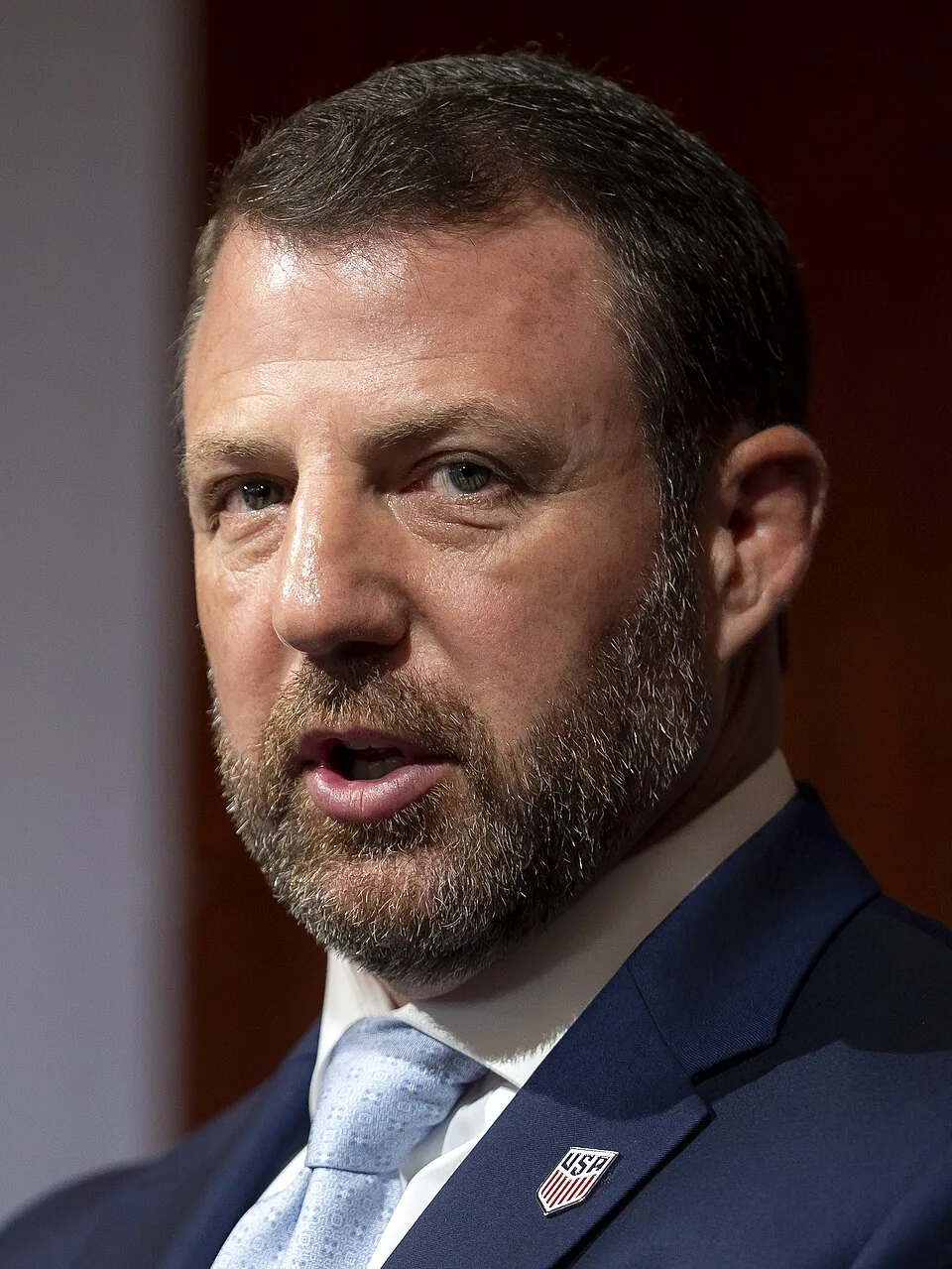
The Secretary of Homeland Security went to a press conference in New York on Tuesday and, apparently without hearing himself, announced that ICE agents will enter polling places on Election Day if they have a warrant. He then said, in the same breath, that ICE is not there to patrol polling places. These two things are not as compatible as he seems to think.
What Mullin Actually Said, Word For Word
At Tuesday's press conference, Homeland Security Secretary Markwayne Mullin laid out what he called a pretty simple policy. ICE officers will only show up at polls if there is "a threat to that polling place," or if they are serving a warrant on someone "that we have been actively tracking down." NBC News was there.
"ICE isn't there to patrol the polling places," Mullin said. And then, when pressed on whether ICE officers would actually enter polling places, he said: "If we're serving a warrant, we will be where we need to be."
So to recap: ICE will not be at polling places. Except when they are. And when they are, they will go inside. But don't worry about it.
The 'No Plans' Reassurance That Doesn't Reassure Anyone
A senior DHS official told NBC News that ICE officers have not received any guidance telling them to do anything beyond their regular duties on Election Day. That's being framed as a calming statement. It is not, particularly, a calming statement.
"Regular duties" for ICE currently include arresting people at churches, courthouses, and hospitals — locations that were previously considered protected sensitive zones before the Trump administration scrapped those protections earlier this year. The bar for where ICE considers it appropriate to conduct enforcement operations has been moved so many times it basically no longer exists.
So when the administration says ICE won't be doing anything special at polling places on Election Day, the natural follow-up question is: what exactly do you consider special at this point?
The Voter Roll Claim Driving All of This
None of this exists in a vacuum. The reason polling place enforcement is even being discussed is because Trump and Mullin have been loudly claiming, without any supporting evidence, that over 250,000 noncitizens are on voter rolls across multiple states. NBC News notes that neither has offered any evidence for this figure.
Mullin has been aggressive about it. He recently threatened state election officials with possible prison time if they refused to hand over voter roll data to the federal government. Several states have pushed back hard, and reasonably so, because the data being requested includes private personal information like Social Security numbers.
This is the context. The administration is asserting, without proof, that elections are being stolen by noncitizen voters. It is threatening state officials who won't comply with its demands. And it is now publicly reserving the right to send federal law enforcement agents into polling places on Election Day. Connect whatever dots you feel like connecting.
Why the Warrant Carveout Is the Whole Ballgame
The administration's talking point is that ICE will only show up at a polling place with a warrant. This is supposed to sound procedurally normal, like due process is working exactly as designed. It does not sound that way.
A warrant is not a neutral, apolitical document that appears from nowhere. Warrants are sought by federal prosecutors and agents, who work for an executive branch that has spent the last year and a half making very clear it views immigration enforcement as a political tool. The question of who gets a warrant, when, and why is not answered by simply saying "they had a warrant."
If you show up to vote on November's midterm Election Day and there are federal agents outside with a warrant for someone allegedly inside that polling location, the chilling effect on every other voter in line does not require anyone to be actually arrested. The fear is the point. That's been obvious from the jump.
State Officials Are Not Playing Along
Multiple state election officials have refused to hand over the private voter data the administration is demanding as part of its noncitizen voter hunt. They are citing, reasonably, concerns about handing Social Security numbers and other sensitive personal information to the federal government, particularly under an administration that has shown little interest in protecting civil liberties or following established protocols.
Mullin's response to that resistance, per NBC News, was to threaten those officials with prison. That is the Secretary of Homeland Security threatening to jail state election administrators for not complying with a data request tied to an unsubstantiated claim about voter fraud. In an election year. Before a midterm.
The Dingo Take
You are supposed to believe that an administration which invented a 250,000-noncitizen-voter number out of thin air, threatened state officials with prison for protecting their constituents' Social Security numbers, and spent 18 months systematically dismantling every norm around immigration enforcement is now drawing a thoughtful, principled line at polling place operations. That the warrant carveout is a reassurance and not a loaded gun sitting on the table.
It is not a reassurance. The whole architecture here is intimidation. You don't need to actually arrest someone at a polling place to suppress votes. You need voters to believe you might. You need a community, specifically a community that has been the explicit target of this administration's enforcement priorities, to look at a line outside their polling place and do a quiet risk calculation about whether casting a ballot is worth it. That calculus is the strategy.
Mullin can say "ICE isn't there to patrol polling places" as many times as he wants. He also said they'll go inside if they have a warrant. Both sentences came out of the same mouth at the same press conference. One of them is the policy. It's not the first one.


Comments