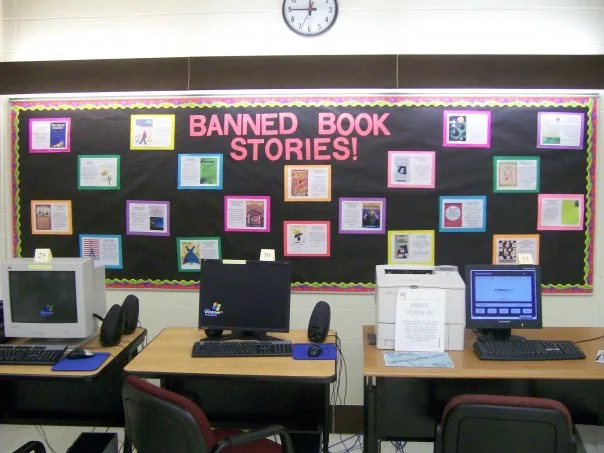
A new PEN America report out Tuesday says American public libraries are "at breaking point," and if you want to understand why, consider this: more than half of all documented book bans in the country now happen in public libraries, not schools. The people who started by coming for kids' classroom reading lists have expanded their territory, and they are not done.
What PEN America Actually Found
The report, titled Out of Circulation: Expanding Censorship in Public Libraries, is 16 pages of methodically documented chaos. PEN America's Freedom to Read Project tracked verbal and physical attacks on librarians, the cancellation of story hours under bomb threats, the installation of politically appointed officials to override elected library boards, and a wave of book bans that has now logged nearly 23,000 incidents in school libraries alone since 2021.
According to The Guardian's coverage of the report, 51% of all book bans documented by the American Library Association are now happening in public libraries. That is not a footnote. That is the whole story. The fight has moved off school grounds and into the institutions that literally anyone, regardless of age or income, can walk into and use for free.
The materials being targeted follow a predictable pattern. Books featuring LGBTQ+ characters, books dealing with gender identity and sexuality, books featuring characters of color. In one surreal Texas case that was later overturned by an appeals court, the banned pile included so-called "butt and fart" books, pulled because some parents objected to depictions of the human body and a description of puberty. A description. Of puberty. In a library.
The Machinery Behind the Bans
This is not random. PEN America is explicit that the campaign follows a coordinated playbook that began with groups like Moms for Liberty, escalated through school board elections, and has since expanded into state legislation designed to strip libraries of their structural independence.
The Guardian reports that Idaho passed a law in March allowing city councils to hire and fire library directors, power that previously belonged to appointed library boards. Alabama pushed similar legislation that would have let local governments remove library board members at will and without cause. The goal is straightforward: replace the people who make decisions about library collections with people who will make different decisions, and make sure those new people answer to politicians rather than communities.
This is how you dismantle a public institution without technically closing it. You leave the building standing. You just gut the people inside it.
Riley Gaines, Library Board Member, Calling Books 'Filth'
You genuinely cannot make this up. According to the PEN America report as covered by The Guardian, conservative activist and former collegiate swimmer Riley Gaines was appointed last year to a library board in Sumter County, Tennessee. The board repeatedly voted down the chair's proposals to remove materials deemed "inappropriate or sexually-explicit, including anything with transgender themes." So Gaines took it to social media, branding the books "filth" and calling out her colleagues for "ignoring" Tennessee's ban on state funding for "woke gender ideology."
This is a person appointed to govern a public library system who responded to losing a vote by going on social media to attack the books her own board decided to keep. She did not persuade her colleagues. She did not pursue the legal options available to her. She rage-posted. And the books she was posting about were in a public library, available to adults, because that is what public libraries do.
Kasey Meehan, PEN America's Freedom to Read director, put it plainly: these efforts reflect a politically driven trend to control what ideas are allowed to be represented. That framing is correct, and it is worth sitting with. The argument being made by the book-ban movement is not that certain books are in the wrong section, or inappropriately shelved near children's materials. The argument is that certain ideas should not exist in publicly accessible spaces at all.
Librarians Are Getting Threatened and Fired
The human cost here is not abstract. PEN America documented bomb threats, protests, and a physical assault on a librarian that led to the cancellation of events and story times at libraries in New York, Massachusetts, and Nevada. People who work at public libraries, who help people find books and use computers and do their homework, are receiving threats serious enough to shut down programming.
And when a librarian tries to hold the line, the consequences can be severe. The Guardian reports the case of Suzette Baker, a branch head librarian in Llano County, Texas, who was fired for insubordination after she refused to remove books from a list handed to her by her supervisor. A court later ruled that public schools and libraries cannot ban books simply because officials disagree with their content. Baker was still fired. The ruling came after the damage was done.
Philomena Polefrone, senior manager of PEN America's Freedom to Read project, said these attacks "rob library users of vital public services, access to books, and an affirmation that they have a place in their community." That last part deserves more attention than it usually gets. For a lot of people, especially LGBTQ+ youth in conservative communities, the library is one of the few public spaces where they can find books that reflect their own lives. Removing those books is not a neutral act.
There Is Pushback, but Do Not Get Comfortable
The picture is not entirely bleak. The Guardian points to Florida's primary elections this month, where multiple Moms for Liberty candidates lost their races and the group lost its majority on the Sarasota school board. Communities are organizing. People are showing up to library board meetings, running for office, and pushing back on funding threats.
But a string of primary losses for Moms for Liberty does not undo 23,000 documented book bans. It does not restore Suzette Baker's job. It does not unpass Idaho's law handing library director hiring power to city councils. The infrastructure of censorship that has been built over the past five years does not evaporate because the movement had a bad election cycle in one state.
PEN America has been tracking this since 2021. The trend line has not bent.
The Dingo Take
Twenty-three thousand book bans. Let that number breathe for a second. Twenty-three thousand times, someone looked at a book in a public or school library and decided that other people should not be allowed to read it. That is not a culture war skirmish. That is a sustained, organized, multi-year campaign against the foundational idea that a free society gets to decide for itself what to read.
The strategic shift to public libraries is deliberate and it is smart, in the way that termites are smart. Schools at least have the pretense of parental authority to hide behind. Public libraries have no such cover. Adults walk in and choose books for themselves. The only way to stop that is to change the governance structure so that politicians control the collection, or to make the librarians so frightened that they censor themselves before anyone even asks. Both of those things are happening right now, simultaneously, across the country.
PEN America's Kasey Meehan said local libraries have long been safe havens for the freedom to read. She is right. The people trying to destroy that are also right, in their own cold tactical way, about what they are attacking. You want to control what a community is allowed to think about? Start with what they are allowed to read. It is not subtle. It has never been subtle. The only question is whether enough people are paying attention before the shelves are empty.


Comments