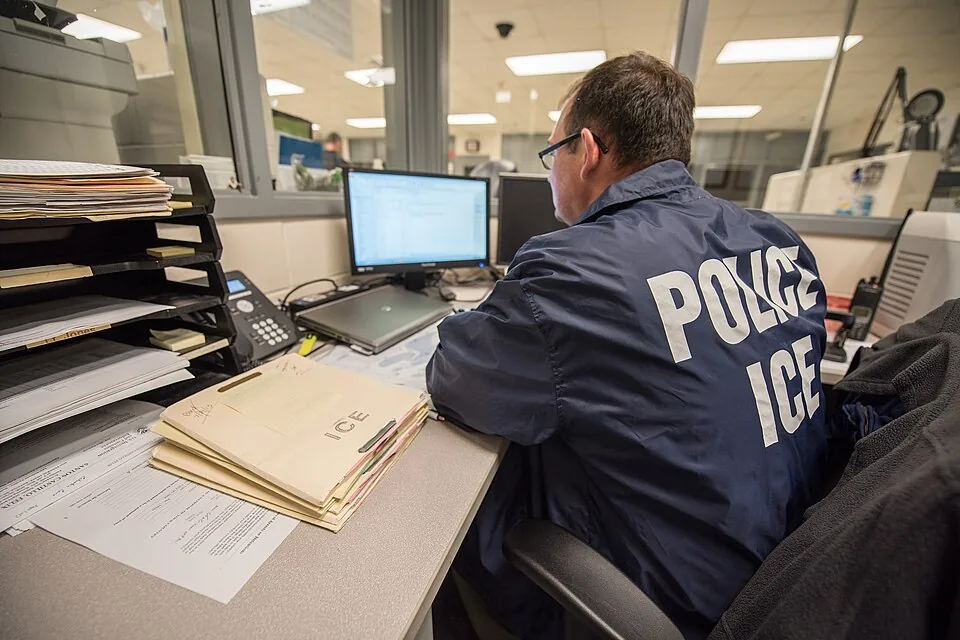
A 51-year-old Chinese man was found unresponsive in an ICE detention facility less than 24 hours after he was booked in. The government is required by its own regulations to screen every detainee within 12 hours of intake. DHS will not confirm that happened.
What We Know About Lianyong Wei
According to NPR, Lianyong Wei was arrested by the Commonwealth of the Northern Mariana Islands Department of Public Safety on August 21 after allegedly attacking a family in their home. His legal immigration status had lapsed in 2019. A day after his arrest, ICE took him into custody at a facility on Saipan, run by the Northern Mariana Islands Department of Corrections.
The next morning, a corrections officer found Wei unresponsive during routine checks. He was transported to the Commonwealth Health Care Corporation Emergency Room, where life-sustaining interventions were initiated. He was pronounced dead at approximately 7:30 a.m. local time on August 23. His cause of death is still under investigation.
This is not a complicated timeline. The man was alive when he arrived. He was dead fewer than 24 hours later. And the one agency that has rules specifically designed to catch medical emergencies before they become fatalities will not say whether those rules were followed.
The 57th Death. The Same Non-Answer.
Wei is the 57th immigrant detainee to die in ICE custody since Trump's second term began, per ICE's own detainee death notifications. Twenty-four of those deaths have occurred since January 1 of this year. That is a number that should be in every newspaper in the country. It is largely not.
Department of Homeland Security regulations require that all detainees receive a basic health screening within 12 hours of intake. NPR asked DHS directly whether Wei received that screening. DHS declined to answer. What they offered instead was this: "Comprehensive medical care is provided from the moment individuals arrive and throughout the entirety of their stay."
That sentence is doing a tremendous amount of work for a department that just watched a man die in less than a day. "Comprehensive medical care" is a marketing phrase. It is not an answer. It is not even close to an answer.
The Deaths They Are Not Counting
Here is where it gets worse. Wei's death count does not include Jose Chajon-Raxon, a Guatemalan man detained at Newark's Delaney Hall Detention Center on July 18. A day after intake, he suffered what DHS described as "seizure-like activity" and was transferred to a hospital. DHS told NPR he was released from ICE custody on July 22. Whether he was alive when that release happened is something DHS has declined to clarify. He is the third person to die after a medical emergency at Delaney Hall since it reopened in May 2025.
The count also does not include Prisciliano Trejo, a 29-year-old detained at the Stewart Detention Center in Georgia while suffering from leukemia. His family told the Detention Watch Network that Trejo asked for medical help on July 6. That request was not approved for eight days. By July 15, he was in a coma. ICE released him that same day. He died on July 24.
Think about that. A dying 29-year-old asked for help. He waited eight days. Then they let him out so his death would not be their problem.
The Policy Change That Made This Worse
In June, the Trump administration quietly eliminated a Biden-era policy that required ICE to report deaths occurring within 30 days of a person's release from custody. The logic, as explained to NPR by DHS officials, was this: "Per ICE policy, when an individual is no longer in ICE custody, then ICE will no longer be responsible for monitoring or reviewing deaths that may occur."
They called this "common sense."
What it actually is: a bureaucratic mechanism for shrinking the death count without reducing the deaths. Release someone who is dying, wait for them to die outside your walls, and then tell the press it has nothing to do with you. The number stays lower. The accountability stays nonexistent. The people stay dead.
This is not a glitch in the system. This is the system working exactly as someone designed it to work.
Saipan Is Not an Accident
It is worth pausing on where this happened. The Northern Mariana Islands is a U.S. territory in the western Pacific, roughly 5,800 miles from Washington, D.C. It is remote in every sense of the word. Oversight is harder. Press attention is lower. Congressional scrutiny is nearly zero.
Wei was detained at a facility run not by ICE directly but by the CNMI Department of Corrections, adding another layer of administrative distance between the federal government and accountability for what happened inside those walls. ICE gets the detention. Someone else runs the building. Nobody answers for the body.
This is not unique to Saipan. Across the country, ICE farms out detention to county jails, private contractors, and territorial facilities. Every handoff is another place for responsibility to disappear.
The Dingo Take
Fifty-seven people dead in ICE custody since January 2025. A policy change specifically designed to stop counting the ones who die after they get released. A department that responds to questions about a man who died in less than 24 hours by reading from a brochure about comprehensive care. You are supposed to look at all of this and conclude that the system is overwhelmed, or underfunded, or just struggling to keep up with the pace of enforcement. That is the generous interpretation, and it does not hold.
Prisciliano Trejo waited eight days for a medical request to be approved while he had leukemia. Eight days. Then ICE released him into a coma so the death would not land on their ledger. That is not a system failing under pressure. That is a system making choices. Specific, deliberate choices about whose suffering counts and whose death gets counted.
The Trump administration eliminated the 30-day reporting window and called it common sense. Here is a different kind of common sense: when a government agency starts quietly changing the rules about which deaths it has to report, and then the deaths keep happening anyway, that is not a paperwork problem. That is a cover-up in progress. And the 57 we do know about are almost certainly not all of them.




Comments