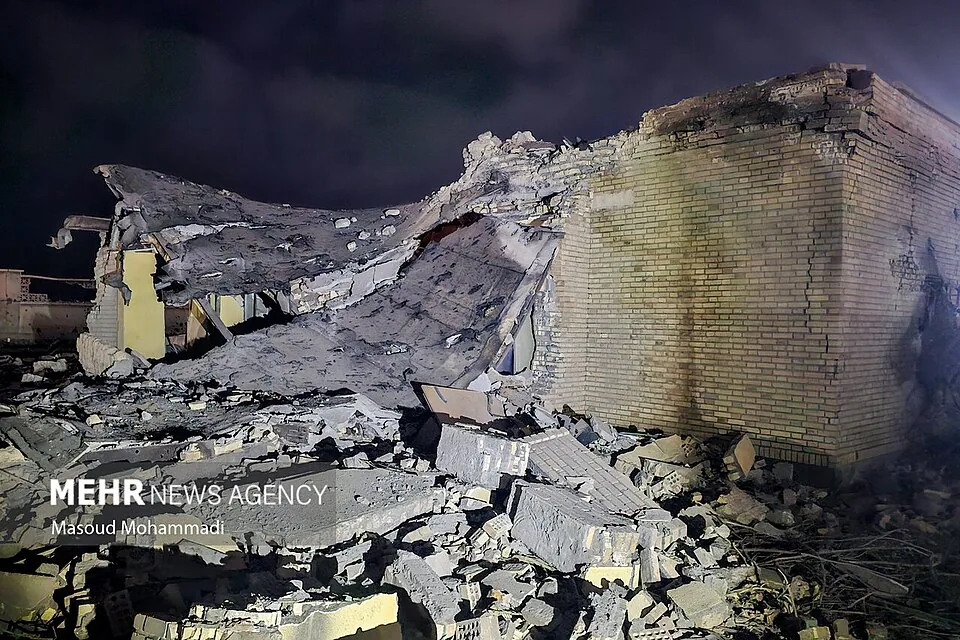
Iran says an American airstrike hit a wedding party in a private home Tuesday night, killing or wounding more than 50 people, including women and children. The U.S. has not commented. Donald Trump's contribution to the moment was a Truth Social post asking when Iranians are going to "rise up and fight."
What Iran Is Claiming Happened in Kuhestak
Iran's Foreign Ministry spokesman Esmaeil Baqaei posted on X that a home in Kuhestak, in the southern Hormozgan province's Sirik district, "was brutally attacked tonight while families were celebrating a wedding. More than 50 innocent men, women and children were martyred or wounded." That's the word martyred. At a wedding.
As CBS News reports, there has been no immediate comment from U.S. officials on the allegation. That silence is its own kind of statement at this point. This war is six months old, and the pattern is depressingly familiar: Iran makes a claim, the U.S. says nothing for days, and by then the news cycle has moved on to the next exchange of missiles.
Baqaei called it the latest in a "chain of atrocities" and referenced an earlier strike on a school in Minab at the start of the war that killed dozens of children. CBS News previously reported that the U.S. was "likely" responsible for that school strike, possibly due to outdated intelligence that wrongly identified the area as an Iranian military installation. Possibly. Due to dated intelligence. Children died.
Trump's Answer to All of This
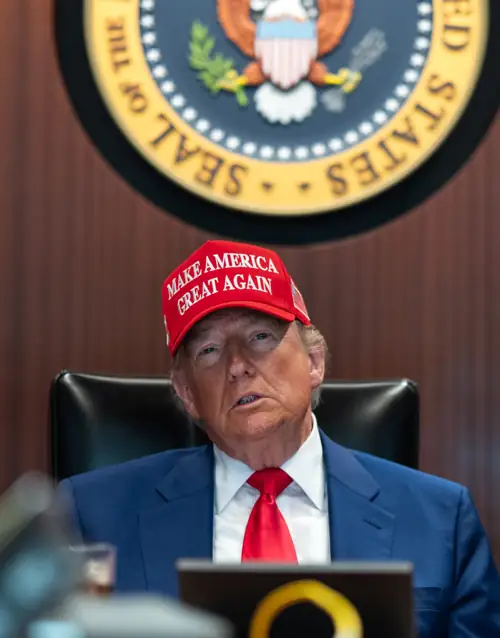
On Tuesday, the same day the alleged wedding strike happened, President Trump posted on Truth Social asking, "When are the Iranian people going to rise up and fight?" He said the Iranian regime is "just playing out the inevitable" with its "economy totally collapsing" and added: "I couldn't care less if they sign a worthless, to them, agreement."
So to be clear: America is conducting airstrikes in Iran that may be hitting civilian gatherings, and the president's diplomatic posture is to publicly dare the Iranian population to overthrow their government. That is the strategy. That is it.
This isn't even the first time Trump has done this. CBS News notes he made the same "rise up" call the day this war started in late February, then quietly dropped the regime-change language months later when the "few weeks" war stretched into summer, saying he "never cared about regime change." Now it's back. The ideology shifts with the news cycle. The bombs do not.
Iran Fires Back at U.S. Allies Across the Region
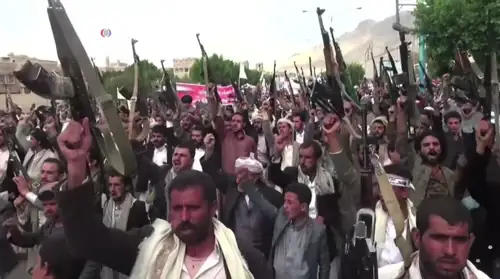
Overnight, Iran's Islamic Revolutionary Guard Corps claimed to have struck at least seven military facilities across the Middle East, including Camp Tabrin and Prince Hassan Base in Jordan, bases in Erbil in northern Iraq, Ali Al Salem in Kuwait, the U.S. Naval Base in Bahrain, and Al Dhafra and Al Minhad in the United Arab Emirates. According to CBS News, the IRGC claimed to have killed multiple U.S. personnel in a ballistic missile strike on Camp Tabrin.
U.S. Central Command rejected that claim, and for good reason: Camp Tabrin is not actually a U.S. base. The U.S. military does not maintain its own bases inside Jordan, though American forces do operate out of Jordanian facilities including Muwaffaq Salti Air Base, where three U.S. soldiers were killed in an Iranian missile strike back in July. That base has been targeted again this week.
Both Bahrain and Jordan said incoming missiles and drones were either intercepted or caused no damage. There's no independent confirmation that Iranian weapons impacted any of the claimed targets. Iran's military communiques and the reality on the ground have had a complicated relationship throughout this war.
Oil Is Up 40% and Nobody Seems Surprised
Here is a number that should put everything else in context: Brent crude oil is trading around $95 a barrel, up roughly 40% compared to a year ago. West Texas Intermediate is above $90. Both benchmarks have been climbing 1-2% per day since fighting resumed over the weekend, as CBS News reports.
This is what a war over the Strait of Hormuz does to global energy markets. Tanker traffic through that chokepoint has been severely limited since the conflict began, and every time a peace deal seems vaguely possible, another round of strikes makes the whole thing worse. The markets had apparently been pricing in some hope that this was winding down. That hope is gone again.
If you filled your gas tank this week, you felt this war. If you haven't noticed yet, give it another few days.
Six Months In, and the Exits Have Disappeared
Trump told the American public this war would take a few weeks. He said that in late February. It is now September. Iran is firing missiles at seven countries' worth of U.S.-adjacent military infrastructure overnight. The president is on social media calling for popular revolution in a country we are actively bombing. Oil is at $95 a barrel. And the latest allegation is that we hit a wedding.
Trump on Tuesday also downplayed the possibility of a peace deal, per CBS News. Not in any strategic, careful, diplomatic way. He just shrugged it off. "I couldn't care less" is not a negotiating posture. It is an absence of one.
There are no clean hands in this war. Iran's IRGC has spent years being a genuinely destabilizing force across the region, and the Iranian government's record on civilian life within its own borders is not something you'd want to defend. But the United States is now six months into a conflict with no defined end state, rising civilian casualty allegations, and a commander-in-chief whose primary communication tool is social media provocations directed at a foreign population that has no actual ability to "rise up" and end the war faster.
The Dingo Take
Fifty people at a wedding. That is the number Iran is putting on Tuesday night's strike in Kuhestak. Women, children, families dressed up for a celebration. The U.S. has not denied it. Has not confirmed it. Has not said anything at all. The silence is not strategy. It's a tell.
There is something genuinely deranged about the combination of events here: an airstrike on a reported wedding party, missile salvos across six countries in a single night, oil prices that have quietly strangled household budgets across the developed world for months now, and the American president's response to all of it is a Truth Social post asking Iranians why they haven't revolted yet. This is the full picture. This is what six months of a war that was supposed to take a few weeks looks like.
Iran's foreign minister warned that "those who remain silent today will not be immune to its consequences tomorrow." He was talking to the international community, but you could just as easily apply it domestically. Americans were told this would be quick, clean, and decisive. Three U.S. soldiers are dead. Gas is through the roof. There is no peace deal. And the president couldn't care less.



Comments