
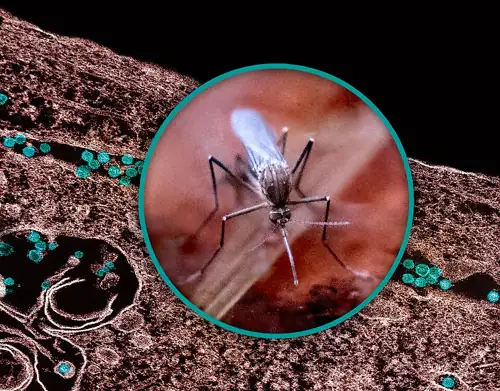
Chinese scientists have discovered a previously unknown tick-borne virus, and it has already shown up in over 10% of patients who came in after tick bites. The virus, now named Asian longhorned tick nairovirus, or ALTNV, causes flu-like symptoms, wrecks your platelet count, and when it teams up with a second tick-borne infection, the death rate hits 18.4%. Cool. Great. Nature is thriving.
What Scientists Actually Found
The New England Journal of Medicine published the findings this week, and they come out of years of detective work by Chinese researchers who had been chasing a mystery since 2009. Patients were showing up with severe fevers, dangerously low platelet counts, and evidence of liver damage. Doctors assumed they knew the culprit. They were partly wrong.
Researchers from the State Key Laboratory of Pathogen and Biosecurity in Beijing combed through blood samples from 3,163 patients who had been bitten by ticks. ALTNV turned up in 10.4% of them. The virus is genetically distinct from Dabie bandavirus, the tick-borne hemorrhagic fever pathogen that had been the prime suspect in these cases, which means it was hiding in plain sight inside samples that looked familiar enough to stop the questions.
The medical term for what ALTNV causes is thrombocytopenia, which is a reduction in blood platelets. As Dr. Sharon Nachman, chief of pediatric infectious diseases at Stony Brook Children's Hospital, explained to Fox News Digital: 'Those patients bled, and it had about a 30% mortality, which is quite high.' That 30% figure refers to SFTS, the broader syndrome, not ALTNV alone. But the new virus is clearly not harmless.
The Co-Infection Problem Is the Scary Part
Here is where it gets genuinely alarming. On its own, ALTNV appears to cause severe flu symptoms, fatigue, muscle aches, gastrointestinal issues, and in some cases respiratory problems and low platelet counts. No confirmed deaths were directly linked to ALTNV acting alone.
But ALTNV and Dabie bandavirus share the same tick vector and circulate in the same geographic regions. That means a single tick bite can potentially deliver both. According to the New England Journal of Medicine study, patients who had both viruses simultaneously were significantly more likely to develop respiratory and kidney complications. Of those dual-infected patients tracked during the study, 18.4% died.
The study authors put it plainly: the overlap of these two viruses in the same areas, spread by the same ticks, 'underscores the need for improved differential diagnosis.' Translation: if your doctor in an SFTS-endemic region is only testing for one of these viruses, they may be missing the other one and making treatment decisions based on incomplete information.
There Is No Targeted Treatment, Which Is the Other Problem
One of the more unsettling details buried in the reporting: there is currently no specific antiviral treatment for ALTNV. As Nachman told Fox News Digital, effective antivirals exist for influenza, but not for most tick-borne viruses, including this newly discovered one. Patients get supportive care, meaning doctors manage the symptoms and hope the body does the rest.
This matters because ALTNV's early presentation looks almost identical to the flu. Fever. Muscle aches. Fatigue. Maybe some respiratory symptoms. A physician who is not specifically looking for a tick-borne illness could easily reach for the wrong treatment. Nachman made that point directly: 'It's also about being smart and not giving patients the wrong medication. We certainly don't want to use antibiotics because those only work for bacteria, not for viruses.' Seems obvious when you say it out loud. Physicians working in high-volume settings with sick, flu-presenting patients are working fast, and an unfamiliar virus hiding inside a familiar symptom picture is exactly how things go sideways.
Should Americans Be Worried Right Now
The short answer is: not about this specific virus, but do not use that as an excuse to stop paying attention to ticks. According to Nachman, the Asian longhorned tick, the species that carries ALTNV, is not currently found in the United States. The longer answer is more complicated.
The Asian longhorned tick, Haemaphysalis longicornis, has actually been detected in the eastern United States before, a fact worth keeping in mind as species ranges shift. And Nachman's broader warning is worth repeating: 'Ticks carry lots of viruses. We're getting smarter at identifying those viruses.' The U.S. has its own robust tick population carrying its own suite of diseases, including Lyme disease, Rocky Mountain spotted fever, anaplasmosis, and babesiosis, none of which require a new Chinese virus to ruin your summer.
The practical advice Nachman offered is the same it has always been. Long pants tucked into socks. Tick repellent on skin for adults, on clothing for young children. Do a full body check after spending time outdoors. The longer a tick stays attached, the higher the transmission risk. This is not new advice. People still do not follow it.
The Bigger Picture Here Is About Surveillance
What this discovery actually represents, stripped of the alarming headline potential, is a success story in infectious disease surveillance. Researchers noticed patients who did not fit the expected pattern. They kept looking. Over years of sample collection and analysis, they found something new. That is the system working.
The concern, as the study authors note, is what happens in places where that kind of sustained surveillance does not exist. Co-infections with two different tick-borne viruses producing overlapping and amplified symptoms are exactly the kind of thing that gets misclassified as 'severe flu' or 'unknown hemorrhagic fever' and buried in a case file. The New England Journal of Medicine study is a reminder that the map of what ticks are carrying is almost certainly not complete.
The Dingo Take
A 30% mortality rate for the severe fever syndrome these patients were already being tracked for, and now there is an additional undetected virus quietly co-circulating in the same tick population, making co-infected patients 18% likely to die. That is not a footnote. That is a headline that deserves sustained attention, not one news cycle and a scroll to the next story.
The scientists here did their jobs. Years of patient tracking, rigorous sample analysis, honest publication of findings in a major journal. The part of this story that should make you uneasy is not the virus itself but the question of how many other ALTNV equivalents are sitting unidentified in tick populations around the world right now, inside patients who got sent home with a flu diagnosis and a 'drink fluids and rest' discharge sheet.
Nachman is right that it is less about the specific tick and more about who you are as a patient. Immune-compromised people, the elderly, anyone on medications that affect platelet function, they do not have the luxury of a mild case. The answer is not panic. The answer is better surveillance funding, faster diagnostic tools, and maybe, just maybe, tucking your damn pants into your socks when you go for a hike.




Comments