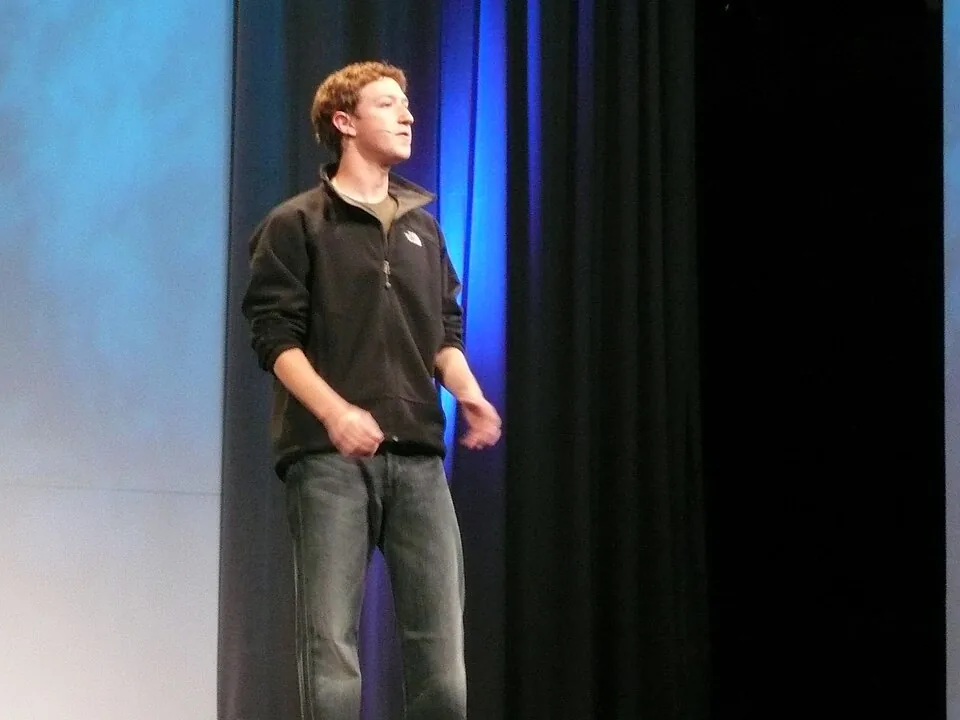
Meta just agreed to pay up to $18 billion to settle accusations from dozens of US states that it deliberately hooked children on addictive products. The man who built those products, who has been sued, fined, and hauled before Congress across two decades of documented harm, is still sitting in the CEO chair. At some point, the bit stops being funny.
The Settlement That Changes Everything (Except Who's In Charge)
According to The Guardian, the settlement resolves a multistate legal assault targeting Meta's algorithmically engineered platforms, specifically Instagram and Facebook, and the ways those platforms were designed to keep children scrolling. Dozens of US state attorneys general lined up to make the case. Meta wrote the check.
The terms include real restrictions: teen accounts capped at two hours a day, no access between midnight and 6am, no notifications during school hours, and mandatory links to parental accounts with stronger age verification. That last part, as The Guardian notes, promises to become a privacy nightmare. But the bigger question isn't how these rules get implemented. It's why the person who built the system that made them necessary is still running the company.
A Throughline of Billion-Dollar Blunders
Joan Donovan, founder of the Critical Internet Studies Institute, has spent 15 years studying how technology produces social change. Writing in The Guardian, she makes the case with uncomfortable precision: Zuckerberg is the one constant thread running through every single one of Meta's catastrophic failures.
The list is not short. A 2018 security breach. Repeated failures to protect user privacy. The algorithmic amplification of hate speech against the Rohingya in Myanmar that contributed to ethnic cleansing. Medical misinformation and conspiracy theories so pervasive that the World Health Organization invented the term 'infodemic' to describe what Meta helped create. And underneath all of it, a PR strategy that Donovan characterizes as delay, deny, and deflect, deployed consistently since Zuckerberg first started getting sued over Facebook's ownership structure in the mid-2000s.
This is not a pattern of unfortunate accidents. This is institutional behavior, and it runs from the top.
'You Just Cannot Trust Mark Zuckerberg With Kids'
That quote belongs to Arturo Béjar, and it should be on a billboard outside Meta's Menlo Park headquarters. Béjar was a lead on safety at Instagram. His own teenage daughter was the target of unwanted sexist harassment and explicit content on the platform he was helping to run. He had the internal data. He had the metrics on how different algorithmic interventions affected user harm. He knew exactly what the platform was doing to kids.
According to The Guardian, Béjar estimates he met with Zuckerberg more than 100 times before ultimately becoming a whistleblower. Think about that number. One hundred meetings. And after all of them, the company's fundamental approach to prioritizing engagement over safety never changed. Béjar's story follows a pattern Donovan identifies across Meta's whistleblower history: people who believe in the rules, try to fix problems through proper channels, and get stonewalled until they have no choice but to go public.
When your own safety chief's kid gets harassed on your platform and you still don't change course after a hundred conversations about it, you have answered the question of whether you can be trusted.
The Tobacco Comparison Is Not Hyperbole
In 2020, Donovan testified before Congress comparing social media misinformation to secondhand smoke. She was following testimony from a Meta executive who had already compared the company's engagement optimization algorithms to how tobacco companies engineered cigarettes to be more addictive. That comparison came from inside the house.
The tobacco parallel is worth sitting with. Cigarettes weren't banned. Society instead limited where you could smoke, set age restrictions, mandated warning labels, required companies to fund public education campaigns about the harm they'd caused, and put the product behind a cashier who checks your ID. Meta's settlement gestures toward some of these things. Screen time limits. Age verification. Parental linking. But the core product, the algorithm engineered to maximize the time a child spends staring at a screen, remains fundamentally intact.
And the guy who signed off on building it is still running the company.
What the Settlement Doesn't Fix
The Guardian is clear that this $18 billion settlement does nothing to resolve the underlying science on social media addiction. It doesn't address how drugs, sex, and gambling content gets algorithmically recommended to teenagers. It doesn't touch Meta's content moderation practices, which the company has treated as a cost center to be minimized, or its advertising business, which is the profit center that drives every decision.
What the settlement does do is signal what's coming. Donovan describes it as the harbinger of a punishing future for Zuckerberg's business. More states. More cases. More whistleblowers, now that it's been legally established that executive decisions at Meta led to what Silicon Valley euphemistically calls 'real-world harm.' The regulatory dam isn't holding. The question is whether Meta's board has the guts to do anything about the person who built it.
The Dingo Take
You are supposed to believe that an $18 billion settlement is accountability. It is not accountability. It is the cost of doing business, distributed across a company worth roughly $1.4 trillion, paid by shareholders while the architect of the harm collects his salary and attends his next congressional hearing to do the wide-eyed 'we take this very seriously' routine he has been performing since approximately 2016.
Mark Zuckerberg has been in front of Congress. He has been fined. He has been sued by states, by the FTC, by foreign governments. His own internal safety executives have testified against him. His algorithms helped enable a genocide. His platform harassed a whistleblower's teenage daughter while her father was sitting in meetings with Zuckerberg trying to stop it. At what point does the board of Meta look at this résumé and conclude that maybe the throughline is the problem?
The answer, historically, has been never. Because Zuckerberg controls the company's voting shares. He cannot be fired. He can only choose to leave, or be shamed into leaving, or watch the regulatory walls close in so completely that staying becomes more costly than going. The $18 billion is a start. It is not enough. And until the man who built this machine is no longer running it, every design restriction and settlement term in the world is just lipstick on a very profitable, very dangerous pig.



Comments