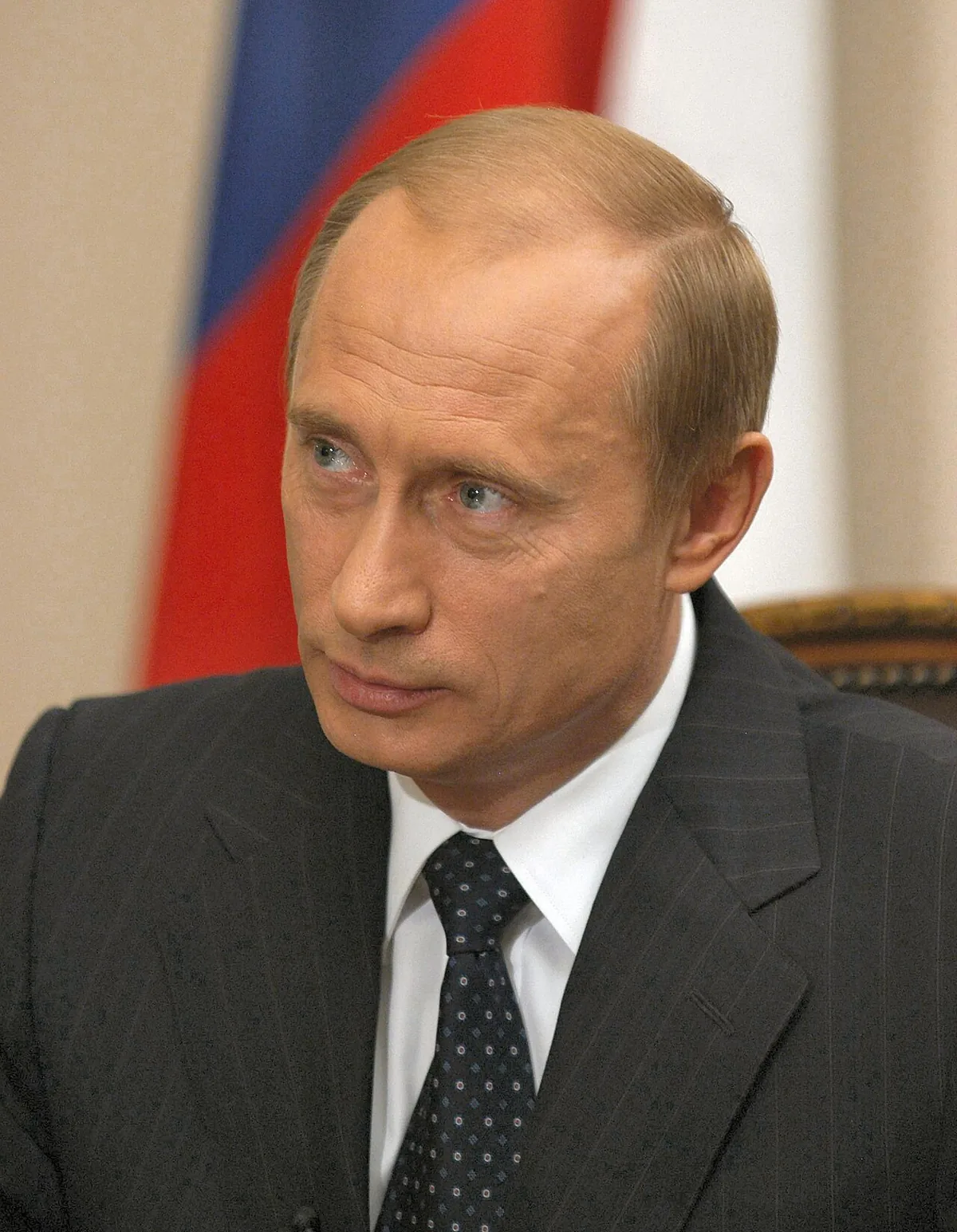
Vladimir Putin controls the Russian government, the Russian media, and the Russian polling apparatus. And even those polls are now telling him he's losing the room. When your own rigged numbers turn against you, something has gone very, very wrong.
The Numbers His Government Can't Hide
Putin's approval rating has dropped to approximately 65% in the latest survey from VTsIOM, Russia's state-run polling center, according to the New York Post. Before he launched the invasion of Ukraine, that number sat at 89%. That's a 24-point collapse, and again, these are the polls the Kremlin runs.
The Public Opinion Foundation, which conducts surveys directly for the Kremlin, recorded an even steeper single-month drop: support for Putin's performance fell from 71% to 66% in July alone. The Post reports that's the sharpest single decline since the mass protests triggered by Russia's 2022 military draft. Trust in Putin specifically fell from 76.7% in mid-June to 71% in the most recent VTsIOM data.
Those numbers are bad enough on their face. But the real picture is almost certainly worse. A separate survey conducted by the Institute for Conflict Studies and Analysis of Russia asked residents in the Krasnodar and Rostov regions a slightly different question: which Russian politician do you trust most? Only 39% named Putin in Krasnodar. Only 37% in Rostov. That's not a strongman. That's a regional manager with a nuclear arsenal.
The Message Hidden in the Methodology
Here is where it gets genuinely strange. Kateryna Stepanenko, Russia Team Lead at the Institute for the Study of War, told the Post that the Kremlin's own surveys publishing these declining numbers may not be an accident. Someone is choosing to let this data out.
"It may also signal that individuals inside the Kremlin are trying to use pollsters to send a message to Putin about the war," Stepanenko said. "Someone is going out of there to show that interest in the war is waning."
Read that again slowly. The theory, from one of the foremost analysts tracking Russia's war, is that factions inside Putin's own government are using state-run polling as a backdoor communication channel to tell their boss to pump the brakes. In a country where journalists who ask inconvenient questions tend to fall out of windows, the VTsIOM survey has apparently become the safest way to say: this is not going well, sir.
What's Actually Grinding Russians Down
The war is in its fifth year, and Russia's ability to insulate its own population from the consequences is crumbling. John Hardie, deputy director of the Foundation for Defense of Democracies' Russia program, told the Post that Ukrainian attacks on oil refineries and online retailers are escalating, gas shortages are spreading, and western sanctions are working their way deeper into daily Russian life.
The oligarchs are unhappy too. Putin is facing pressure from both the public and Russia's business elite, though Hardie is careful not to overread the situation. "There is a strong desire to end the war, but it's not likely that this trend will lead to major unrest or a palace coup," he said. Not yet, anyway.
Putin, for his part, seems to know exactly how hot the stove is. He has reportedly backed off plans to seize control of the Telegram messaging app and, crucially, has refused to repeat the 2022 draft that set off nationwide protests. Hardie suspects that calculus may not hold much longer, predicting Putin is likely waiting until after Russia's September elections to announce a fresh wave of mobilizations. Which is a very Russian way of saying: the bad news is coming, they're just scheduling it.
Estonia's Intelligence Chief Has Seen Enough
Last week, Kaupo Rosin, director general of the Estonian Foreign Intelligence Service, offered an assessment that should be taken seriously given how closely Estonia monitors its enormous neighbor. He told the Telegraph that Putin's hold on power is at its most fragile point it has ever been.
"There are certainly voices which express that he should keep going, but I think the voices which urge him to maybe reconsider the situation are becoming stronger," Rosin said, describing the "internal tension" building in Moscow.
Estonia shares a border with Russia. Their intelligence service is not working from press releases. When the director general of Estonian foreign intelligence says Putin's grip is wobbling, that's not punditry. That's sourced analysis from people whose national survival depends on getting this right.
What 65% Actually Means in Putinland
To be clear about something: 65% approval sounds fine if you're an American politician. It would be remarkable, actually. But the context here is that this number comes from a state-controlled polling apparatus in a country where expressing open dissatisfaction with the president carries genuine physical risk. These are not voters firing off angry tweets. These are people in a surveillance state telling government-affiliated researchers that they are unhappy.
Stepanenko pointed out to the Post that unlike North Korea, where Kim Jong Un's state polls report a 99% approval rating and no one believes a word of it, Russian polling does carry some signal. It's one of the few remaining peepholes, as she put it, into how Russians actually feel. The fact that this peephole is now showing a 37% trust rating in some regions should alarm the people in the Kremlin who understand what comes after prolonged, unwinnable wars.
The Dingo Take
You are supposed to believe that a man who controls the information environment, the press, the polling firms, and the legal definition of what counts as treason has nothing to worry about because his numbers are still technically above water. That argument requires ignoring everything we know about how authoritarian systems actually collapse. They don't announce themselves. They leak. And right now, Russia is leaking.
The most telling detail in this entire story isn't the approval rating. It's the theory that Kremlin insiders are deliberately feeding unflattering poll numbers into the public record as a signal to Putin himself. That's not governance. That's a hostage negotiation conducted through survey data. When your inner circle is afraid to tell you the truth out loud and starts encoding it in VTsIOM methodology, you are not running a tight ship. You are running a ship where the crew has started quietly studying the lifeboats.
Putin started this war expecting a three-day walkover and is now five years deep with tens of thousands of dead soldiers per month, sanctions biting harder every quarter, and his own pollsters apparently trying to stage an intervention. The war isn't going to end because the West finally gives Ukraine the right weapons package or because some diplomat brokers a brilliant ceasefire. It's going to end because at some point the internal pressure cooker blows a valve. The only question nobody can answer is what that looks like from the outside, and whether it's better or worse than what's happening now.
Comments