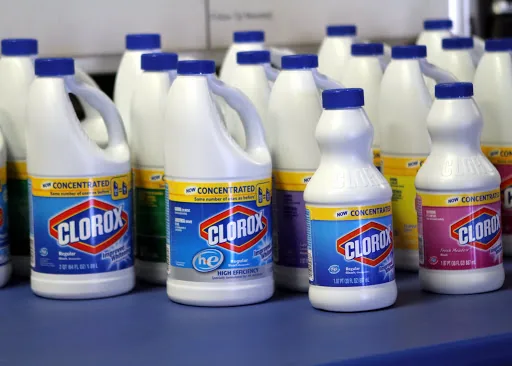
Clorox is recalling 6.3 million bottles of scented cleaning products sold in Puerto Rico and the U.S. Virgin Islands because they may be growing a bacteria that can kill people with weakened immune systems. The products are called cleaners. They contain a pathogen. That sentence should not be possible, and yet here we are. Oh, and this is the second time Clorox has done this exact thing.
What Got Recalled and Where You Find the Date Code
According to a Consumer Product Safety Commission notice issued September 3, 2026, the recall covers scented Mistolin Dilutable Cleaners in nine scents including Frescura de Lavanda, Manzana y Canela, and Flores de Primavera, plus four scented Lestoil Heavy Duty Multi-Purpose Cleaners including Intenso Limón Boricua and Olas de Rincón. Only scented products are included. Unscented versions are fine.
The affected date codes start with the prefix "PR01" followed by a five-digit number between 25091 and 26168. That represents products manufactured between April 1, 2025, and June 17, 2026. The date code is printed on the side of the bottle. The products sold in 28, 40, 64, and 128 fluid ounce bottles at Walmart, Sam's Club, Costco, Supermercados Econo, Supermercados Selecto, and other major retailers, priced between $1.40 and $8.
Medical Daily reports no injuries or incidents have been reported. That is genuinely good news. But "no injuries yet" and "safe" are two very different things.
Who Is Actually at Risk Here
The CPSC notice is careful to point out that people with healthy immune systems are, quote, "usually not affected" by Pseudomonas aeruginosa. That framing is technically accurate and also does a lot of work to bury the lead. Because Puerto Rico has roughly 3.2 million residents, and diabetes rates on the island are higher than in most U.S. states. Diabetes means slower wound healing. Advanced diabetes can mean dialysis access. Dialysis access means a tube going directly into your bloodstream on a regular basis.
Pseudomonas aeruginosa, as Medical Daily explains, becomes dangerous when it reaches someone who cannot fight it off, or when it bypasses the skin entirely. It can enter through inhalation, through the eyes, or through a break in the skin. Anyone with a catheter, a central line, a tracheostomy, a feeding tube, or an open surgical wound has a permanent gap in the body's defenses where this organism can walk right in. And Pseudomonas is notorious for being resistant to multiple antibiotics, which means when it does cause an infection, treating it is hard, slow, and sometimes impossible.
There is also a caregiving problem that is easy to miss. A perfectly healthy family member doing the cleaning can carry contaminated aerosol into the room of someone who is not healthy at all. You do not have to be the one spraying the bottle to be the one who gets sick.
Clorox Did This Before. With 37 Million Bottles.
Here is the part that should make you put down your coffee. Medical Daily reports that in October 2022, Clorox recalled roughly 37 million Pine-Sol scented cleaners produced at a facility in Forest Park, Georgia, for Pseudomonas aeruginosa contamination. The hazard language in that recall was nearly identical to this one. That action also reported no injuries.
So we are talking about the same company, the same bacteria, a different product line, a different manufacturing plant, and a second large-scale recall within four years. That is not a one-off quality control hiccup. That is a pattern. Scented cleaners are water-based formulations, and what keeps them microbiologically stable is the preservative system built into the formula. When contamination shows up twice at this scale in this product category, the question is not "what went wrong" in some isolated sense. The question is what Clorox's process controls look like, and whether anyone is watching them closely enough.
The CPSC notice does not describe the source of the contamination and the agency has not publicly stated whether it will examine the manufacturing history. That remains, per Medical Daily, unconfirmed.
What to Do If You Have These Products Right Now
Stop using the recalled products immediately. Do not pour them down a drain. Do not transfer the liquid to another container. Opened, partially used bottles get treated the same as full ones. Put them in their original container and dispose of them with household trash.
To get a refund, Clorox asks you to register at the recall site, submit a photo of the 12-digit UPC code and a photo of the date code on the side of the bottle. With a receipt, you get the full purchase price back. Without one, you get the manufacturer's suggested retail price. You can reach Clorox Puerto Rico toll-free at 855-215-5439, available 8 a.m. to 8 p.m. Eastern.
If anyone in your household is immunocompromised or has an indwelling medical device and has been exposed to these products, Medical Daily recommends watching for fever, chills, redness or pain at a wound or catheter site, or worsening breathing. A rapidly spreading area of redness, sudden confusion, very high fever, or difficulty breathing means urgent care, not a scheduled appointment. Product problems can be reported directly to the CPSC at SaferProducts.gov.
The Dingo Take
A cleaning product that grows dangerous bacteria is not a niche regulatory footnote. It is a specific, foreseeable threat to some of the most vulnerable people in a territory that already gets the short end of nearly every federal stick. Puerto Rico has higher rates of diabetes, higher rates of poverty, and a healthcare infrastructure that is still not fully recovered from Maria. The people most likely to own a catheter or a central line on that island are also the people least likely to have easy access to urgent care when something goes wrong. Clorox sells these bottles for $1.40 at Walmart. The people buying the cheapest cleaning products are not buying them because they have a lot of options.
This is Clorox's second time at this rodeo. Thirty-seven million bottles in 2022. Six point three million more now. Different plant, same bacteria, same carefully worded reassurance that healthy people are probably fine. At some point the question stops being "how did this happen again" and starts being "why is the answer to contaminated cleaners always a voluntary recall with a refund form, rather than a serious look at whether these manufacturers have their production under control between major incidents." The CPSC has not said whether it plans to ask that question. Based on recent history, do not hold your breath.
Check your bottles. If you have a family member who is sick, elderly, on dialysis, recovering from surgery, or living with any device that bypasses the skin, treat this as urgent. The date code starts with PR01. The rest of the code is printed right there on the side. This is a ten-second check and it might actually matter.





Comments